harpoon
The Old Man and the SeaThe harpoon is the culminating weapon of Santiago's solitary battle, the tool with which he finally kills the great marlin and the object whose loss to a Mako shark signals the beginning of his defeat. It appears first as part of the gear the boy helps carry, then as the instrument of the old man's supreme effort, and finally as a missed presence when he must fight sharks with a knife lashed to an oar and a broken tiller. Its trajectory from readiness to use to absence traces the arc of Santiago's triumph and its undoing.
Identity and Role
The harpoon is a standard piece of a fisherman's heavy tackle, stored in the skiff alongside the gaff, the club, and the coiled lines. The boy carries it when they bring the gear home, and the old man thinks it a "needless temptation" to leave in the boat, though he trusts no local would steal. It is a long-shafted iron weapon, distinct from the gaff used to subdue fish alongside, and it is kept with a coil of light rope made fast to the bitt in the bow. Santiago has rigged it long before he needs it, and its presence represents his preparedness for the largest fish.
The Killing of the Marlin
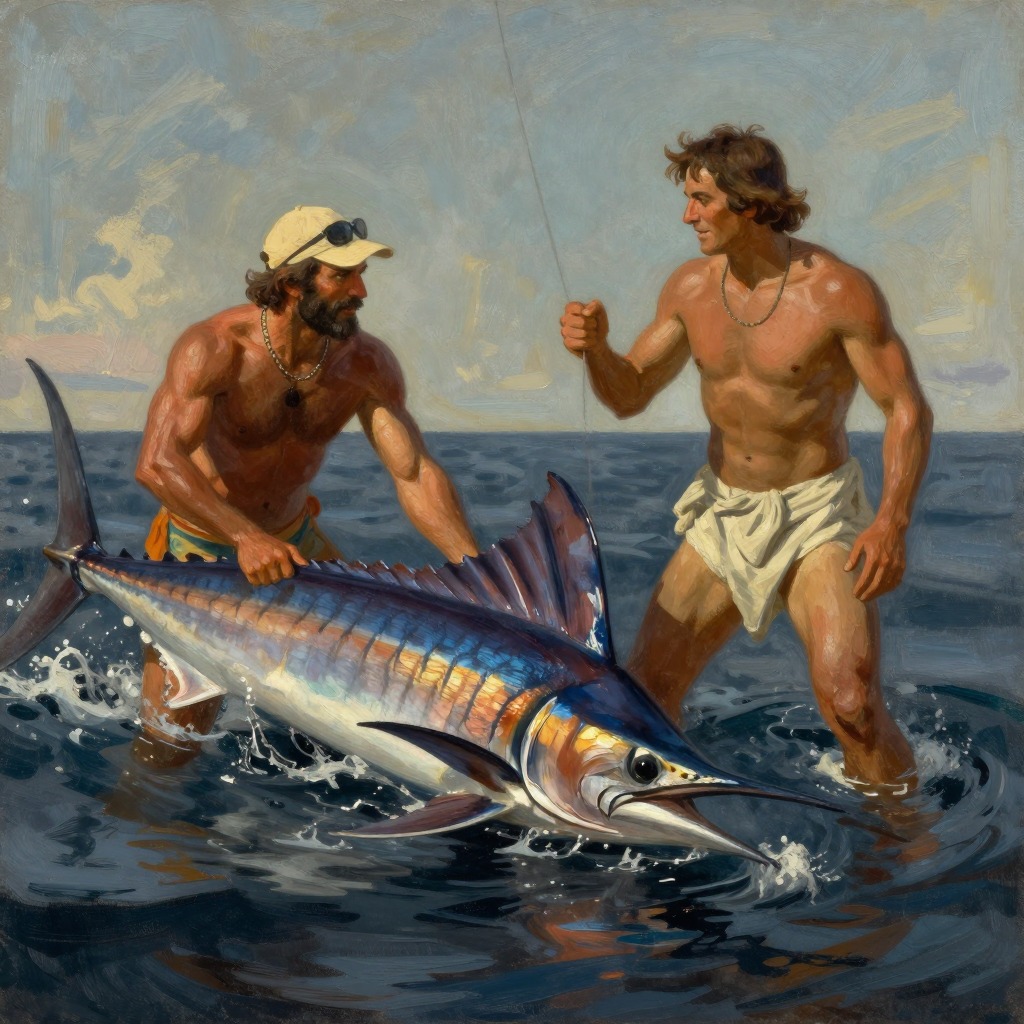
After three days of struggle, when the marlin finally comes alongside on its side, its bill almost touching the skiff's planking, Santiago drops the line, puts his foot on it, and lifts the harpoon as high as he can. He drives it down with all his strength, and more strength he summons, into the fish's side just behind the great chest fin that rises to the height of his chest. He feels the iron go in, leans on it, drives it further, and pushes all his weight after it. The fish comes alive with death in him, rises high out of the water showing all his length and power and beauty, and then falls with a crash that sends spray over the old man and the skiff. The harpoon shaft projects at an angle from the fish's shoulder, and the sea discolors with the red of blood from the heart. Santiago later thinks he felt the fish's heart when he pushed on the harpoon shaft the second time.
Loss to the Mako Shark
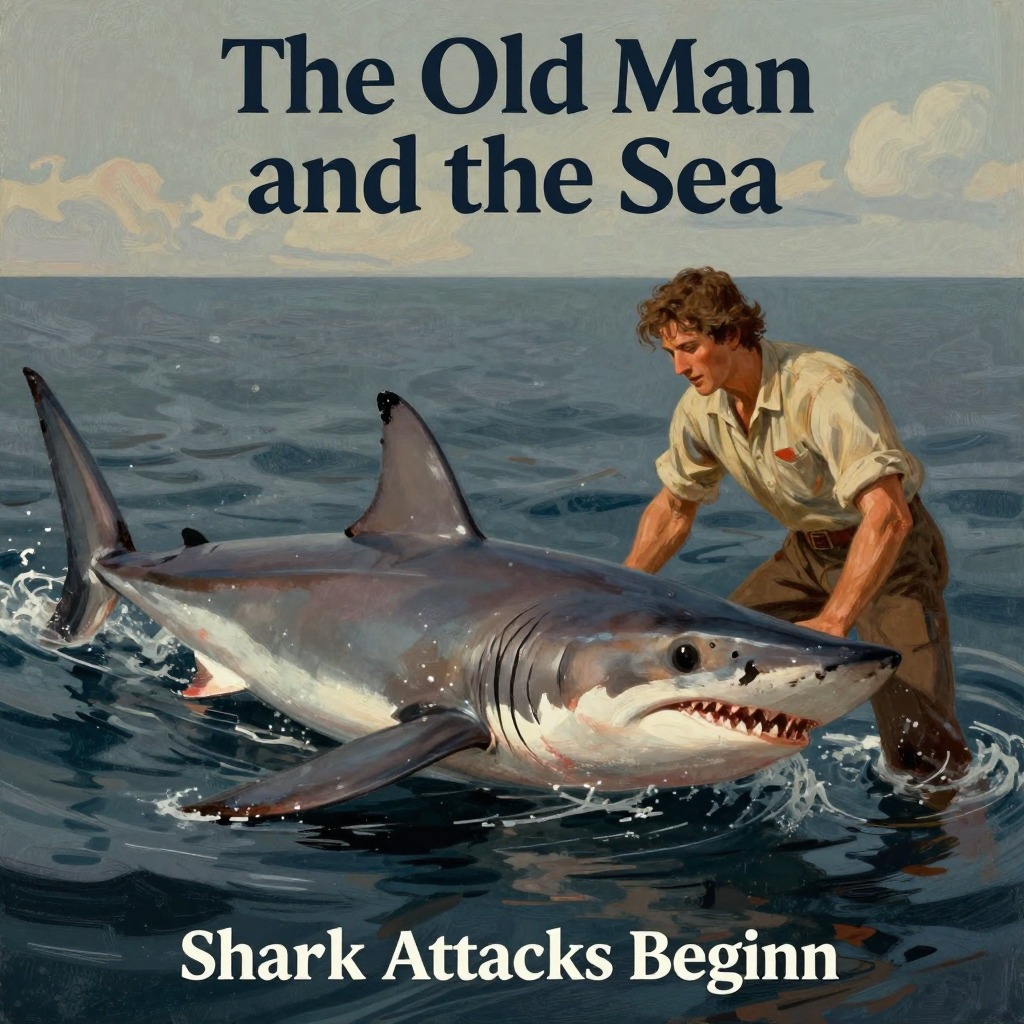
The harpoon is lost when the first shark, a huge Mako, attacks the marlin's carcass. Santiago drives the harpoon down onto the shark's head at the spot where the line between its eyes intersects with the line running back from its nose—the location of the brain. He hits it with his blood-mushed hands, driving the good harpoon with all his strength, without hope but with resolution and complete malignancy. The shark swings over, wrapping itself in two loops of the rope, and though it dies, it does not accept death. It plows over the water on its back, tail lashing and jaws clicking, until the rope comes taut, shivers, and snaps. The shark takes the harpoon and all the rope with it as it sinks. Santiago calculates that the shark took about forty pounds of the marlin's meat, and he now has no harpoon left.
Aftermath and Substitution
With the harpoon gone, Santiago must improvise. He lashes his knife to the butt of one of the oars, creating a makeshift weapon. He tells himself he is still an old man but not unarmed. When the shovel-nosed sharks arrive, he uses the knife on the oar to stab them, and when the knife blade snaps on a later shark, he is left with only the gaff, the two oars, the tiller, and a short club made from a broken oar handle. The loss of the harpoon thus forces a descent from the decisive, single-stroke weapon of a master fisherman to the desperate, repeated blows of a man fighting off a pack. The harpoon's absence is felt in every subsequent attack, and Santiago's final, exhausted fight against the midnight pack is conducted with the tiller alone, which breaks in his hands.
Thematic Significance
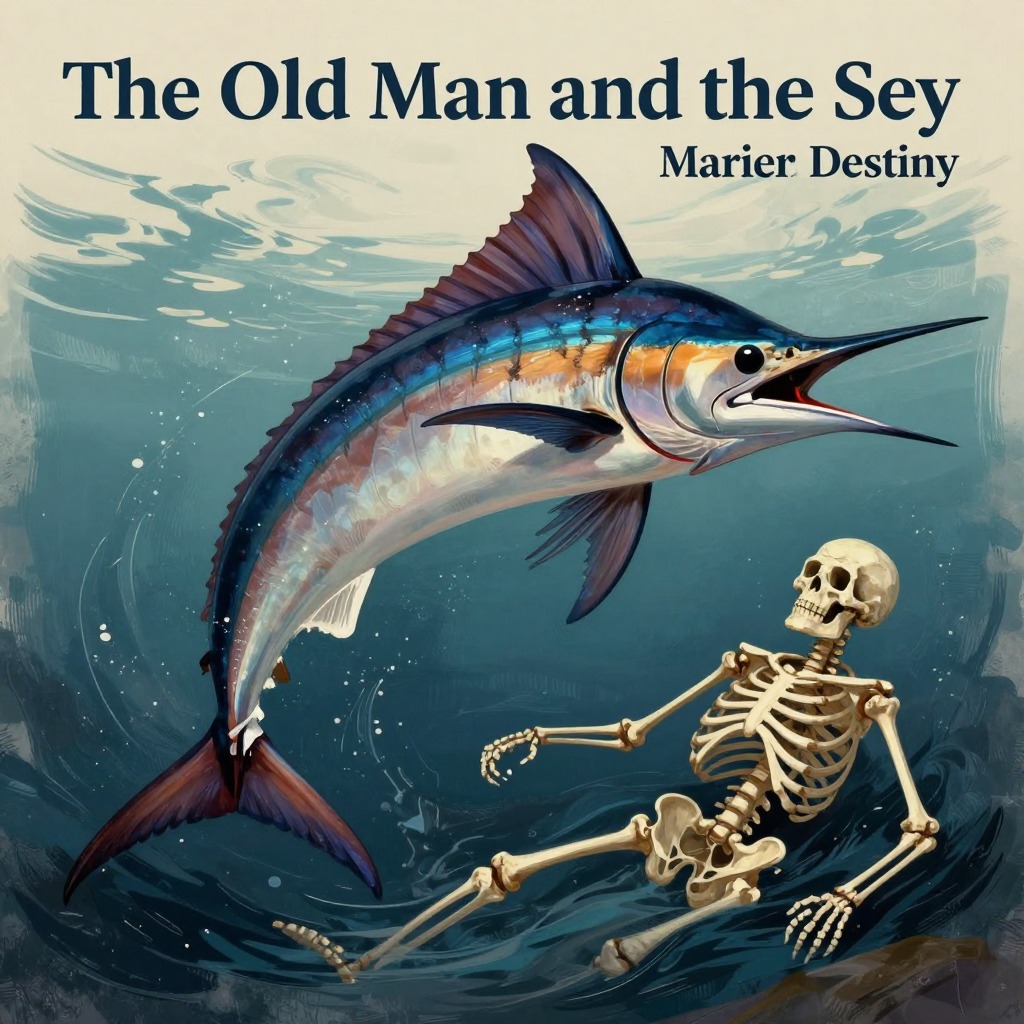
The harpoon embodies Santiago's professional competence and his capacity for a clean, honorable kill. He uses it only once, on the marlin he loves and respects, and the act is described as a kind of ritual—the iron driven into the heart, the fish hanging in the air like a vision. Its loss to the Mako, a shark he also respects as noble and fearless, begins the process by which the marlin's beautiful body is reduced to a skeleton. The harpoon is never recovered; it sinks with the shark into the mile-deep water. Its disappearance marks the point at which Santiago's triumph becomes inseparable from destruction, and his subsequent fight becomes a matter of endurance rather than mastery. The harpoon, like the marlin's spear, is a weapon that belongs to the world of purposeful action, and its loss leaves the old man with only his hands and his will.