knife
The Old Man and the SeaThe knife is a crucial piece of equipment for Santiago, the old fisherman, serving multiple essential functions throughout his ordeal at sea. It is a tool for survival, a weapon for defense, and its eventual failure marks a turning point in his battle against the sharks. The knife's journey from a reliable instrument to a broken remnant mirrors the old man's own physical and material depletion.
Role as a Fishing and Butchering Tool
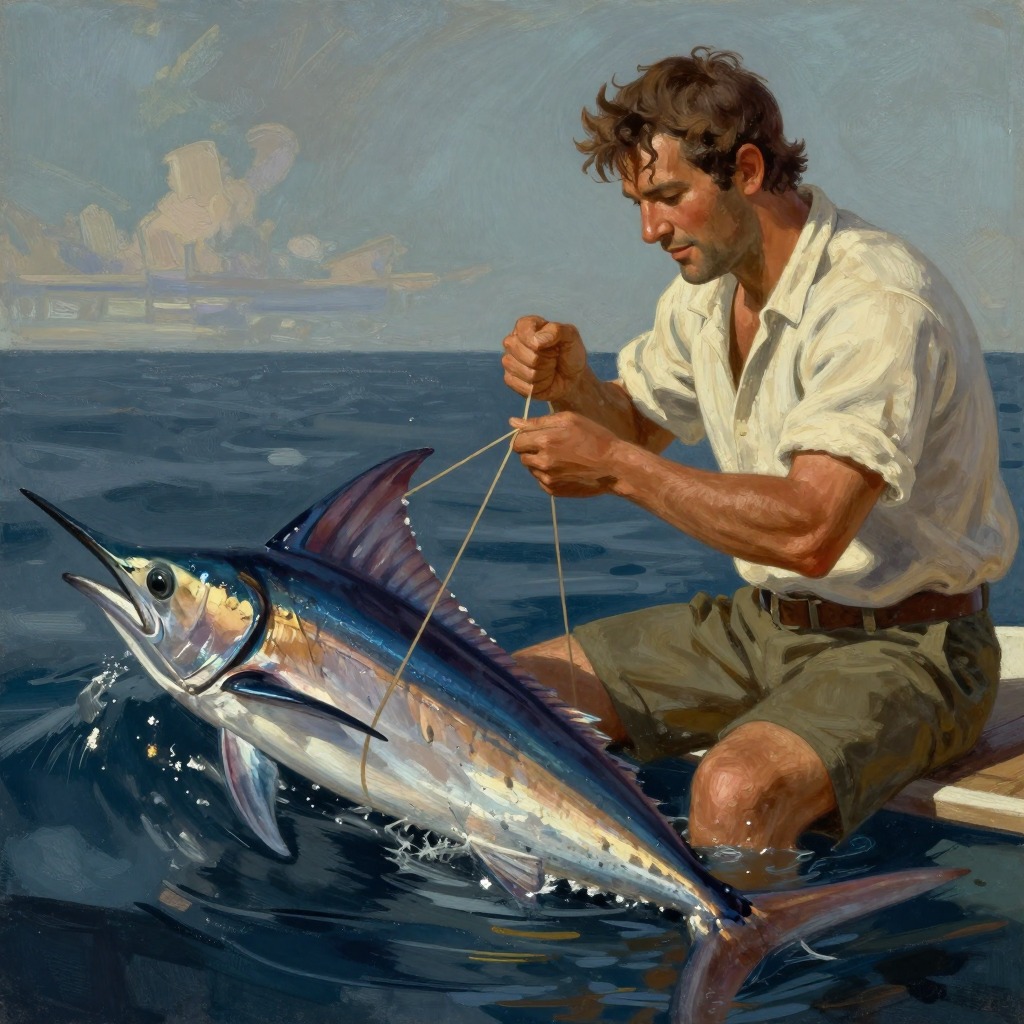
From the outset, the knife is an integral part of Santiago's gear. When he first sets out, the boy Manolin helps him carry the gear from the boat, which includes the gaff and harpoon, but the knife is always on the old man's person. Its primary use is for preparing and processing the fish he catches. After hooking the great marlin, Santiago uses the knife to cut strips of dark red meat from the bonito he had caught earlier, which he eats to maintain his strength. Later, when he catches a dolphin, he uses the knife to gut it, slitting it from the vent to the lower jaw, and then to skin it, cutting the fillets from the head to the tail. The knife is also used to open the dolphin's maw, revealing two fresh flying fish inside, which he also prepares for eating. This systematic use of the knife demonstrates Santiago's skill and the disciplined, practical nature of his work at sea.
Adaptation as a Weapon Against Sharks
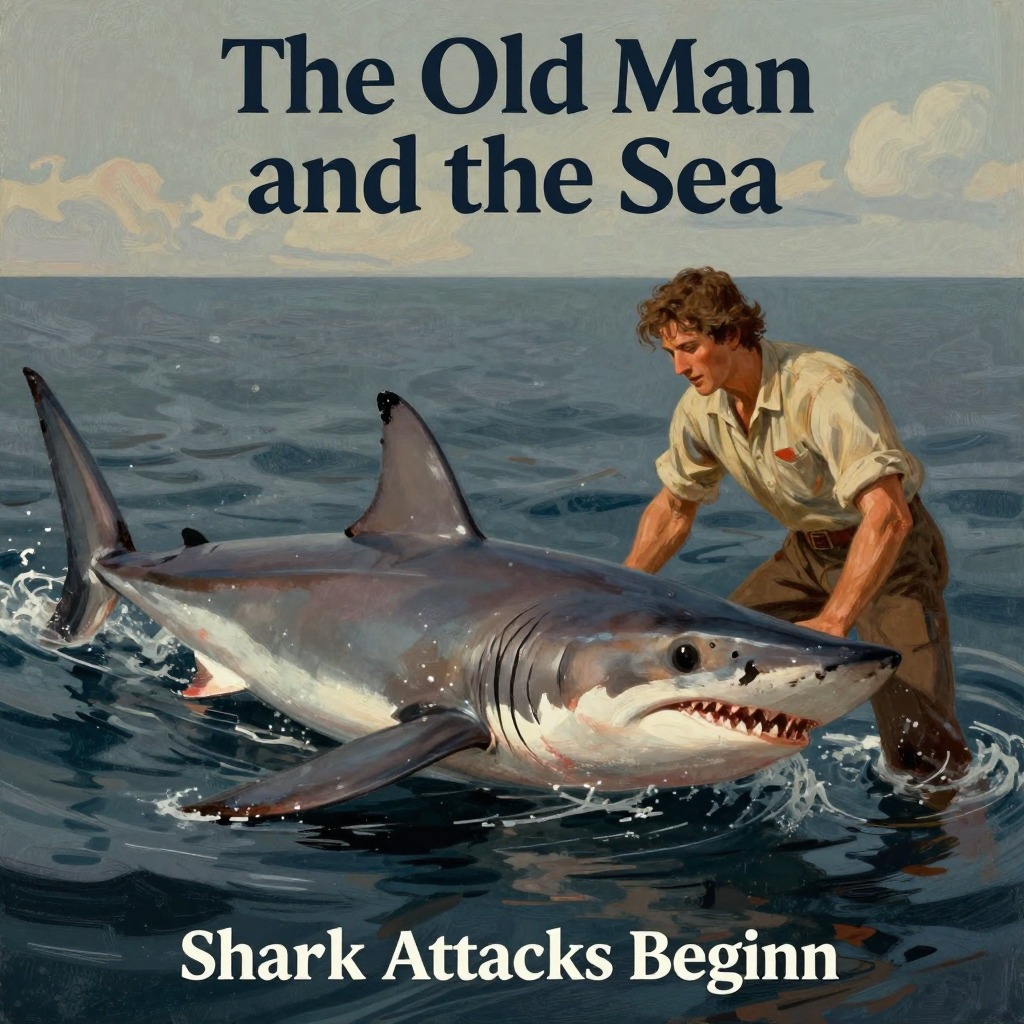
When the sharks begin to attack the marlin lashed to his skiff, Santiago is forced to adapt his tools for combat. After the first Mako shark attack, which costs him his harpoon and rope, he realizes he must improvise. He decides to lash his knife to the butt of one of the oars, creating a makeshift spear. He does this while steering with the tiller under his arm and holding the sheet of the sail under his foot. With this new weapon, he declares, "I am still an old man. But I am not unarmed." This adaptation shows his resourcefulness and determination to defend his prize, transforming a tool of preparation into a weapon of last resort.
Failure and Breaking Point
The knife's most critical moment comes during the attack of the single shovel-nosed shark. Santiago lets the shark hit the fish and then drives the knife lashed to the oar down into its brain. However, the shark jerks backwards as it rolls, and the knife blade snaps. This failure is a devastating blow. With the knife broken, Santiago is left with only the gaff, the two oars, the tiller, and a short club to fight off the remaining sharks. The breaking of the knife marks a clear escalation in his disadvantage, stripping him of his most effective close-quarters weapon and forcing him into a purely defensive, and ultimately losing, battle. The old man later reflects on this loss, telling the boy Manolin that they must get a good killing lance, as his "knife broke."
Symbolic Significance
The knife, in its utility and its eventual destruction, embodies the themes of resourcefulness, the limits of human preparation, and the relentless nature of the natural world. It is a man-made object that Santiago relies upon to impose his will on the sea, to process its bounty, and to defend against its predators. Its breakage is not just a practical loss but a symbolic one, signaling that the old man's tools, like his own body, are subject to failure. The knife's journey from a sharp, reliable blade to a shattered piece of metal parallels the marlin's transformation from a magnificent creature to a mutilated carcass, and Santiago's own trajectory from a confident fisherman to a beaten but undefeated man. The broken knife is a concrete reminder of the cost of his journey and the unforgiving reality of the sea.