luck
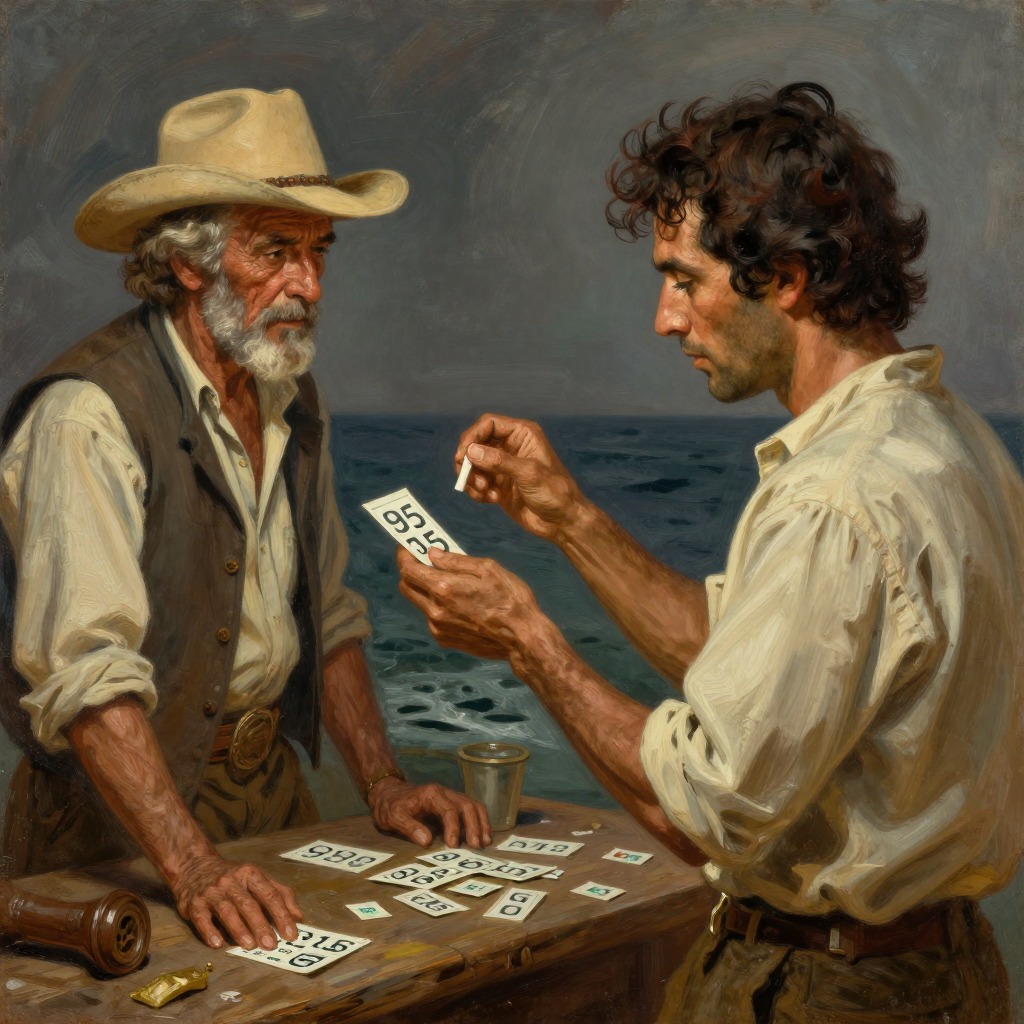
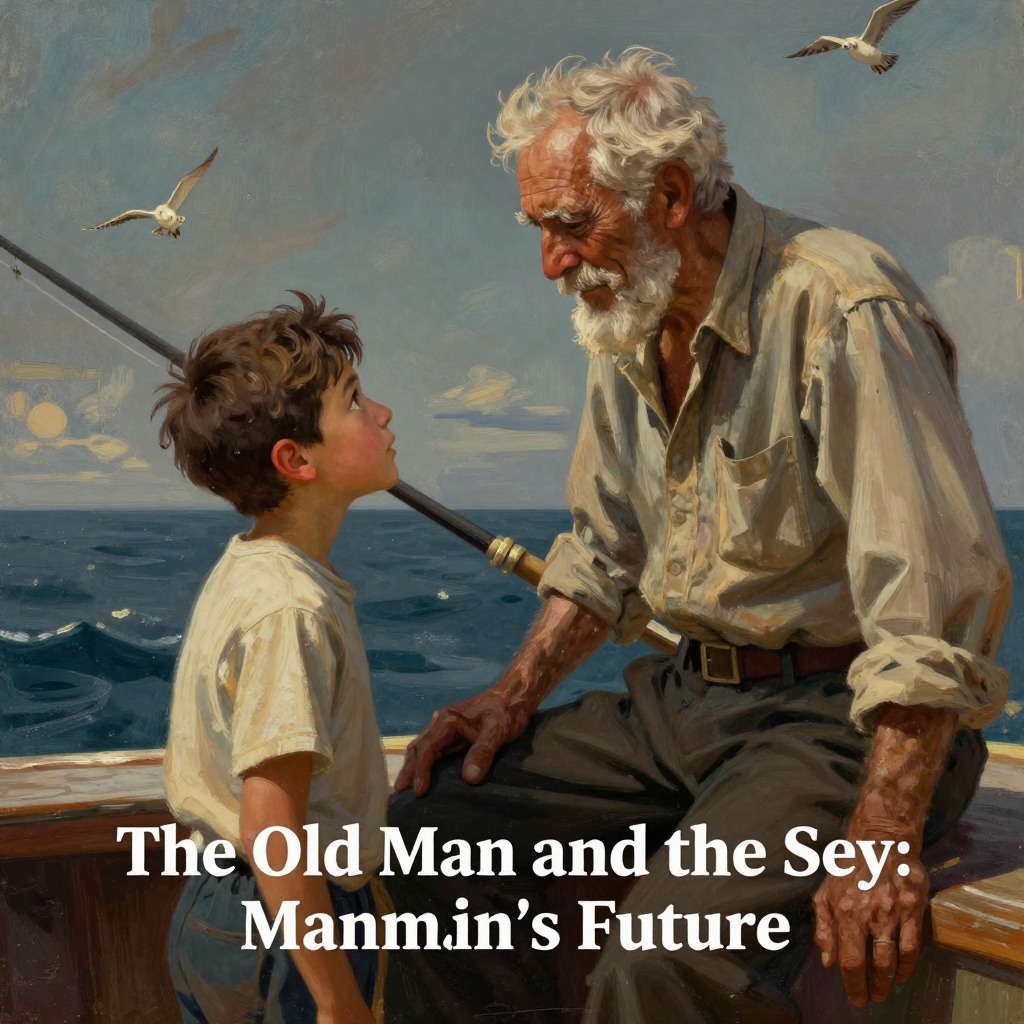
The Old Man and the SeaLuck is one of the first forces named in The Old Man and the Sea, and it arrives as a social judgment. The boy Manolin's parents, after forty days without a fish, declare Santiago "definitely and finally salao, which is the worst form of unlucky," and order their son to leave the old man's skiff for a boat that catches three good fish in its first week. The word salao—a Cuban corruption of salado, meaning salted or cursed—marks Santiago as a man the community has written off, and the sail patched with flour sacks, furled, looks to the narrator "like the flag of permanent defeat." Yet Santiago himself does not accept this verdict. When Manolin asks if he is strong enough for a truly big fish, Santiago answers, "I think so. And there are many tricks." His hope and confidence, the narrator notes, "had never gone. But now they were freshening as when the breeze rises." Luck, for Santiago, is not a fixed inheritance but a condition that can be met with skill and resolution.
Luck and the Fisherman's Code
Santiago's relationship to luck is practical and unsentimental. He tells himself, "It is better to be lucky. But I would rather be exact. Then when luck comes you are ready." This maxim governs his method: he keeps his lines straighter than anyone, at precise depths, so that a bait waits exactly where he intends it, while other fishermen let theirs drift and misjudge the depth by forty fathoms. Exactness is the preparation that makes luck possible; it is not a substitute for luck but the condition under which luck can be recognized and seized. When the great marlin finally takes the bait, Santiago does not attribute the strike to luck alone—he has worked the deep wells for a week without success, and on the eighty-fifth day he has chosen to go "far out" where the big fish are. The decision to go beyond the usual grounds is a gamble, but it is a calculated one, grounded in knowledge of the current, the season, and the habits of the fish.
The Limits of Luck: Will and Endurance
As the struggle with the marlin extends into its second day, Santiago's thinking shifts away from luck toward will. He says aloud, "I'll stay with you until I am dead," and reflects that the fish "cannot know that it is only one man against him, nor that it is an old man." Luck becomes irrelevant in the face of a contest that is purely a matter of endurance. When his left hand cramps, he does not pray for luck; he eats the raw bonito to restore strength and commands the hand to uncramp. He tells himself, "I must have confidence and I must be worthy of the great DiMaggio who does all things perfectly even with the pain of the bone spur in his heel." The reference to DiMaggio—a man who performs despite physical limitation—replaces luck with a code of stoic competence. Santiago's prayers, when he offers them, are not petitions for luck but bargains: ten Our Fathers and ten Hail Marys in exchange for the fish, with a pilgrimage to the Virgin of Cobre as a promised payment. Even in prayer, luck is treated as something that can be transacted, not simply received.
The Reversal: Luck Violated
After the sharks destroy the marlin, Santiago's understanding of luck darkens. He tells himself, "You violated your luck when you went too far outside." The phrase is crucial: luck is not something that simply fails or abandons a person; it can be violated, transgressed against, as though it were a moral or natural law. Santiago does not blame the sharks, the sea, or fate. He blames his own choice to go beyond the limits that luck requires. When he finally reaches the harbor with only the skeleton, he tells Manolin, "They beat me. They truly beat me," and when the boy insists the fish did not beat him, Santiago corrects him: "No. Truly. It was afterwards." The defeat is not in the hooking or the killing but in the aftermath, the part that luck governs. Yet even in this admission, Santiago does not surrender to despair. He says aloud, "Nothing. I went out too far," and the statement is both an acknowledgment of error and a refusal to call it anything else—not fate, not tragedy, just a navigational mistake.
Luck and the Meaning of the Ordeal
The narrative ultimately places luck within a larger framework of human worth. Santiago thinks, "You did not kill the fish only to keep alive and to sell for food. You killed him for pride and because you are a fisherman." The killing is an act of identity, not of commerce, and luck is irrelevant to identity. When the old man says, "I am not lucky. I am not lucky anymore," Manolin replies, "The hell with luck. I'll bring the luck with me." The boy's declaration shifts luck from an external force to a relational one: luck is not something one has but something one brings to another person. In the final scene, Santiago dreams of the lions on the beach—the same dream he has had throughout the story, the same image of a youthful, untroubled strength that predates the eighty-four days without a fish. The lions are not lucky or unlucky; they simply are. The dream suggests that what endures in Santiago is not his luck but his capacity to dream of a world before luck mattered.