marlin's bill
The Old Man and the SeaThe marlin's bill is the most distinctive and formidable physical feature of the great fish Santiago battles for three days. It is described as being as long as a baseball bat and tapered like a rapier, a weapon of nature that the old man first sees when the fish makes its spectacular leap from the water. The bill is not merely a piece of anatomy; it is the defining mark of the marlin's identity, a symbol of its strength and its alien, majestic otherness. Santiago, who comes to love and respect the fish as a brother, is acutely aware of this sword-like appendage, and it becomes a focal point of his regret and tactical imagination after the marlin is killed and lashed to the skiff.
Physical Description and First Appearance
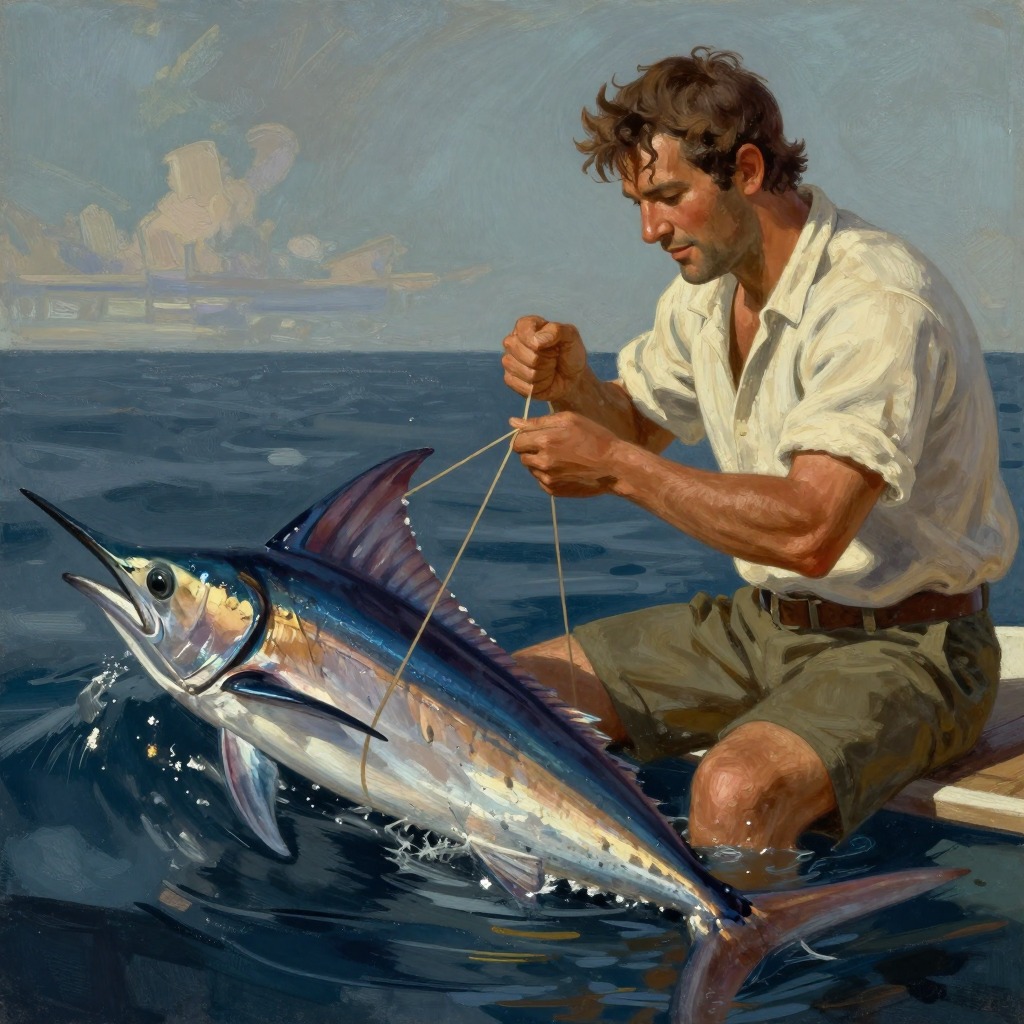
The marlin's bill is first seen in all its glory when the fish jumps for the first time. Santiago observes that the sword is as long as a baseball bat and tapered like a rapier, and he sees the fish's full length, including the great scythe-blade of its tail, as it re-enters the water. The bill is a rapier, a weapon of elegant and deadly precision, and its appearance confirms the old man's suspicion that he is fighting the biggest fish he has ever seen or heard of. Later, when the fish is alongside the skiff, Santiago passes the harpoon rope through its gills and out its jaws, making a turn around the sword before knotting the rope. He also cuts a piece of line and ties the fish's lower jaw against its bill so its mouth will not open, allowing the skiff to sail as cleanly as possible. This practical act of lashing the bill shut underscores the object's physical reality and the old man's methodical approach to securing his prize.
Santiago's Regret and the Missed Weapon
After the sharks begin their assault, Santiago's thoughts turn to the marlin's bill with bitter regret. As he fights the shovel-nosed sharks, he thinks to himself that he should have chopped the bill off to fight them with. He imagines lashing it to an oar butt, creating a formidable weapon that would have allowed him and the fish to fight the sharks together. This fantasy highlights the old man's sense of a lost partnership; the bill, in his mind, was not just a part of the fish but a potential tool for their shared defense. The fact that he had no hatchet and then no knife to cut it off deepens his sense of being unarmed and unprepared for the onslaught. The bill represents a missed opportunity, a piece of the marlin's innate power that Santiago failed to harness in their final, desperate struggle.
The Bill as a Symbol of the Fish's Nobility
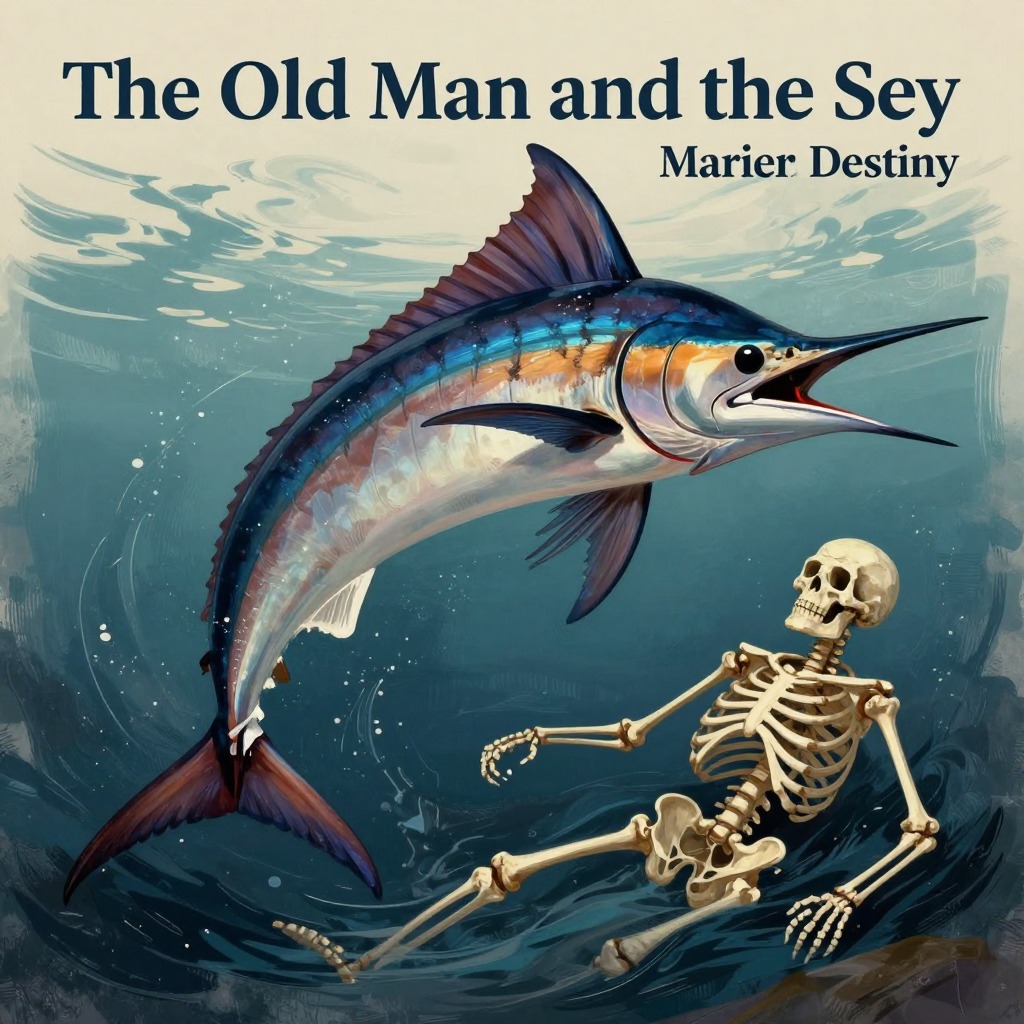
Beyond its practical potential as a weapon, the marlin's bill is a key element of the fish's noble and dignified appearance. Santiago repeatedly marvels at the fish's beauty and greatness, and the bill is integral to that image. When the old man tells the fish, "I love you and respect you very much. But I will kill you dead before this day ends," he is addressing a creature whose entire being, including its rapier-like bill, commands his awe. The bill is a sign of the fish's power and its right to fight, a natural armament that makes the contest between man and fish a worthy one. In the end, when the skeleton is all that remains, the bill is one of the few recognizable features, projecting from the dark mass of the head and standing as a final, stark testament to the magnificent creature that once was.
The Bill in the Aftermath
After Santiago returns to the harbor, the fate of the marlin's bill is settled in a brief exchange with the boy, Manolin. When the boy asks what should be done with the spear, Santiago tells him he can keep it if he wants it. The boy immediately says he wants it, claiming the bill as a personal memento of the great fish and the old man's epic struggle. This transfer of the bill from the old man to the boy signifies the passing of a legacy. The bill, once a part of the living fish, becomes a trophy and a symbol of Santiago's ordeal, a physical object that the boy will hold onto as he prepares to fish with the old man again. It is the only part of the marlin, besides the skeleton, that is preserved, and it carries the weight of the entire adventure.