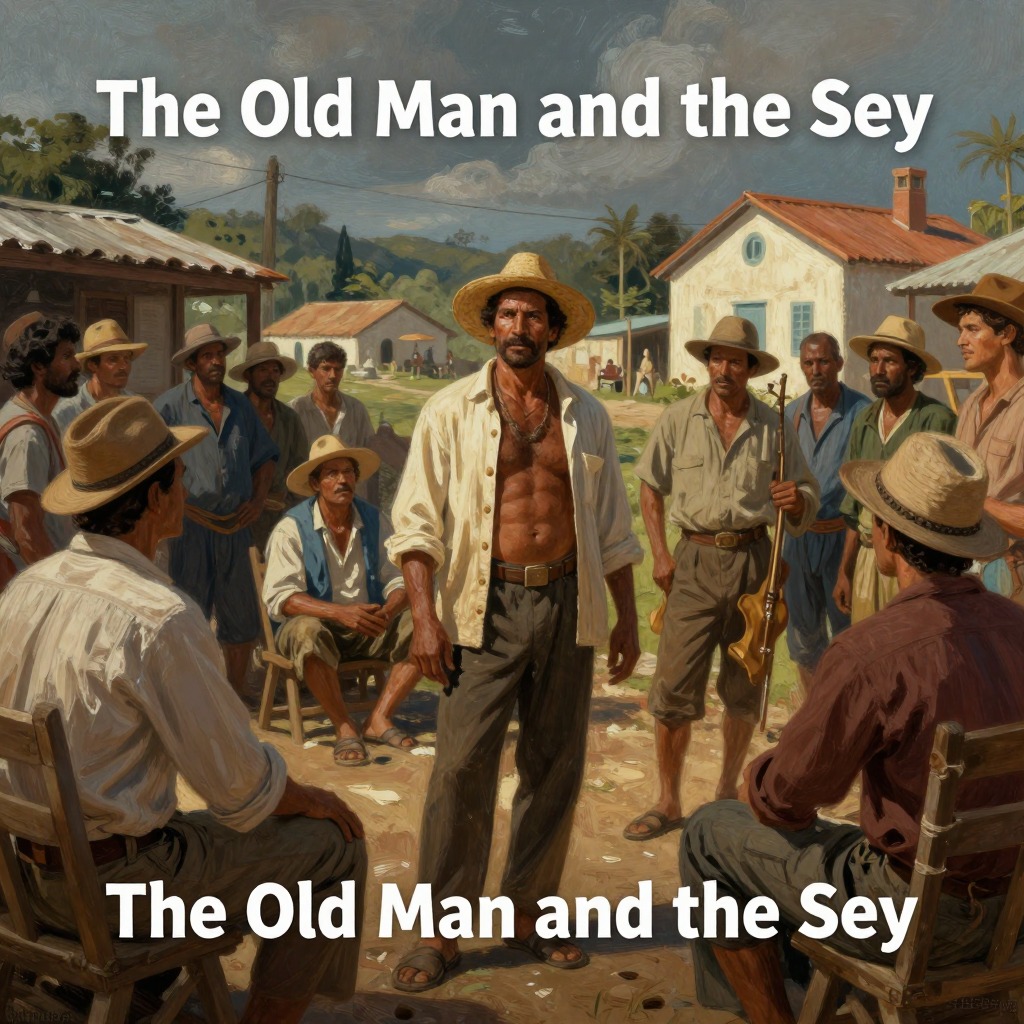
the boy
The Old Man and the SeaThe boy, Manolin, is the young apprentice and devoted companion of the old fisherman Santiago, whose loyalty, care, and faith form the emotional anchor of the story and represent the continuity of the fisherman's code across generations. Though forced by his parents to leave Santiago's boat after forty days without a catch, the boy never abandons the old man; he helps him carry his gear, brings him food and coffee, shares his meager resources, and insists they will fish together again. His presence frames the narrative, from the opening scene on the Terrace to the final vigil beside the sleeping Santiago, and his unwavering belief in the old man's skill and worth provides the human counterpoint to Santiago's solitary ordeal at sea.
Identity and Background
Manolin is a boy who has fished with Santiago since he was five years old, when the old man first took him out in a skiff and nearly lost him to a green fish that tore the boat apart. The boy remembers the tail slapping, the thwart breaking, the noise of clubbing, and the sweet blood smell, and he insists he remembers everything from when they first went together. Santiago taught him to fish, and the boy loves him. After eighty-four days without a fish, the boy's parents declared Santiago "salao," the worst form of unlucky, and ordered the boy to another boat that caught three good fish in the first week. The boy obeyed his father, saying, "I am a boy and I must obey him," but he remained deeply attached to the old man, coming each day to help him carry the coiled lines, the gaff, the harpoon, and the sail that was patched with flour sacks and looked like the flag of permanent defeat.
Relationship with Santiago
The bond between Manolin and Santiago is one of mutual devotion and unspoken understanding. The boy brings Santiago supper from Martin, the owner of the Terrace, including black beans and rice, fried bananas, stew, and two bottles of Hatuey beer, and he thanks Martin on the old man's behalf. He worries about Santiago's welfare, thinking he must get him water, soap, a good towel, another shirt, a jacket for the winter, shoes, and another blanket. The boy shares Santiago's faith in the great DiMaggio and the Yankees, and he listens eagerly to the old man's stories of Africa, the lions on the beaches, and the great John J. McGraw. When Santiago says, "I am a strange old man," the boy replies, "But are you strong enough now for a truly big fish?" and the old man answers, "I think so. And there are many tricks." The boy's confidence in Santiago is absolute: when asked who the best fisherman is, he says, "There are many good fishermen and some great ones. But there is only you."
Role in Santiago's Ordeal
Though physically absent during the three-day battle with the marlin and the subsequent shark attacks, the boy is a constant presence in Santiago's thoughts. The old man repeatedly says aloud, "I wish I had the boy," to help him and to see the great fish. He imagines the boy rubbing his cramped hand, wetting the coils of line, and sharing the wonder of the fight. The boy's absence sharpens Santiago's solitude, but his memory also steels the old man's resolve: he thinks of the boy's faith and of proving himself worthy of it. When Santiago finally returns, exhausted and defeated in appearance, the boy is the first to see him, and he weeps at the sight of the old man's cut and swollen hands. He tells the fishermen not to disturb Santiago, brings him hot coffee with milk and sugar, and sits by him until he wakes.
Change and Ending
After Santiago wakes and says, "They beat me, Manolin. They truly beat me," the boy rejects the verdict: "He didn't beat you. Not the fish." He insists they will fish together again, declaring, "The hell with luck. I'll bring the luck with me." When Santiago protests that he is no longer lucky, the boy answers, "I do not care. I caught two yesterday. But we will fish together now for I still have much to learn." The boy immediately begins planning for the future: they will get a good killing lance made from a spring leaf from an old Ford, grind it in Guanabacoa, and have everything in order. He brings the old man a clean shirt, food, newspapers, and medicine from the drugstore for his hands. In the final scene, the boy sits by the sleeping Santiago, watching him, as the old man dreams of the lions on the beach. The boy's tears and his practical care affirm that the bond between them endures beyond the loss of the fish, and that the old man's knowledge and spirit will be passed on.
Thematic Significance
Manolin embodies the themes of loyalty, faith, and the transmission of skill and values across generations. He is the human link that prevents Santiago's struggle from being purely solitary and meaningless. The boy's refusal to accept defeat, his insistence on learning, and his active care for the old man demonstrate that the code of the fisherman—endurance, pride, and love for the sea—is not extinguished by failure or death. The boy's presence at the beginning and end of the story frames Santiago's journey as one that is witnessed and continued, and his final vigil, with the old man dreaming of the lions, suggests that the cycle of teaching, learning, and striving will begin again.