the cycle of life
The Old Man and the SeaThe cycle of life in The Old Man and the Sea is the fundamental, inescapable rhythm that governs the ocean and all who live from it. It is a system of constant predation, consumption, and transformation, where every creature is both eater and eaten, and where death is not an end but a passage of matter from one form to another. Santiago, the old fisherman, lives within this cycle as intimately as the fish he hunts, and his three-day struggle with the great marlin becomes a profound enactment of its laws. The cycle is not a metaphor but a concrete, physical reality: the old man must kill to live, the sharks must kill to live, and the sea itself, which he loves as a woman, is the arena where this endless drama unfolds. The novel offers no escape from this system, only the possibility of facing it with courage, skill, and a recognition of the bonds it creates between all living things.
The Predator and the Prey: Eating to Live
The cycle begins with the most basic necessity: the old man must eat to sustain the strength required for his fight. After hooking the marlin, Santiago eats strips of raw bonito, chewing the dark red meat slowly and deliberately, knowing that his body needs the nourishment to endure the prolonged battle. He later consumes a dolphin he catches, along with a flying fish found inside its stomach, and even the tiny shrimps he shakes from a patch of Gulf weed, pinching off their heads and eating them shells and all. Each meal is a small act of predation within the larger one, a reminder that survival depends on consuming other life. The old man is acutely aware of this: he thinks of the marlin as his brother, yet he must kill him to keep himself alive and to feed many people. He reflects that "fishing kills me exactly as it keeps me alive," acknowledging that his own existence is woven into the same fabric of taking and being taken. The cycle is not cruel by design; it is simply the way of the sea, where the plankton feeds the bait fish, the bait fish feed the tuna and dolphin, and the great fish feed the fisherman.
The Shark's Feast: Consumption and Waste
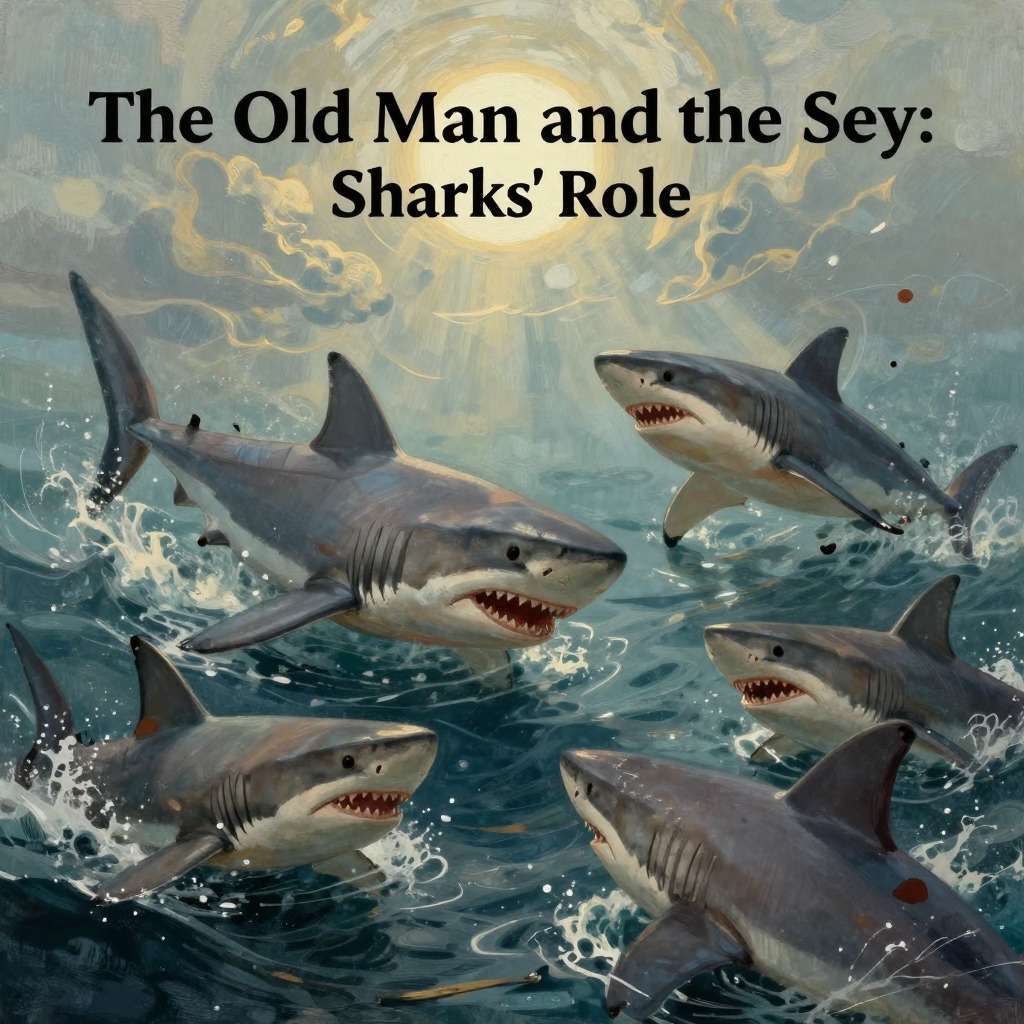
Once the marlin is killed and lashed to the skiff, the cycle accelerates into a brutal, public spectacle of consumption. The first shark, a huge Mako, tears away about forty pounds of the marlin's meat, and Santiago kills it with the harpoon, but the damage is done: the fish bleeds again, and the scent draws more sharks. The shovel-nosed sharks, or galanos, arrive in pairs and packs, ripping off quarter of the best meat, then half of the fish, until by midnight they have stripped the carcass down to the backbone and tail. Santiago fights them with a knife lashed to an oar, then a club, then the broken tiller, but he knows the fight is useless: "They came in a pack and he could only see the lines in the water that their fins made and their phosphorescence as they threw themselves on the fish." The sharks are not villains but participants in the same cycle, driven by the same hunger that drove Santiago. The old man himself acknowledges this, thinking of the Mako: "He lives on the live fish as you do. He is not a scavenger nor just a moving appetite as some sharks are. He is beautiful and noble and knows no fear of anything." The cycle does not distinguish between noble and ignoble; it simply consumes.
The Skeleton and the Market: Economic and Social Cycles
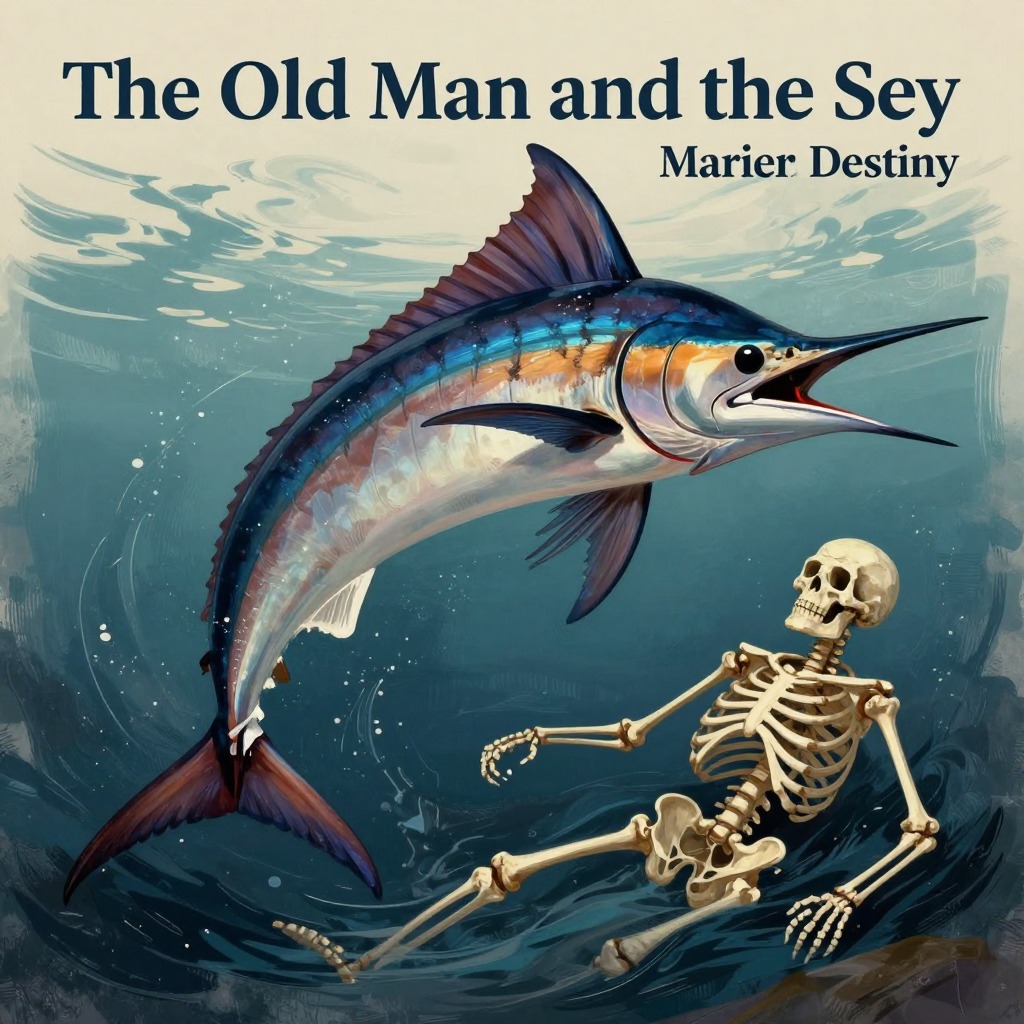
The cycle of life extends beyond the biological into the economic and social realms of the fishing village. The successful fishermen butcher their marlin and carry them to the fish house, where they wait for the ice truck to take them to market in Havana. Those who catch sharks take them to the shark factory on the other side of the cove, where the livers are removed, the fins cut off, the hides skinned, and the flesh cut into strips for salting. The old man himself thinks of the marlin's market value: "If he dresses out two-thirds of that at thirty cents a pound?" The fish is not only a brother but a fortune, a commodity that will feed a man all winter. Yet the cycle of consumption does not end with the market. The marlin's skeleton, eighteen feet from nose to tail, is left lashed to the skiff, and by the next afternoon it is "just garbage waiting to go out with the tide." A tourist on the Terrace sees the long white spine and huge tail and asks what it is; the waiter, meaning to explain, says "Tiburon"—shark. The magnificent fish, which Santiago called his brother and which had fought with more nobility than any creature he had ever seen, is reduced to a mistaken identity, a curiosity for outsiders. The cycle has turned the marlin from a living adversary into a commodity, then into waste, and finally into a misread sign.
The Old Man's Place in the Cycle: Destruction and Continuity
Santiago does not stand outside the cycle; he is fully within it, and his body bears the marks of its operations. His hands are cut and cramped, his back is raw from the line, and he feels a strange coppery taste in his mouth after the final shark attack, wondering if something in his chest is broken. He is destroyed by the ordeal in the sense that he has lost the marlin's meat, his harpoon, his knife, and nearly his life. Yet he is not defeated: "A man can be destroyed but not defeated." The cycle of life includes human endurance and will as part of its fabric. The old man returns to his shack, falls asleep face down on the newspapers, and dreams of the lions on the beach—the same lions he dreamed of as a boy, the same lions that represent a time before the cycle of fishing and killing began. The boy, Manolin, sits by him, crying, and promises that they will fish together again. The cycle continues: the old man will heal, the boy will bring new gear, and they will go out again. The sea will provide another fish, and the cycle of predation, consumption, and renewal will begin anew. The novel ends not with a resolution but with a return: the old man sleeping, the boy watching, and the lions playing in the dusk.