the dream of the lions
The Old Man and the SeaThe dream of the lions is a recurring, deeply symbolic motif in Ernest Hemingway's The Old Man and the Sea, representing Santiago's lost youth, his connection to a primal and innocent past, and his enduring, undefeated spirit. It serves as a counterpoint to the old man's present suffering and isolation, appearing at crucial moments of exhaustion and despair to offer solace and a vision of a world beyond struggle.
Origin and Content of the Dream
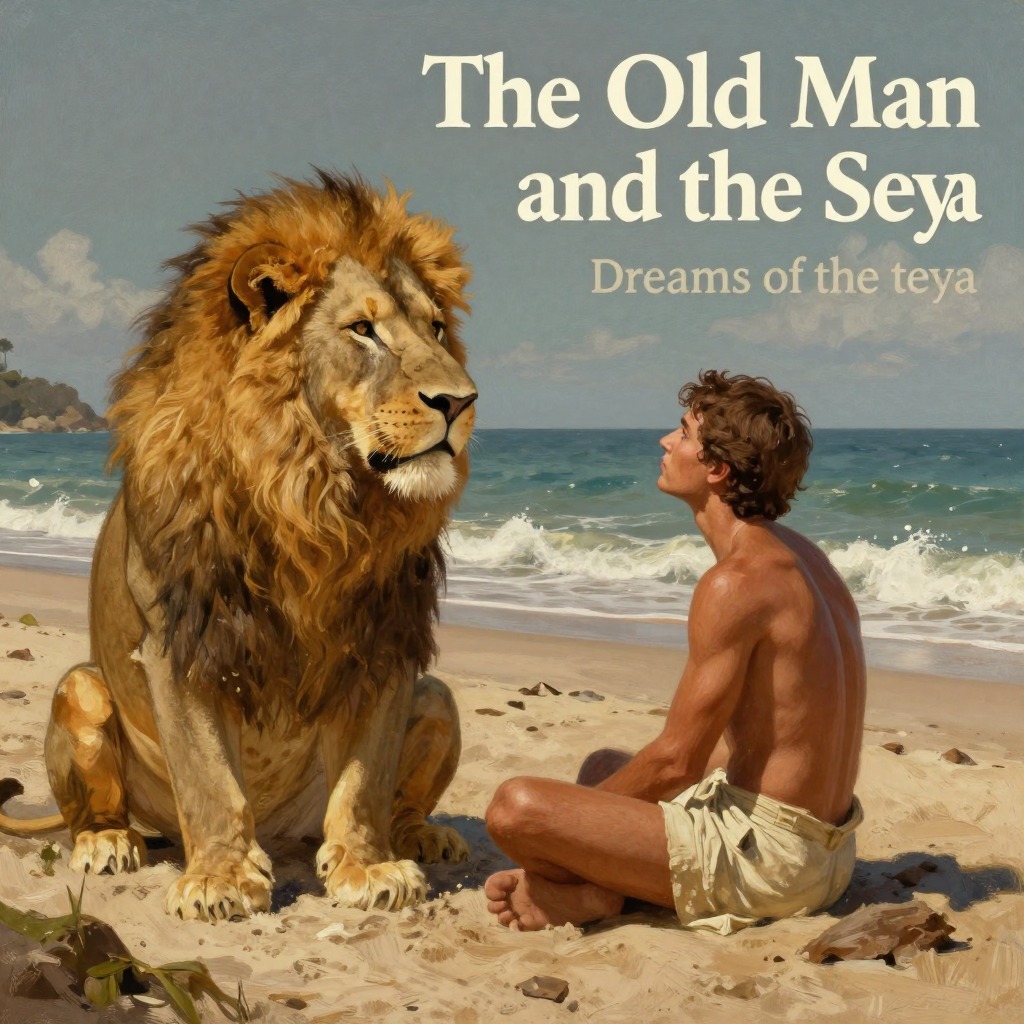
The dream originates from Santiago's youth, when he served as a boy before the mast on a square-rigged ship that sailed to Africa. He has seen lions on the beaches in the evening, a memory that becomes the core of his dream life. In the dream, the lions are not hunting or threatening; they play like young cats in the dusk on the long golden and white beaches of Africa. The old man loves them as he loves the boy, Manolin. This dream replaces all other dreams he once had—of storms, of women, of great occurrences, of great fish, of fights, of contests of strength, and of his wife. Now, he only dreams of places and of the lions on the beach.
The Dream as a Refuge from Suffering
The dream of the lions functions as a psychological refuge, a space of peace and happiness that Santiago can retreat to when his physical and mental endurance is tested to its limits. On the night before his great battle with the marlin, he falls asleep quickly and dreams of Africa, the long beaches, the high capes, and the great brown mountains. He lives along that coast every night in his dreams, hearing the surf roar and smelling the tar and oakum of the deck and the smell of Africa. During his ordeal at sea, when he is exhausted and his left hand is cramped, he wishes he could sleep and dream about the lions, thinking, "Why are the lions the main thing that is left?" Later, when he finally manages to sleep for a short time while holding the line, he does not dream of the lions but of a vast school of porpoises. However, after that, he begins to dream of the long yellow beach and sees the first lion come down onto it in the early dark, then the other lions, and he rests his chin on the wood of the bows, happy, waiting to see if there will be more lions.
The Dream as a Symbol of Undefeated Spirit
The dream of the lions is inextricably linked to Santiago's undefeated spirit. The lions, playing in the dusk, represent a state of natural, unselfconscious power and grace that is untouched by the struggles of the human world. They are a vision of a world where there is no contest, no killing, and no defeat. This is the world Santiago carries within him, the source of his cheerful and undefeated eyes. The dream is the last image of the novel. After Santiago has returned to his shack, his hands destroyed and his great fish reduced to a skeleton, he is sleeping again, face down on the newspapers, and the boy is sitting by him watching him. The old man is dreaming about the lions. This final image affirms that despite his physical destruction and the loss of his prize, the core of his being—the part that dreams of the lions—remains intact and unconquered. The dream is not an escape from reality but a deeper reality that sustains him through it.
The Dream's Contrast with the Ending
The dream of the lions stands in stark contrast to the novel's final, public image of the marlin's skeleton. While a party of tourists at the Terrace mistakes the great backbone for that of a shark, and the waiter offers a brief, inadequate explanation, Santiago is dreaming of the lions. The tourists see only a piece of garbage; the old man possesses a vision of beauty and power. The dream is a private, inviolable truth that the outside world cannot touch or understand. It is the ultimate expression of the idea that a man can be destroyed but not defeated, for the part of him that dreams of the lions—his will, his memory, his capacity for love and wonder—cannot be taken away.