the great well
The Old Man and the SeaThe great well is a sudden deep of seven hundred fathoms in the Gulf Stream, a place where the ocean floor drops steeply and the current swirls against its walls, concentrating shrimp, bait fish, and sometimes schools of squid in the deepest holes. These creatures rise close to the surface at night, drawing all the wandering fish that feed on them. For the fishermen of Havana, it is a known and productive spot, and Santiago, after a week of working the deep wells without success, decides on the eighty-fifth day of his run of bad luck to row far out beyond the other boats, to where the schools of bonito and albacore might be, hoping that a truly big fish will be among them.
Location and Characteristics
The great well lies in the part of the ocean that the fishermen call by that name because of its extraordinary depth—a sudden plunge to seven hundred fathoms. Santiago rows over it in the dark, before the sun has risen, and he can see the phosphorescence of the Gulf weed in the water. The current's swirl against the steep underwater walls creates a vortex that gathers marine life, making it a rich feeding ground. The old man knows this place intimately; he has fished it for a week without result, but he returns to it on the day that will change everything, setting his baits at precise depths—forty, seventy-five, one hundred, and one hundred and twenty-five fathoms—each bait hung head down, the hooks covered with fresh sardines, the lines as thick around as a big pencil, looped onto green-sapped sticks so that any pull will make them dip.
Santiago's Fishing Strategy
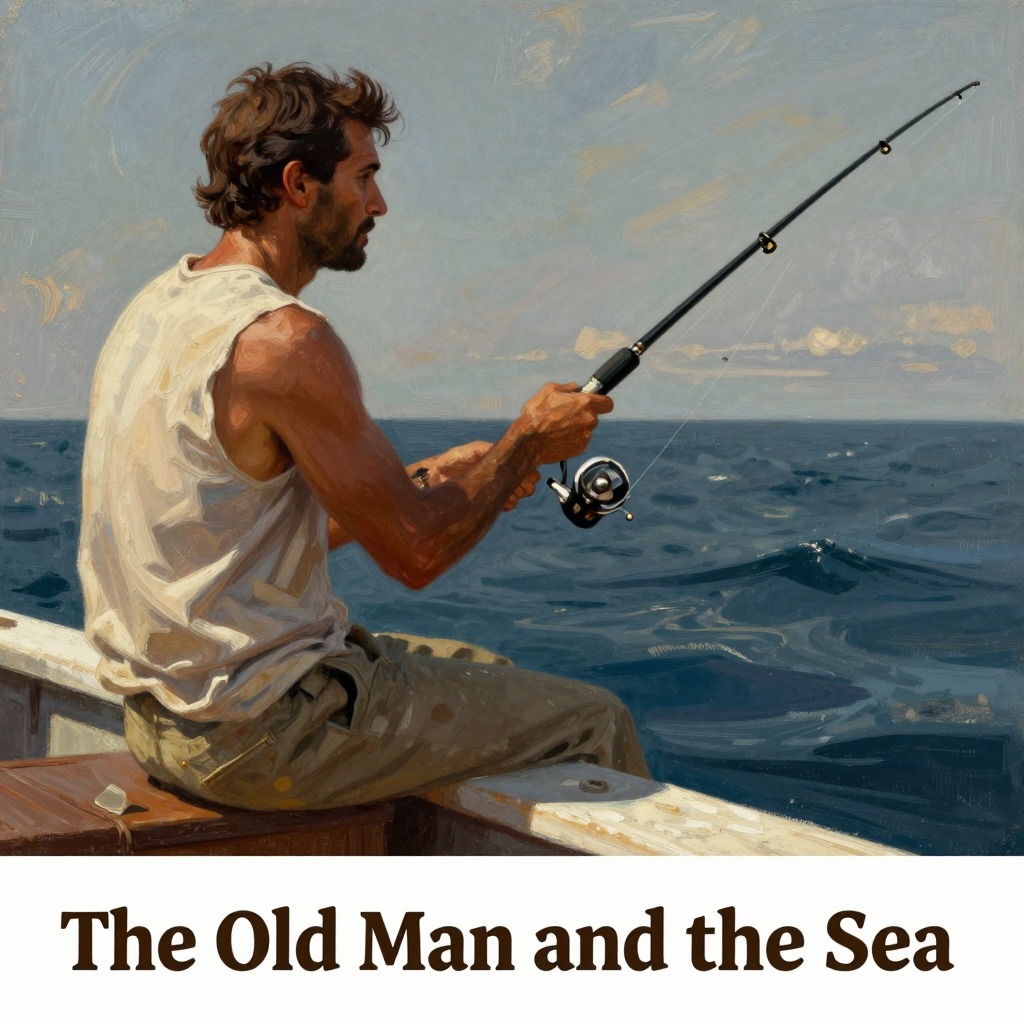
Santiago's approach to the great well is methodical and exact. He keeps his lines straighter than anyone else, ensuring that at each level in the darkness of the stream there is a bait waiting exactly where he wishes it to be for any fish that swims there. Others let their lines drift with the current, sometimes at sixty fathoms when they think they are at a hundred, but Santiago prides himself on precision. "Only I have no luck any more," he thinks, but he adds, "It is better to be lucky. But I would rather be exact. Then when luck comes you are ready." It is at the great well, while watching his lines, that he sees one of the projecting green sticks dip sharply, and he knows that a marlin, one hundred fathoms down, is eating the sardines that cover the hook. The fish takes the bait, and Santiago feels the weight—hard and unbelievably heavy—and lets the line slip down, down, down, unrolling off the first of the two reserve coils.
The Hooking and Its Consequences
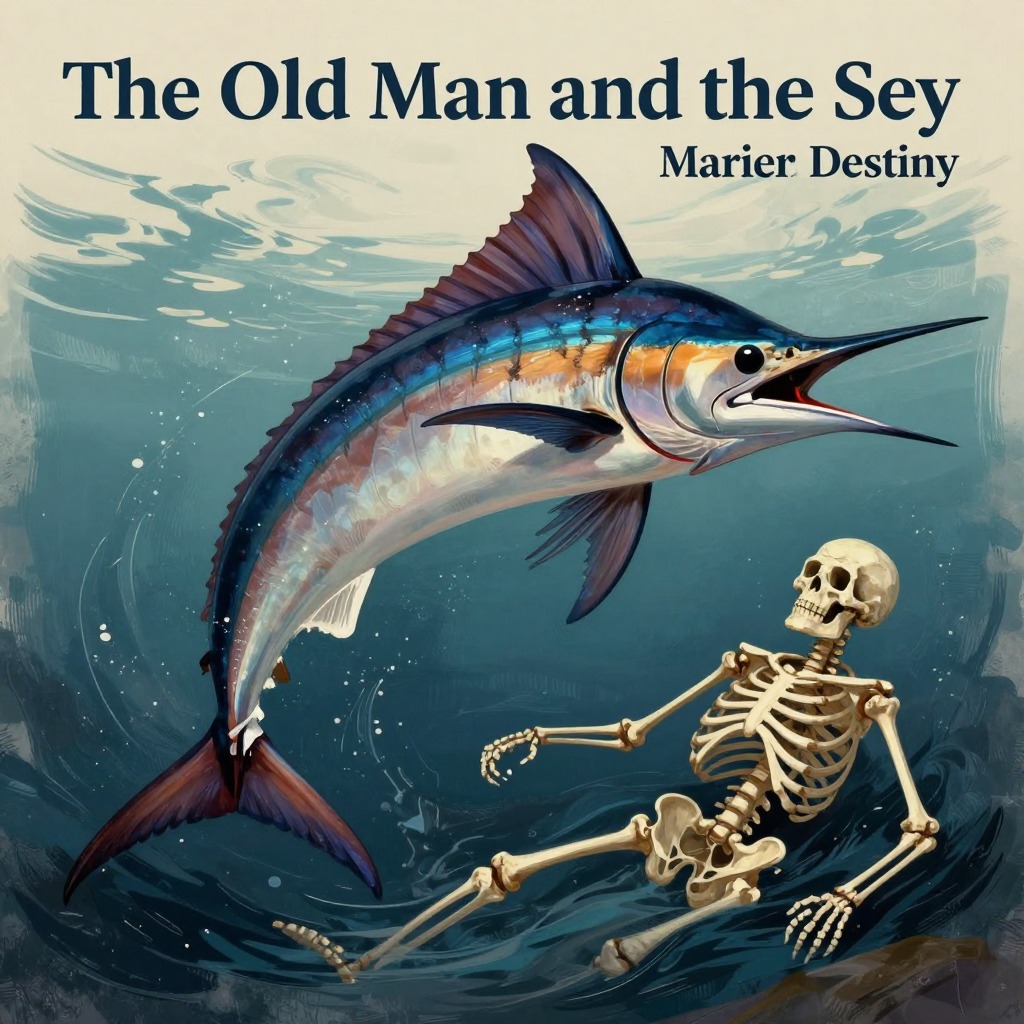
The hooking at the great well sets in motion the entire central drama of Santiago's voyage. The fish, which he later estimates to be over fifteen hundred pounds and two feet longer than his skiff, begins to tow him steadily toward the northwest. Santiago is alone, out of sight of land, and he must hold the line across his back, braced against the thwart, for hours and then days. The great well is thus the threshold between his long run of bad luck and the supreme test of his skill, endurance, and will. It is the place where his precision and his decision to go "far out" converge, leading him to the biggest fish he has ever seen or heard of, and to the subsequent attacks by sharks that strip the marlin to a skeleton before he can bring it home.
Narrative and Thematic Significance
The great well functions as a narrative pivot and a symbol of Santiago's relationship with the sea. It is a place of abundance and danger, where the ocean's hidden depths yield both life and death. The old man's choice to fish there, rather than closer to shore, reflects his willingness to gamble, to push beyond the ordinary limits of luck and safety. The great well is also a reminder of the sea's vastness and mystery—a mile deep in places, with currents and creatures that the fishermen can only partially understand. When Santiago finally returns to the harbor, his skiff towing the great fish's skeleton, the great well is left behind, but its consequences—the marlin's capture, the shark attacks, the old man's exhaustion and his dream of the lions—define the story's arc. The great well is not merely a location; it is the point of no return, the place where Santiago's fate is sealed.