the lottery
The Old Man and the SeaThe lottery appears in The Old Man and the Sea as a concrete, recurring symbol of hope, luck, and the economic precariousness of Santiago's life. It is not a mere abstraction but a practical, if desperate, plan that the old man and the boy Manolin discuss on the eve of Santiago's fateful voyage. The lottery represents the possibility of a windfall that could break the old man's streak of bad luck, a tangible wager against the odds that mirrors the gamble he takes each day on the sea.
The Lottery as a Plan and a Gamble
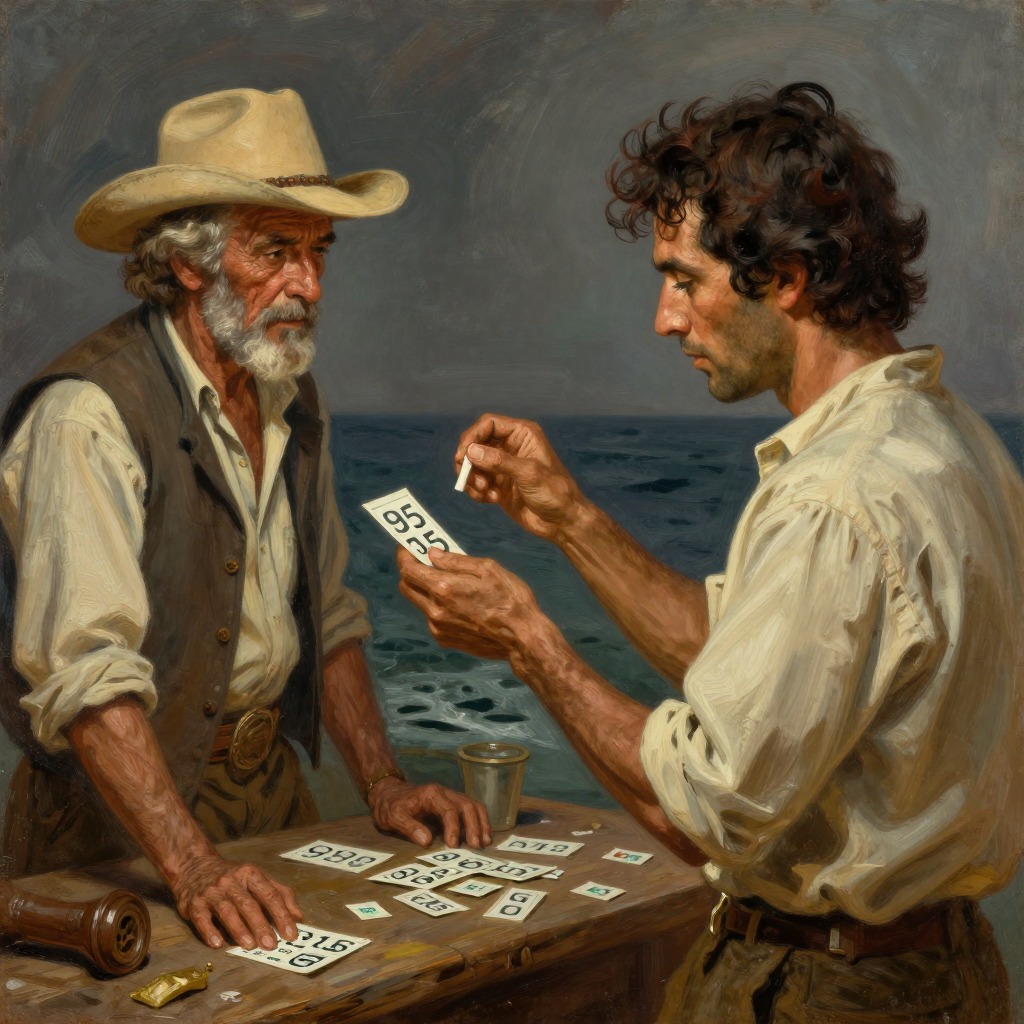
On the night before he sets out, Santiago proposes to Manolin that they buy a terminal of the lottery with the number eighty-five, as the next day will be the eighty-fifth day of his unlucky streak. The boy reminds him of the eighty-seven-day record, suggesting that a repeat of that triumph might be unlikely. Santiago acknowledges this, asking if the boy can find an eighty-five, and Manolin offers to order one. The cost is two dollars and a half for a single sheet, a sum neither of them has. Santiago reflects on the difficulty of borrowing, stating, "First you borrow. Then you beg," revealing his pride and his aversion to dependency. The lottery is thus not just a symbol of hope but a concrete economic transaction, a small investment in a future that might redeem his present poverty.
The Lottery as a Metaphor for Existence
Beyond its literal appearance, the lottery functions as a metaphor for the fundamental gamble of Santiago's life and his relationship with the sea. The old man's entire existence as a fisherman is a lottery: he goes out each day not knowing if he will catch anything, and his eighty-four-day run of bad luck is a prolonged losing streak. The sea itself, which he thinks of as feminine and capricious, "gives or withheld great favours" like a lottery. His decision to go "far out" is a high-stakes bet, and the marlin he hooks is the ultimate prize. The subsequent attacks by sharks, which strip the marlin to a skeleton, represent the cruel randomness of the sea's lottery, where even a great victory can be undone by subsequent losses. The lottery thus encapsulates the novel's central tension: the human will to gamble against fate, and the acceptance that luck is a force beyond control.
The Lottery and the Theme of Luck
The lottery is inextricably linked to the novel's exploration of luck. Santiago's long streak of bad luck has earned him the label "salao," the worst form of unlucky, and his community treats him with a mixture of pity and mockery. The lottery offers a potential, if unlikely, escape from this designation. When Santiago finally hooks the great marlin, he feels a resurgence of hope, but the subsequent destruction of his prize by sharks leads him to reflect, "You violated your luck when you went too far outside." This suggests that luck is not merely random but can be squandered or transgressed. The lottery, then, is a symbol of the human attempt to court luck, to buy a chance at reversing one's fortune, even as the novel ultimately suggests that true luck is not something that can be purchased but is a quality of the spirit, as embodied by Santiago's undefeated eyes and his refusal to be defeated.
The Lottery and the Economic Reality of Santiago's Life
The lottery also grounds the story in the harsh economic reality of Santiago's existence. His shack is bare, with a bed, a table, one chair, and a dirt floor for cooking. He and Manolin go through a daily fiction about having a pot of yellow rice and fish, knowing they have none. The two dollars and a half for a lottery ticket is a significant sum for a man who has not caught a fish in eighty-four days. The lottery thus represents a desperate hope for economic salvation, a way to buy food, new gear, or even a new boat. It is a small, tangible symbol of the poverty that defines his life and the slim chance of escaping it. The fact that he must borrow the money to buy the ticket underscores his vulnerability and the gamble he is taking, not just on the sea, but on the very system of chance that governs his livelihood.