the porpoises
The Old Man and the SeaIn the vast solitude of the Gulf Stream, the porpoises emerge as one of the few creatures Santiago explicitly names as his brothers, alongside the flying fish. They represent a form of life untouched by the predatory violence that defines his epic struggle. When he hears them rolling and blowing around his skiff during the long night after hooking the marlin, he immediately identifies them as good, playful beings who love one another. This moment of recognition, occurring while he is braced against the line with the great fish towing him steadily out to sea, offers a brief respite from the relentless physical and mental strain. The porpoises embody a natural fellowship that stands apart from the contest of wills between the old man and the marlin, and from the brutal, scavenging hunger of the sharks that will later destroy his prize.
Brotherhood and the Sea's Community
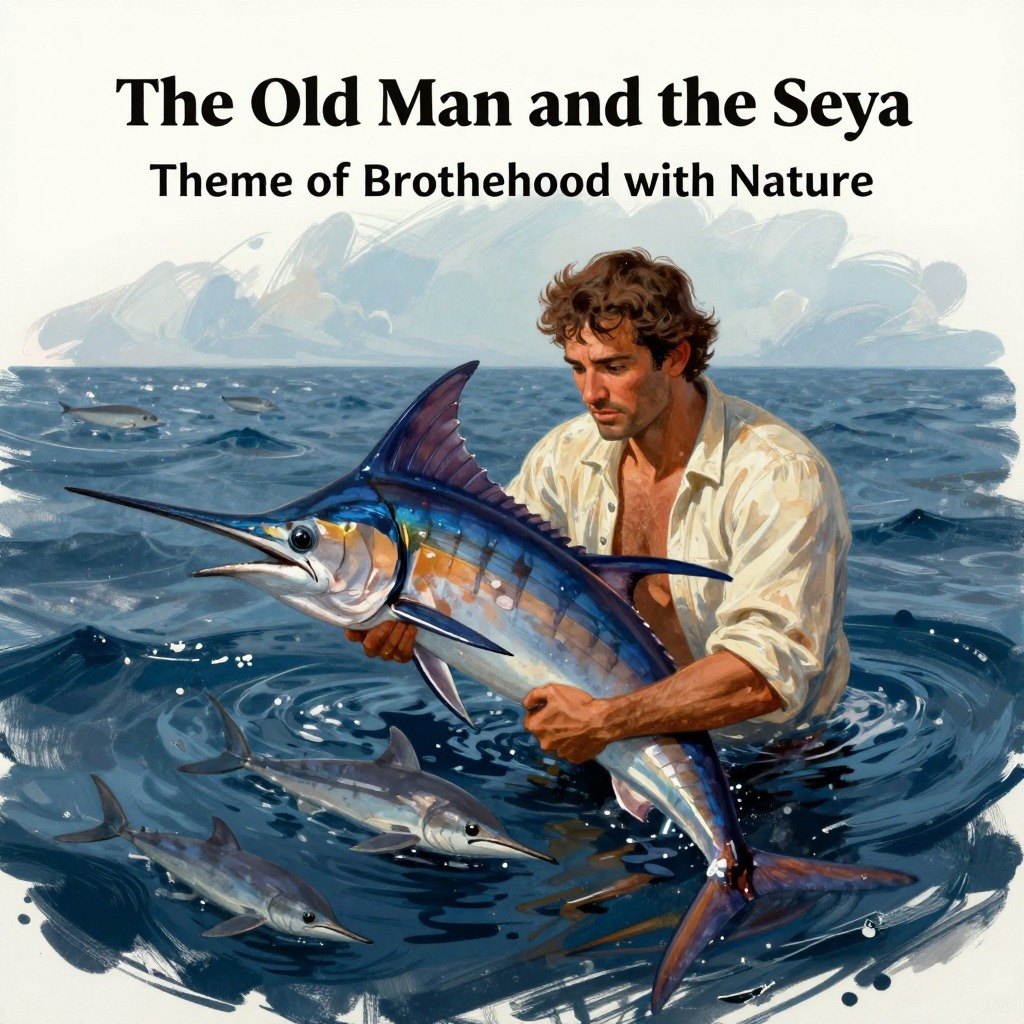
Santiago's relationship with the porpoises is defined by a sense of kinship that transcends the hunter-prey dynamic. He explicitly states, "They are good... They play and make jokes and love one another. They are our brothers like the flying fish." This declaration, made aloud to himself in the darkness, establishes the porpoises as part of a select group of sea creatures he regards with affection and respect. Unlike the marlin, which he must kill, or the sharks, which he must fight, the porpoises exist in a realm of mutual recognition and shared existence. They are not rivals, enemies, or sources of food; they are companions in the ocean's vastness. This brotherhood is a key element of Santiago's personal code, a way of understanding the sea not merely as a battleground or a source of livelihood, but as a community of living beings, each with its own nature and place.
The Dream of the Porpoises
The porpoises also inhabit Santiago's subconscious, appearing in his dreams during the rare moments of sleep he manages to steal. After he has rigged a way to rest while still holding the line, he falls asleep and does not dream of the lions that usually visit him. Instead, he dreams of "a vast school of porpoises that stretched for eight or ten miles and it was in the time of their mating and they would leap high into the air and return into the same hole they had made in the water when they leaped." This dream is a vision of pure, abundant life, of a natural world operating in perfect, joyful rhythm. The image of the porpoises leaping and returning to the exact same hole in the water suggests a cycle of harmony and precision, a stark contrast to the chaotic, destructive struggle he is enduring. The dream provides a moment of mental escape and replenishment, a glimpse of the sea's beauty and order that exists beyond the immediate crisis of his fight.
Contrast with the Sharks and the Marlin
The porpoises serve as a crucial counterpoint to the other major sea creatures in the narrative. Where the marlin is a noble adversary, a brother in the sense of a worthy opponent, the porpoises are brothers in a more peaceful, fraternal sense. The sharks, particularly the galanos, are the antithesis of the porpoises: they are scavengers, killers driven by mindless hunger, creatures Santiago despises for their ugliness and lack of nobility. The porpoises, by contrast, are associated with play, love, and communal life. They represent the sea's capacity for grace and joy, a quality that Santiago deeply values. This contrast reinforces the moral and emotional landscape of the story, where the old man navigates a world of both profound beauty and brutal necessity. The porpoises are a reminder that the ocean is not only a place of solitary struggle but also of shared, harmonious existence, a truth that sustains Santiago even as he faces his greatest trial.