the robber birds
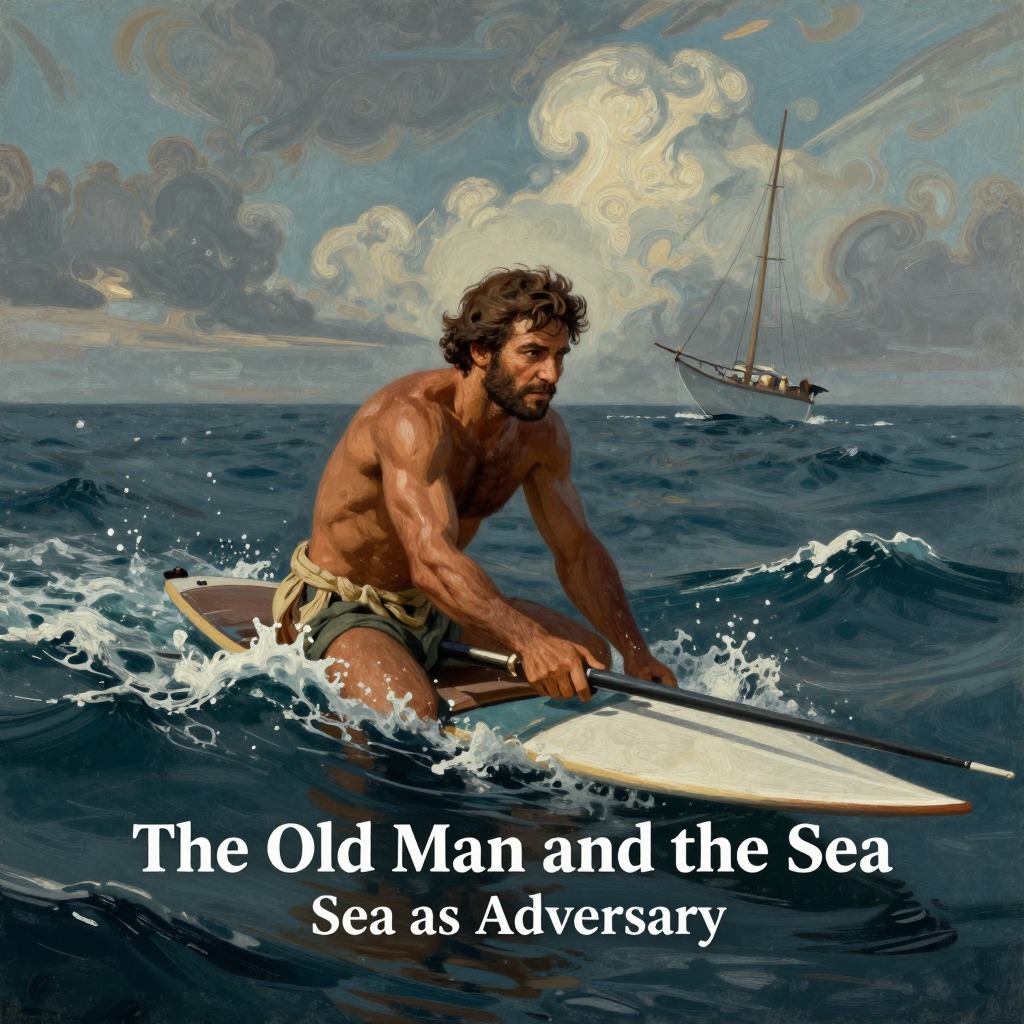
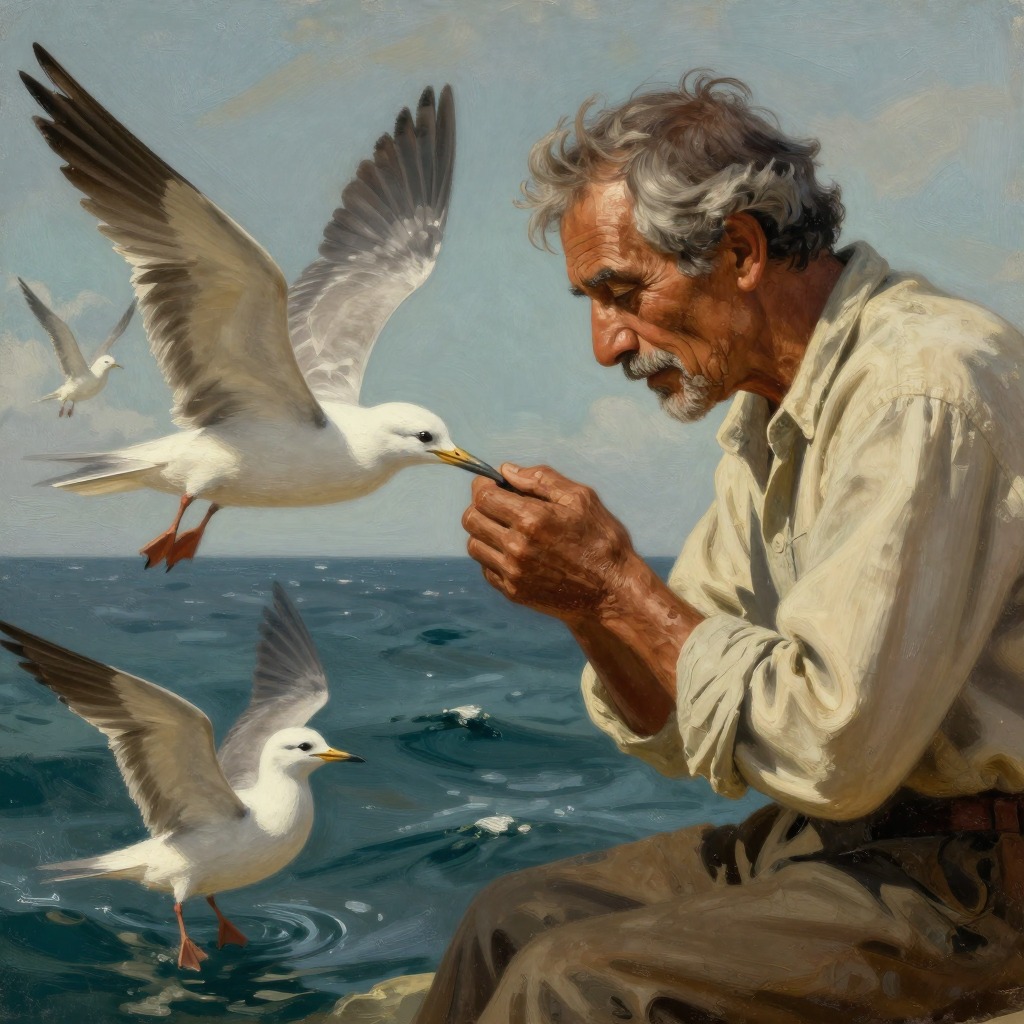
The Old Man and the SeaIn the vast, indifferent expanse of the Gulf Stream, Santiago, the old fisherman, categorizes the seabirds he observes into two distinct groups: the delicate, struggling ones and the predatory, successful ones. The robber birds belong to the latter category, embodying the harsh, competitive reality of the ocean where strength and predation determine survival. They are the heavy, strong birds that Santiago contrasts with the small, delicate dark terns and sea swallows, which he pities for their constant, often fruitless search for food. The old man reflects that the birds have a harder life than humans, except for the robber birds and the heavy strong ones, implying that these predators are better equipped to thrive in the ocean's cruel environment. This distinction underscores Santiago's understanding of the natural world as a place of inherent inequality and struggle, where some creatures are built to dominate and others to endure hardship.
The Robber Birds as a Contrast to Delicate Seabirds
Santiago's sympathy for the small, delicate dark terns and sea swallows is rooted in his perception of their vulnerability. He observes them always flying and looking, almost never finding, and he thinks, "the birds have a harder life than we do except for the robber birds and the heavy strong ones." This comparison highlights the robber birds as exceptions to the general rule of avian hardship. While the terns and swallows are made too delicately for the sea's cruelty, the robber birds are built to exploit the ocean's resources effectively. The old man's pity for the weaker birds is a measure of his own empathy, but his acknowledgment of the robber birds' success reflects his acceptance of the ocean's brutal logic, where only the fittest and most aggressive can avoid constant struggle.
The Robber Birds and the Ocean's Cruelty
The robber birds are implicitly linked to the ocean's capacity for sudden, overwhelming cruelty. Santiago thinks of the sea as "la mar," a feminine entity that is kind and very beautiful but can be so cruel, and it comes so suddenly. The robber birds, unlike the delicate sea swallows, are not victims of this cruelty but rather its beneficiaries or agents. They are part of the ocean's system of predation, where strength and opportunism are rewarded. This perspective aligns with Santiago's broader view of the sea as a living, feminine force that gives or withholds great favors, and if she does wild or wicked things, it is because she cannot help them. The robber birds, in this framework, are one of the sea's instruments of wildness, thriving in the same environment that destroys the more fragile creatures.
The Robber Birds as a Symbol of the Fisherman's World
The concept of the robber birds extends beyond ornithology to reflect the social and economic realities of Santiago's world. The fishermen who make fun of the old man, the successful ones who butcher their marlin, and the shark factory that processes the catch all operate within a similar logic of predation and competition. The robber birds, as predators, mirror the human activities of fishing and commerce, where the strong and lucky take the spoils. Santiago himself, in his epic struggle with the marlin, must adopt the role of a predator, killing his "brother" fish for survival and pride. The robber birds thus serve as a natural analogue to the human struggle for existence, where the line between the hunter and the hunted is constantly blurred, and where, as Santiago reflects, "everything kills everything else in some way."