
Human Contradictions
The One and Only IvanThe animals encounter humans as both destroyers and rescuers, forcing the story to distinguish individual kindness from harmful systems.
increasing Bearing strength in each event
 decreasing
Bearing strength in each eventdecreasingChildren at the Glass
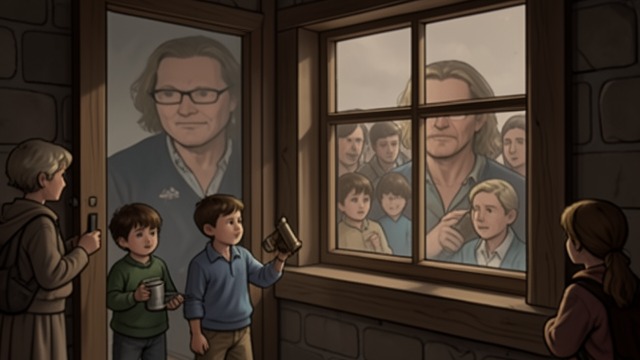
Children at the Glass
Cruelty at close range
Some children spit at Ivan's window and throw pebbles. The glass protects him from direct harm but also leaves him exposed to staring and taunting.
Judgment held in reserve
Ivan calls them names and regrets it later, remembering his mother's likely disapproval. The scene shows that humans can behave cruelly while Ivan's response remains complicated by the animal's own restraint.
A Rescue by Villagers
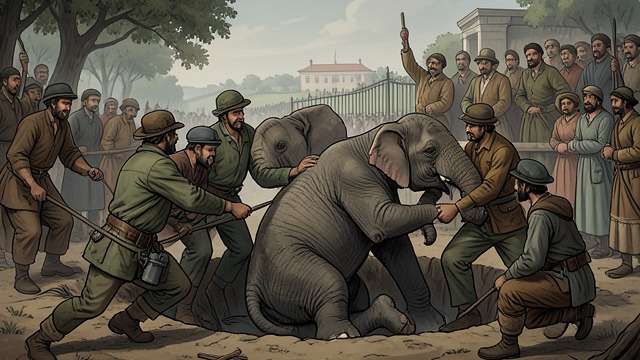
A Rescue by Villagers
Help without profit
Villagers pull Ruby from the pit and guide her back toward her family. Children and older people participate, acting because a young elephant is in danger.
A complication for distrust
Ruby's memory contradicts Bob's belief that humans are uniformly harmful. The rescue does not excuse the later killing of her family or her capture, but it prevents either character from treating all human behavior as identical.
Mack's Mixed Kindness
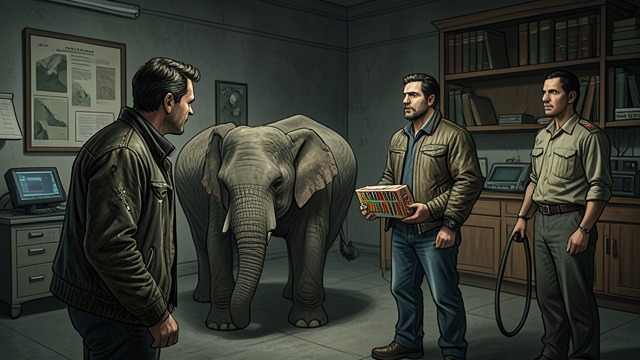
Mack's Mixed Kindness
Care remembered
Mack raised Ivan in a household, shared outings with him, and later gives money for Julia's crayons. On the night before relocation, he recalls their early adventures and says he will miss Ivan.
Harm remains real
Mack also keeps Ivan alone, sells his art, and controls Ruby's training. The story allows affection and responsibility to coexist without letting personal tenderness erase the structures of captivity.
George and Julia Choose Help
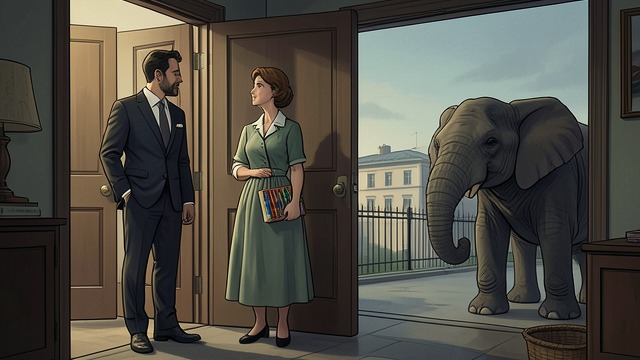
George and Julia Choose Help
Risk acknowledged
George knows helping could cost him his job, especially because his family needs income and his wife has medical bills. Julia nevertheless asks him to consider what will happen to Ruby if no one intervenes.
Ethical action under pressure
George agrees to help without certainty that publicity will work. Their decision shows a form of human responsibility that is imperfect and costly, but capable of changing what the animals can expect.
Care Beyond the Mall
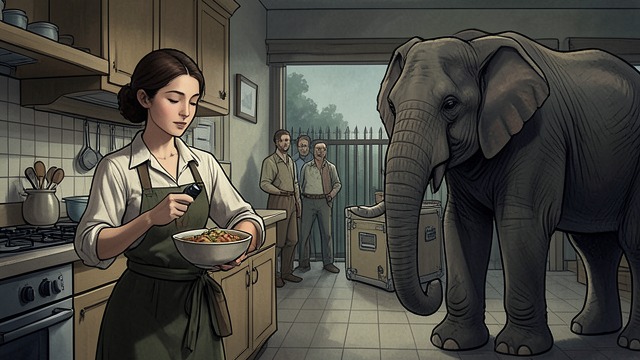
Care Beyond the Mall
Patient human support
Maya uses food and clicker training to help Ivan and Ruby approach transport boxes. She later offers Ivan a chance to meet the gorillas without forcing him through every step at once.
A different relationship
The care does not make confinement disappear, but it contrasts with coercive training at the mall. Human behavior can create fear or support adaptation, depending on whether it attends to the animal's needs.
Early in the story, during a visit from children who spit and throw pebbles
Before Ruby's circus capture, as recalled in her story to Ivan and Bob
Across Ivan's recollections of life with Mack, especially during the late-night photograph visit
The night Julia asks George to put Ivan's image on the billboard
After relocation, when Maya introduces Ivan to the gorilla group
