Capture of Ivan and Tag
The One and Only IvanThe capture of Ivan and Tag marks the violent break between their family life and the human-controlled existence that follows. On a still, hot day, humans arrive and take the siblings; their confinement in a crate becomes the setting for Ivan’s recognition that survival will require him to leave his former life behind. The event is also bound to an earlier family loss: Ivan remembers that humans killed his parents while he and Tag clung to their mother. For Ivan, capture is therefore not merely a change of place. It is the culmination of a rupture in which family, home, and safety are taken from him at once.
Family Loss Before the Capture
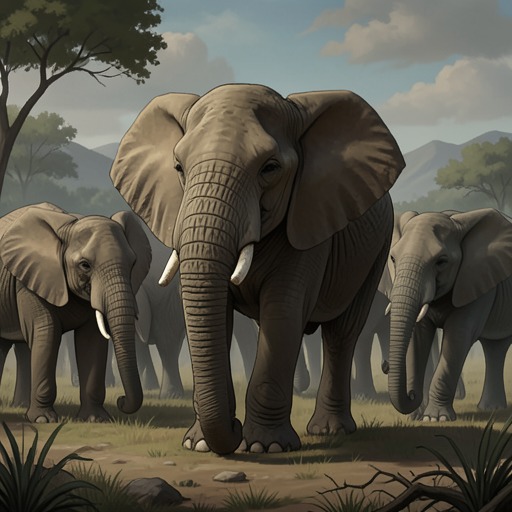
Ivan’s recollection begins with his parents’ deaths. He remembers clinging to his mother with Tag when humans killed her, and remembers that they killed his father next. The account does not elaborate on the interval between this violence and the siblings’ capture, but it places the loss of their parents within the same remembered history of human intervention that ends with Ivan and Tag being taken away.
The order matters to the event’s emotional shape. The siblings are not simply removed from an intact family home: by the time humans capture them, their parents have already been killed. Their shared dependence on their mother, recalled at the moment of her death, makes the later separation from home part of a wider collapse of family security. Ivan’s account keeps these losses connected without suggesting that the siblings understand or experience them in the same way.
The Siblings Are Taken
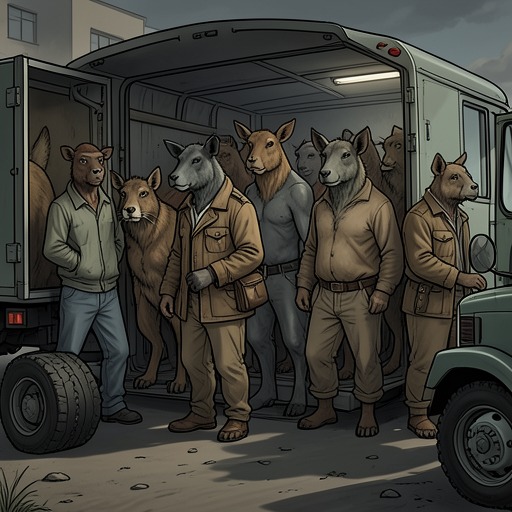
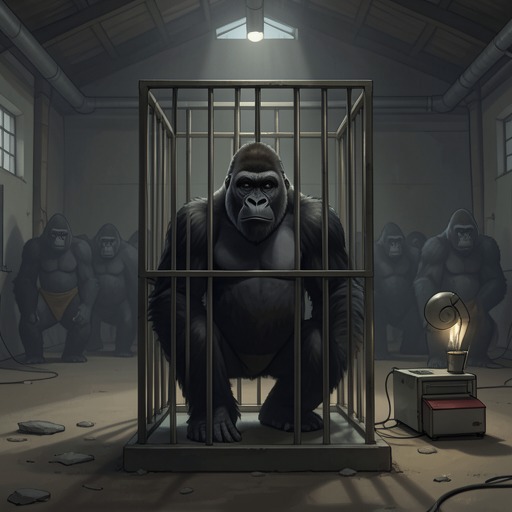
The capture happens on a day Ivan remembers as still, with the hot air humming. Humans come and take both Ivan and Tag. They are placed together in a cramped, dark crate, a confined space that sharply contrasts with the home they have left. The crate is not a temporary pause in an otherwise unchanged life: it is the first enclosure in a sequence that will carry Ivan into human ownership.
Inside the crate, Ivan arrives at a conclusion that Tag cannot share. He understands that, if he is to live, he must let his old life die. The thought is not a claim that the past has become unimportant; it describes the painful adjustment he believes survival requires. In the immediate aftermath of capture, accepting the loss of home becomes a means of continuing, even as the physical confinement gives that loss a present and unavoidable form.
Tag’s Attachment to Home
Tag remains held by the home the siblings have lost. Ivan compares that attachment to a vine extending across the miles: it comforts her, but also strangles her. The image captures the double force of memory in his account. Home remains a source of connection, yet the bond also prevents Tag from making the break that Ivan thinks survival demands. The siblings are in the same crate, facing the same capture, but their responses to separation diverge.
While they are still confined together, Tag looks at Ivan without seeing him. Ivan understands the gesture as the moment when the vine has finally snapped. The account does not explain precisely what Tag experiences or establish what happens to her afterward; it records Ivan’s perception of a decisive change in her relation to home. Her unseeing look turns the capture’s physical confinement into a moment of emotional separation as well. Ivan’s judgment is spare, but it conveys how completely the former life has become unreachable to them.
Aftermath and Recollection
The crate leads directly into Ivan’s relationship with Mack. Mack pries it open, buys Ivan, and raises him like a human baby. That sequence gives the capture a concrete consequence: Ivan passes from the place and family he remembers into a life shaped by a human purchaser. The account does not describe a comparable outcome for Tag, so her fate should not be inferred from Ivan’s image of the snapped vine.
The memory also returns later, when Ivan lies awake thinking about the promise he made to Stella and the pictures he has made for Ruby. He remembers the past in full, including what humans did to his family. Set alongside his present responsibilities, the recollection makes the capture more than a piece of personal history: it is a source of knowledge about the losses that can lie behind an animal’s human-managed life. Ivan’s understanding that he had to let the old life die stands in stark contrast to the promise he now carries for Ruby. The earlier capture shows the cost of being taken; the later promise gives Ivan a reason to act for another animal facing an imposed future.