Home and belonging
The One and Only IvanHome and belonging are measured not simply by where an animal lives, but by whether that place offers safety and by whom it holds close. Across Ruby’s bedtime story, Ivan’s painted letters, and their argument over the mall, home changes from a hoped-for destination into a difficult distinction between attachment and captivity. At the end, Ivan’s own recognition of family and home gives the idea a different, lived meaning.
A promise of safety
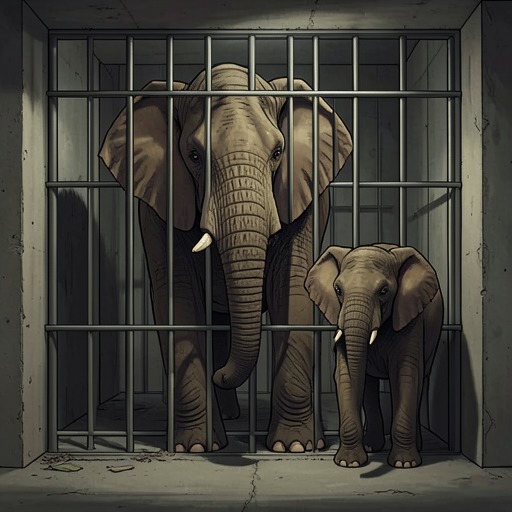
When Ruby asks what a zoo is, Ivan answers with a moral definition rather than a description of buildings or enclosures: “A zoo, Ruby, is a place where humans make amends. A good zoo is a place where humans care for animals and keep them safe.” The answer makes home depend on care. A place qualifies not because it is called a zoo, but because humans there protect the animals in their charge.
Ivan frames that explanation as a bedtime tale about a brave baby elephant who needs to reach a zoo. Ruby’s questions keep the tale close to its central uncertainty: she asks what a zoo is and how the elephant will get there. Ivan does not explain the journey. Instead, he tells her that the elephant “had a friend” who “made a promise.” The promise supplies the story’s emotional assurance without supplying its practical route. Ruby eventually returns to sleep, but the tale leaves its essential question of arrival suspended: safety is imagined as something a friend must help bring about.
Making home legible
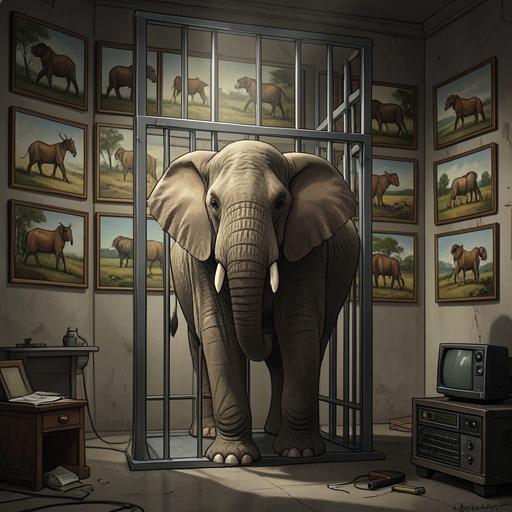
Home also becomes a word Ivan has to construct. He explains to Bob that he is learning to make letters and needs three more before he will have a word; when Bob asks which word, Ivan answers, “Home.” The physical process matters: Ivan dips his fingers into paint to continue. An idea that has so far appeared in a spoken story is becoming something he can make visible, letter by letter.
Bob’s quiet response—that the word is not important—sets his casual assessment against Ivan’s effort. Ivan does not argue the point. The scene instead lets the work itself express the word’s importance: he is counting the letters still needed and returning to the paint. Home is not an effortless abstraction for him; it is a message that must be assembled before it can be shown.
When Julia recognizes H-O-M-E in the ring, the letters become public and legible. She pumps her fist and celebrates the word, while George suggests it might be coincidence, comparing the result to a chimpanzee at a typewriter. Ivan answers with a grumbling noise and rejects the comparison. The exchange leaves room for George’s doubt but makes clear that Ivan understands the act as more than random marks. Ruby calls the zoo very nice, and Bob agrees; beside their approval, the revealed word joins the place to the possibility of home.
Attachment and confinement
That possibility becomes painful when Ivan tries to explain Ruby’s impending journey. He tells her that the box may take her somewhere with other elephants, more room, and humans who care about her. Even as he speaks, he remembers the last box he was in and shudders. His reassurance is therefore not simple confidence: his own memory makes the means of transport frightening even while he hopes the destination will be better.
Ruby rejects the proposed definition of home. “I don’t want a zoo,” she says. “I want you and Bob and Julia. This is my home.” Her words make belonging intensely relational: the people she names matter more to her than the promise of another place. Ivan does not deny that attachment. He counters, “No, Ruby. This is your prison.” The disagreement turns on two realities that coexist without becoming equivalent. The mall contains relationships Ruby loves, but Ivan insists that those relationships cannot make captivity a safe or suitable home.
The scene sharpens the distinction introduced in Ivan’s story. A good zoo is defined by care and safety; Ruby’s declaration, by contrast, shows how a captive animal can feel at home with trusted companions even in a place Ivan identifies as a prison. Her attachment is real, but the text does not present it as proof that the mall is good for her. Ivan’s insistence asks him to oppose the comfort she knows in favor of the safer home he has promised her.
Home as a lived recognition
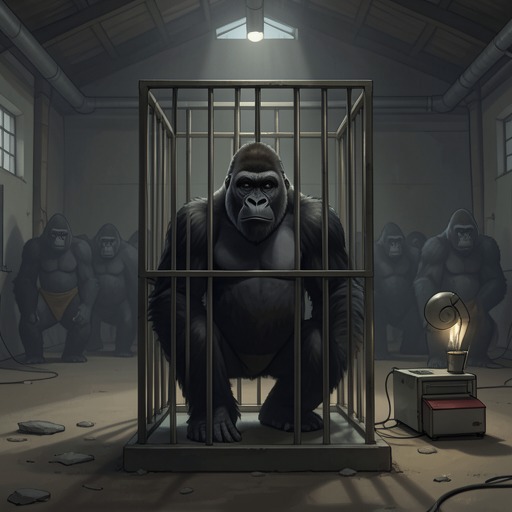
At the close, the zoo’s pathway lamps come on as the others turn to leave. Bob calls to Ivan from Julia’s backpack, naming him the One and Only Ivan. Ivan nods and turns toward “my family, my life, my home,” then whispers, “Mighty Silverback.” The movement gathers the three terms together: home is no longer only the destination in a story told to Ruby or the word Ivan painstakingly paints. It is connected to the family and life toward which he turns.
That ending does not erase the earlier conflict between Ruby’s chosen attachments and Ivan’s judgment about the mall. Instead, it gives the theme a changed perspective. Ivan has spoken of home as a place where humans make amends and animals are kept safe; he has tried to make the word visible for others; and he has told Ruby that affection cannot transform a prison into a proper home. In the final image, belonging is also something he recognizes in his own direction of attention. The closing whisper echoes Bob’s public address, but Ivan’s turn toward family, life, and home makes the recognition his own.