Memory and identity
The One and Only IvanMemory and identity are closely joined in Ivan’s story: remembering is not simply recovering lost information but facing the experiences that have shaped him and acting on what they mean. Stella gives him a way to understand that work, and his later recollections connect the long span of his captivity to the promise he makes to protect Ruby.
Memory as a Choice
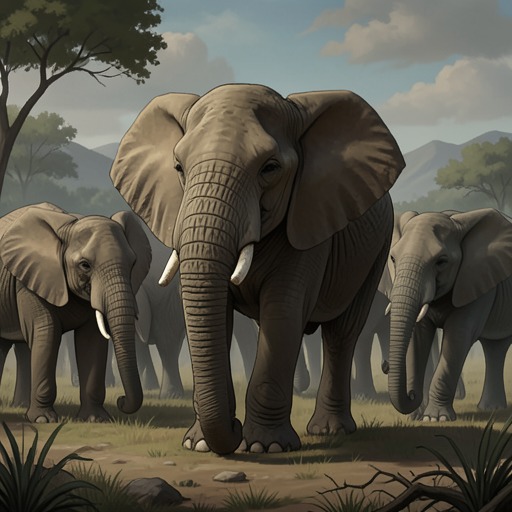
Stella urges Ivan to remember a good day when he cannot sleep. Her advice rests on her own unusually complete memory: she remembers each moment from birth, including sensory impressions, setbacks, and victories. Against this capacity, Ivan says he cannot remember much. Stella gently distinguishes an inability to remember from a refusal to remember, and Ivan acknowledges that forgetting has been something he has had time to practice. The distinction makes memory more than a passive faculty: it may be painful, but turning away from it is also a response.
Stella describes memories as precious because they help tell someone who they are. She asks Ivan to recall the people who cared for him, including Karl, a keeper he liked. Ivan remembers Karl giving him a coconut when he was still young; opening it occupied the whole day. Other keepers come back in separate, ordinary details: Juan poured Pepsi into his waiting mouth, Katrina disturbed him with a broom while he slept, and Ellen sang as she cleaned his water bowl. These recollections do not make the humans around Ivan uniformly kind or cruel. Instead, they restore a varied history of companionship, care, and unpleasant treatment, helping him recover a past more complicated than a single, fixed account.
Counting the Captive Years
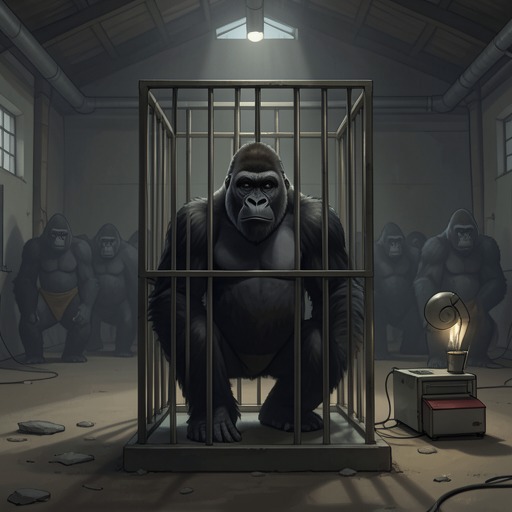
One night, while Ruby and Bob sleep, Ivan finds himself remembering for perhaps the first time. He reflects on the unusual shape of his life, with a brief beginning and an apparently endless middle, and counts the days spent with humans. Although many things have faded from memory, he has always known precisely how long he has lived in his domain: 9,876 days. The number makes time in captivity measurable even when much of the life lived within it is difficult to recall.
Ivan turns that count into a physical record. Using one of the Magic Markers Julia gave him, he draws a small X on his painted jungle wall, then adds more marks, one for every day of his life with humans. The marks make a private measure visible. A wall painted as jungle becomes a surface for recording the duration of confinement; each X is both a day counted and a unit in a history Ivan is beginning to face. His repeated action contrasts with the gaps in his memory: what he cannot retrieve as a complete narrative, he can still preserve through counting.
The Return of the Past
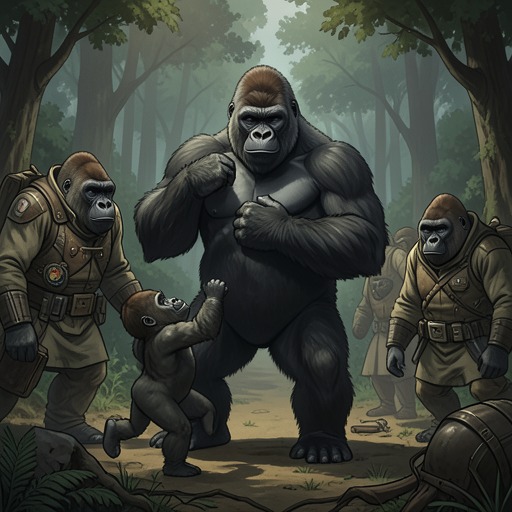
Later, Ivan stays awake while Bob and Ruby sleep and thinks about his promise to Stella and the pictures he has made for Ruby. He remembers everything. The recollection reaches back to his childhood: he and his sister were clinging to their mother when humans killed her, and his father was shot afterward. The memory supplies a history of violence behind Ivan’s long separation from his family, one that had not been fully present to him before this moment. Its return is difficult, but the narrative places it alongside his present attachments rather than treating it as an isolated fragment.
The memories of his parents’ deaths also stand beside Ruby’s account of villagers coming to her rescue. Ivan recalls Stella’s belief that humans can sometimes surprise others. These memories complicate any simple judgment of people: humans have taken his family from him, yet a story of human rescue and Stella’s counsel remain part of what he remembers. The contrast does not erase the past. It gives Ivan more than one human action to consider as he decides what his own response will be.
Memory Put to Work
Ivan looks at his fingers, coated in red paint, and understands how to keep his promise to Stella. The moment joins recollection to action: the past is no longer only something he has avoided or counted, but a source of resolve in the present. His memory of Stella’s request, his renewed awareness of his own history, and the pictures made for Ruby converge around his responsibility to her.
The pattern continues in the division between waiting by day and painting by night. Remembering is linked to the work of making pictures, while the X marks preserve the days themselves. Together, these acts give Ivan ways to record and communicate what otherwise remained private: an accumulated life, a painful family history, and a commitment that survives Stella’s absence. Memory therefore changes not only what Ivan knows about himself, but what he can do for Ruby. His past is not repaired or undone; it becomes part of the reason he acts.