Colin Franklin
The Other Black GirlColin Franklin is a commercially successful Wagner Books author whose novel Needles and Pins becomes the focus of a clash over how a Black woman character is written and marketed. His confrontation with editor Nella Rogers turns on Shartricia Daniels: Nella sees a damaging caricature where Colin insists he has depicted a fictional character on her own terms. The novel’s attention to the opioid epidemic and the possibility that it may connect with readers do not settle the argument over representation; instead, its publishing process keeps bringing that argument back into view.
Identity and Work
Colin is an established Wagner Books writer with earlier titles including Three-Ring Bullet and The Terrorist Next Door. Wagner is preparing to make an offer on his next book, and Nella expects to be asked to gather sales figures for those earlier novels. The publishing work surrounding him is therefore not merely speculative: his standing at the house gives his next project commercial weight before its publication, and the staff are already organizing his books and preparing for a deal.
The available scenes also show Colin’s life beyond the manuscript, though only in passing. He talks about his son Brenner, whose video of workers painting an addition to the family kitchen in Nantucket has an eye toward going viral. Colin describes the project with the emphatic relief of someone for whom the delay has become a running frustration. These details place him within the domestic world of a successful author, but the narrative does not offer a fuller biography or establish how that family life shapes his writing.
The Novel and Its Reception
Needles and Pins depicts the countrywide opioid epidemic. Nella acknowledges that the book conveys the crisis’s bleakness and contains moving scenes, including a family of ten confronting buried secrets and a baby escaping danger. Her objection is not that the novel has nothing worthwhile in it; she recognizes its apparent moral seriousness even as she believes Shartricia is badly drawn. That distinction matters to the dispute: a subject treated with gravity does not, in Nella’s view, guarantee that every character within the story has been represented with care.
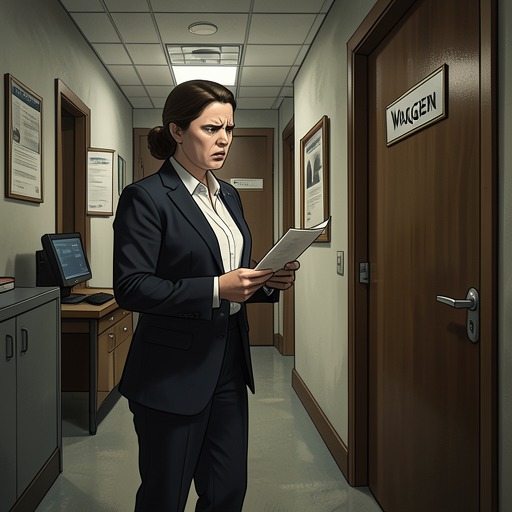
Before she discusses the novel with Colin, Nella’s private reaction has been far more furious than the measured editorial response she attempts to give. She imagines throwing the pages onto Fourth Avenue to be destroyed by traffic, makes a list of everything she hates, then tears it up and burns it in a Yankee candle. She sends Malaika a ten-second video of the burned scraps; Malaika replies, “GREAT. NOW GO TO BED, WEIRDO.” The comic, intimate episode records the intensity of Nella’s frustration, not an action Colin takes. It also complicates a simple account of her judgment: after venting, Nella concedes the novel has strengths and tries to formulate a criticism she can deliver at work.
Nella suspects that Colin’s first draft centered on white characters living in a white suburban town and that someone later suggested adding characters of color. The narrative presents this as her inference, not as a verified account of his drafting process. Her suspicion frames the question she brings to him: whether Shartricia belongs organically to the novel, or whether her presence reflects an attempt to respond to publishing and cultural expectations without adequately imagining a Black character.
Nella’s Critique and Colin’s Response
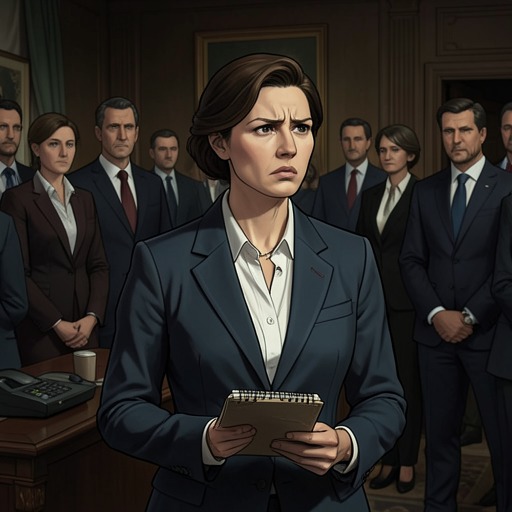
At the meeting with Colin and his editor Vera Parini, Nella begins cautiously, saying there is “one thing” she thinks could use work, then names Shartricia. Colin has invited feedback with visible enthusiasm: he stands with a small green spiral notepad and says he cannot wait to hear what Nella and Vera think. The contrast between that invitation and what follows marks the limits of his openness. When the criticism reaches the character at the center of Nella’s concern, the conversation becomes a defense of his authorship rather than an exploration of her editorial point.
Colin argues that he chose to depict one particular Black woman having a hard time and that her difficulty belongs to the character, not to an actual person. His defense grows louder as he insists, “I’m the writer. Jesus. I’m not a racist.” He then asks whether Nella expects him to make Shartricia’s hair curlier, her skin darker, or her speech more like Sidney Poitier’s, contrasting those imagined alterations with his description of Shartricia as a Black girl raised in rural Ohio without a father. The exchange shows him treating Nella’s concern as a demand to alter visible markers or voice, while Nella’s objection is to the character’s overall depiction. His questions do not resolve that disagreement; they make it public and personal.
Vera attempts to intervene, but Colin stops her and takes several deep breaths before standing and placing his pages on her desk. The small physical sequence—his fingers clamped at the knuckles, his hand on his cap, his repeated breaths—underscores how tightly he is holding his ground. Nella, by contrast, wonders whether Hazel-May McCall can hear the disturbance from her desk and later apologizes for how the discussion unfolded. Nothing in the available scenes confirms that Colin accepts Nella’s criticism or revises Shartricia in response.
Marketing and the Continuing Dispute
The disagreement does not remain confined to the initial editorial conversation. At a later marketing meeting about fall titles, Richard Wagner proposes starting with Colin’s book, and Josh calls it “the cash cow.” Hazel praises its Black protagonist and family as potentially resonant for readers of color, particularly people affected by addiction, and connects the material to stories her parents told about the crack epidemic. She then signals that there are aspects of Shartricia that may draw criticism. Nella feels the room’s attention turn toward her, making the earlier dispute part of the social atmosphere around the book even when Colin is not the speaker in the exchange.
After the meeting, Hazel tells Nella that she has finished Needles and Pins and now thinks the book is badly written, contrived, caricatured, offensive, and embarrassing. That assessment belongs to Hazel, and it is not evidence that Colin has changed his view. Its importance to his characterization is indirect but revealing: another colleague can voice a judgment close to Nella’s while the public marketing discussion has framed the novel as a work likely to connect with readers. The different assessments show how the book’s reception divides between its intended subject and the credibility of its particular portrayal.
A later cover discussion makes Shartricia’s prominence visible in the book’s packaging. One proposed design, unlike the familiar format of Colin’s previous books, uses a watercolor American flag threaded with fragmented faces. Nella recognizes Shartricia’s dark face, wide nose, thick lips, frightened eyes, and Bantu knots among the pieces; she concludes that no other character is featured as prominently. The scene does not establish that Colin selected or approved this option. Instead, it shows the publishing process placing the disputed character front and center, turning a question about the novel’s representation into a question about how that representation will be sold.
Narrative Role and Limits of the Record
Colin’s scenes trace a progression from anticipated editorial discussion to a sharply defensive confrontation and then to the continuing commercial and visual framing of the novel. He is at once an important Wagner author, a writer whose book addresses a major public crisis, and the person resisting Nella’s challenge to its Black character. The narrative preserves the tension between these facts rather than allowing the novel’s topic, its moments of emotional force, or Colin’s claims about his intentions to settle the issue.
The evidence here does not establish what becomes of Colin’s career, whether he revises the book, or whether he later reconciles with Nella. Vera says she has spoken with him nearly every day and believes he feels bad about how the incident happened; that report is not the same as a direct apology or an account of changed views. Colin therefore remains defined in these scenes less by a resolution than by an unresolved collision: his insistence on authorial control meets Nella’s conviction that Shartricia’s depiction has consequences beyond the writer’s stated intent.