Nella Rogers—Vera Parini
The Other Black GirlNella Rogers and Vera Parini’s relationship is a workplace bond unsettled by the Colin Franklin incident: Vera remains Nella’s boss and a familiar presence, yet Nella increasingly has reason to wonder whether that familiarity can be trusted. Small acts of consideration and a candid apology point toward repairing the relationship, while Vera’s handling of manuscripts and her supervision of Nella’s proposed apology preserve the unequal power between them.
Identity and Workplace Dynamic
Vera is Nella’s editor and supervisor at Wagner Books. Their connection has the rhythms of an established working relationship: Vera has a usual arrival time, and she and Nella hold a regular fifteen-minute morning meeting. Nella knows Vera’s habits well enough to plan how to raise a question casually, and she is sensitive to shifts in Vera’s attention. Their closeness is therefore not separate from the workplace hierarchy. Nella depends on Vera’s editorial decisions, while also reading her tone and choices for signs of where she stands.
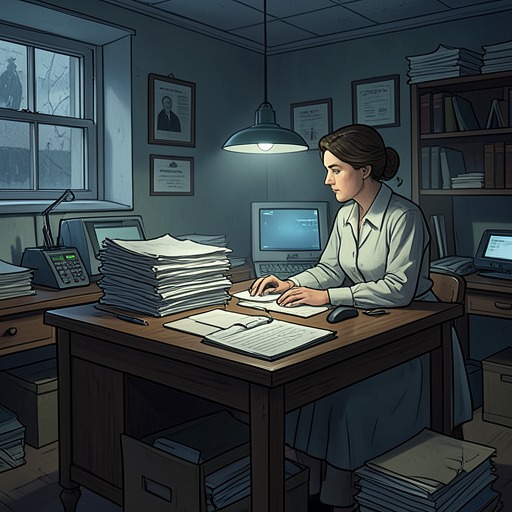
That combination makes ordinary exchanges consequential. When Vera enters early one morning, still wearing a rain-speckled light-blue raincoat with its hood pulled tight over her hair, she is astonished to find Nella already at work. The greeting carries a backhanded edge, but Nella chooses not to take offense. Their interaction is more than formal politeness: Nella answers easily, asks about the rain, and later recognizes Vera’s familiar manner as reassuring. At the same time, the exchange reminds the reader that warmth between them can arrive wrapped in remarks that leave Nella questioning how she is being regarded.
Familiarity and Uneven Reassurance
Vera’s response to a call from Nella’s agent shows the practical, casually protective side of their relationship. She complains that the agent is calling about a signing payment for a book they had bought only the previous week, then shifts to concern about why Mickey’s book is not selling among readers aged forty to fifty. With a dismissive gesture, she tells Nella that she need not answer the phone so early next time. Nella calls back that she will ignore it, even though Vera has already gone into her office and cannot hear her, and laughs despite herself. The episode feels to Nella like evidence that the Vera she knows is still present.
Nella also allows herself to hope that the relationship has not been ruined and that Vera may be keeping her available for another substantial project. That is Nella’s interpretation, not a promise from Vera. The distinction matters: her relief depends on reading intention into familiar behavior, while the decisions that would confirm Vera’s confidence in her remain in Vera’s hands.
Manuscripts and the Return of Suspicion
The limits of that reassurance become more apparent when Hazel-May McCall asks whether Vera has sent Nella The Lie. Hazel asks with apparent concern rather than mockery, but the question hurts enough that Nella nearly pretends the manuscript has arrived. She instead decides that Vera, not Hazel, is the person to question. Hazel says it probably slipped Vera’s mind because Vera has a lot going on, then turns back to her keyboard.
Nella’s unease has a concrete basis beyond that exchange. Vera has sent Leslie Howard pages to a new employee, even though she has not usually shared manuscripts with assistants and is known for keeping her prospective acquisitions private until she has decided how she feels about them. Nella finds the difference difficult to explain and considers two possibilities: Vera may be deliberately ostracizing her, or she may still be angry about the Colin situation. Those are suspicions, not established motives. Still, the contrast between Vera’s customary privacy and her decision to share pages with a newcomer makes Nella’s uncertainty about their professional standing sharper. A manuscript becomes a measure of access: who is trusted with new work, and who is left wondering why it has not been offered to her.
The Colin Conflict and an Attempt at Repair
Vera eventually addresses the strain directly. She acknowledges that she has not been present lately and says she knows Nella may connect that absence to the Colin situation, though she is not sure that is the whole explanation. She describes things as unusually busy and apologizes if she has made Nella uncomfortable. She also recognizes that she asked for Nella’s opinion and says she is glad Nella gave it. Nella listens from the doorway, repeatedly opening and closing her pen. Vera’s apology is measured rather than sweeping: she accepts some responsibility without reducing the tension to a single cause.
Vera then tells Nella that she has been speaking with Colin almost every day to understand how he feels, and that he feels bad about how things happened. On that basis, she recommends that Nella apologize to him again, even if only briefly, so they can begin again. The advice places Vera between them as both Nella’s manager and someone in continuing contact with Colin. Nella does not immediately embrace the suggestion. She uncrosses her arms and says she can call him, a tentative answer that leaves her reluctance visible even as she agrees to consider it.
Oversight and Unresolved Trust
Vera redirects the proposed apology from a call to an email. Colin is in California working on film matters related to his last book, she explains, and she asks Nella to send her the email first so she can look it over. The request turns an attempt at personal repair into a document subject to managerial review. For Nella, writing is less appealing than speaking: she would rather hear Colin’s tone, and she does not know exactly how to phrase the apology. She also recalls her mother’s warning never to give a boss anything in writing.
Nella privately imagines Colin printing the email and displaying it on his refrigerator for guests to see, while wearing the multi-fabric cap associated with the earlier conflict. The image exposes how little reassurance Vera’s proposed process has given her. She nevertheless agrees brightly to send the message for review. Her outward compliance and private misgivings coexist, just as her affection for the familiar Vera coexists with suspicion about Vera’s professional choices. Their relationship is not shown as definitively repaired or broken: Vera has apologized and acknowledged Nella’s discomfort, but her request to inspect the email keeps authority—and the power to shape what Nella says—firmly in her hands.