Nella and Colin’s Dispute Over Shartricia
The Other Black GirlNella and Colin’s Dispute Over Shartricia is a confrontation about a fictional Black character that becomes a test of who can define authentic representation—and who bears the risk of naming its failures. When Nella tells Colin that Shartricia Daniels feels like a collection of stereotypes rather than a fully realized person, he interprets the criticism as a personal accusation. His departure leaves Nella exposed between a white author and her white supervisor, turning an editorial discussion into a conflict over race, authority, and the limits of candor at Wagner Books.
Background and Stakes
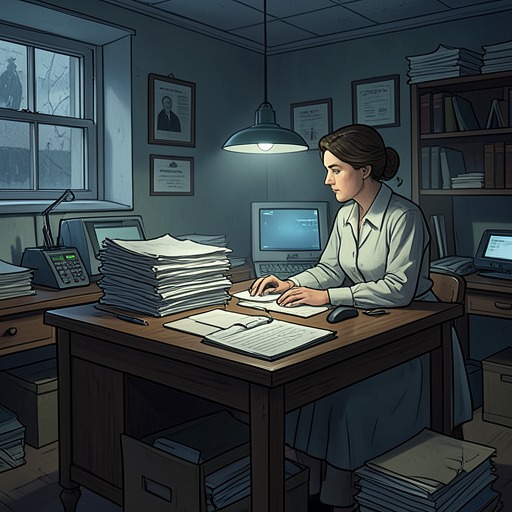
The confrontation grows out of Nella’s uneasy position at Wagner Books. Before joining the Manhattan office, she had worked behind bars and coffee counters, where she encountered people across occupations and could wear what she wanted. She had never held a conventional office job and feared that the hierarchy, homogeneity, and rigidity she had seen in television and films would prove accurate. For her interview with Vera, she chose a conservative blue dress, old black stockings, and inexpensive flats in case she needed to run for a train. The stockings developed a long run down her leg on the way to the interview, a small mishap that sits beside her effort to present herself as professionally prepared without surrendering every trace of personal style.
Vera had later said that Nella’s literary tastes were raw, bold, and unique, and that her willingness to speak up had helped secure her job. Yet that invitation to be candid did not erase the unequal stakes of candor. Nella had overheard Kevin in digital marketing mock the possibility of hiring nonwhite employees, imagining that they would be unqualified and damage the company. In the office, colleagues often treated Nella not as a young Black woman whose perspective might inform editorial decisions, but as an exception whose degree supposedly set her apart from Blackness. This could spare her unsolicited requests to weigh in on Black issues, but it could also make her feel that taking the job required her to give up part of her identity.
Nella had already anticipated the danger of criticizing Colin. She expected him to hear an editorial objection as a charge that he was racist, and she knew that employees at Wagner could become defensive about the prospect of being called racist. The dispute therefore does not arise from an abstract disagreement about taste: Nella is trying to assess a Black character while navigating a workplace where her authority to do so is precarious and where the author’s reaction can affect her standing.
Nella’s Critique of Shartricia
During a meeting in Vera’s office, Vera and Colin first exchange compliments. When the discussion is supposed to turn to criticism, Colin unexpectedly asks Nella what she thinks, mentioning that Vera had told him she saw one or two things that needed fixing. Nella freezes. She looks to Vera, but her boss remains stone-faced, leaving Nella to decide how directly to answer without the support or reassurance she had hoped to find.
Nella begins cautiously, acknowledging that the book is a good read and that its subject matters. She then identifies Shartricia Daniels as the problem. Colin is initially eager for specifics, and Vera prompts Nella to explain. Nella says that Shartricia seems constructed from an idea of what a Black person suffering amid the opioid epidemic in Ohio would be like. To her, the character gathers unflattering tropes and remains irredeemable and stuck by the end of the novel. Her criticism concerns more than whether the character is likable: she objects to a portrayal that reduces a Black woman’s hardship to a set of expected traits and offers her no meaningful development.
Nella’s choice to say this aloud marks a shift from the guarded politeness she had maintained while Colin and Vera praised the book. She has been encouraged to speak, but the moment she gives the criticism substance, the room’s balance changes. Colin stops behaving like an author soliciting editorial feedback; he hears Nella’s account of the character as a judgment of his own racial character. The distinction between criticizing a portrayal and condemning its writer is precisely what the exchange fails to hold.
Colin’s Reaction and the Immediate Aftermath
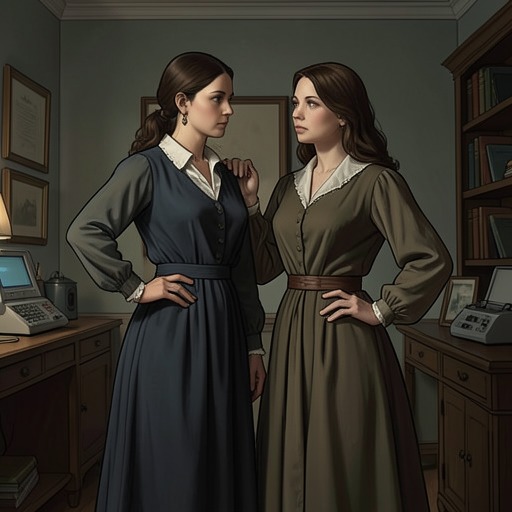
Vera asks whether Nella’s criticism might itself be racist, ostensibly playing devil’s advocate. Colin agrees that he feels accused, and directs his attention to Vera as if Nella were no longer part of the conversation. Nella feels as though she has disappeared beneath the office carpet. She had not expected Colin to apologize for the history of racism, but she had thought he might appreciate feedback from a Black editor about the Black character in his book.
Colin insists that Shartricia represents one particular Black woman having a hard time, not an actual person’s experience. His voice grows louder as he rejects the idea that he is racist and asks whether he should change the character’s hair, skin, or speech. He invokes Shartricia’s rural Ohio upbringing and absent father as grounds for his authority over the portrayal, then challenges who has the right to determine whose book it is. The questions turn Nella’s specific editorial concerns into a dispute about his ownership and intentions. Vera tries to intervene, but Colin stops her, takes several deep breaths, places his pages on her desk, and walks out.
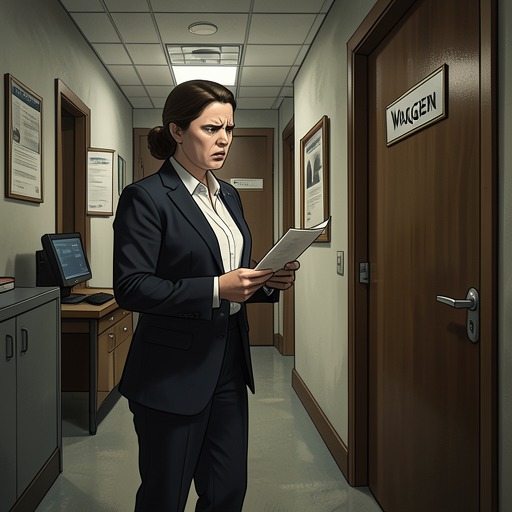
Nella watches the open doorway and expects a reprimand. None comes immediately. She retrieves the ballpoint pen Colin dropped and sets it on Vera’s desk while Vera remains silent, looking at his pages. After several seconds, Nella tries to explain that she did not mean to cause the rupture. Vera tells her not to speak to her yet and asks to be left alone. The silence offers no resolution: Colin has exited, while Nella is left in the room with the supervisor whose response might determine whether the critique is treated as editorial work or as an offense.
Colin returns to Vera’s office about twenty minutes later, his cap back on, his jaw set, and his eyes red. Nella apologizes for his having thought she was calling him racist. She experiences the apology as flat and difficult to say, because it does not name what she believes she is actually sorry for; still, she says it. Her account to Hazel later compresses the episode into Colin flipping out after she tried to be honest. She tells Hazel that she did not call him racist, though she recognizes that he took her words that way, and admits that it was not her finest moment. The gap between the apology she gives and the criticism she still stands by remains unresolved.
Workplace Consequences and Significance
The confrontation sharpens a pressure already present in Nella’s working life: she is expected to contribute as an editor, yet her observations about race can be recast as personal hostility. After the dispute, she tells Owen that it is easy for him to believe the matter will blow over. She identifies the difference between their positions: as a white cisgender man, he does not have to navigate many of the conversations she does. To an outsider, Wagner’s employees may seem harmless, but Nella experiences the accumulated effect of daily small talk, assumptions about Black coworkers’ roles, and the office’s broader racial homogeneity as exhausting.
A later professional opportunity at Wagner also places Nella’s ambitions beside Hazel’s. Richard offers Nella a role connected to Jesse Watson’s project, then says Hazel should receive an opportunity too because she introduced them to Jesse. Nella’s excitement at the prospect of advancement collapses into anger: she believes she took the initiative and had wanted the role for a long time, yet her chance is immediately shared. The scene does not establish that the dispute with Colin caused Richard’s decision, but it reinforces the career context in which Nella’s editorial labor and professional aspirations compete with the company’s treatment of its Black employees.
The episode’s force lies in the reversal between invitation and consequence. Colin asks Nella for her view; when she supplies it, he hears an accusation and leaves. Vera’s earlier encouragement that Nella speak boldly offers no protection when that speech unsettles a powerful author. Shartricia becomes the focal point of a larger conflict over representation, but the immediate cost falls on the employee asked to identify what is wrong. Nella’s reluctant apology closes the encounter without settling its central question: whether an editor can criticize a racial stereotype without being made responsible for the author’s defensiveness.