Other Black Girls (OBGs)
The Other Black GirlOther Black Girls (OBGs) are women whose changes reach beyond appearance or manner into personality and sense of self. Lynn gives the phenomenon its name and tracks its spread through reports from people around the country. The term describes a troubling pattern: Black women becoming more focused on success and increasingly hostile to other Black women who stand in their way, even as they grow harder to distinguish from those who have not changed.
Definition and Characteristics
Lynn calls the women OBGs because, in her view, they are no longer like the Black women she considers her own kind. She does not claim they are aliens; she believes there must be a deeper explanation for their altered behavior. The distinction she draws is one of allegiance and ambition: OBGs appear to answer chiefly to themselves and to the white people they work for, while pursuing success with an intensity that can turn them against Black women perceived as competitors.
The changes vary from person to person. Some women speak or dress differently, but Lynn emphasizes that the shift is not superficial: it reaches their inner lives. This makes the phenomenon more than a matter of style or professional conformity. Its defining danger, as Lynn understands it, is that advancement becomes a reason to undermine other Black women.
Spread and Development
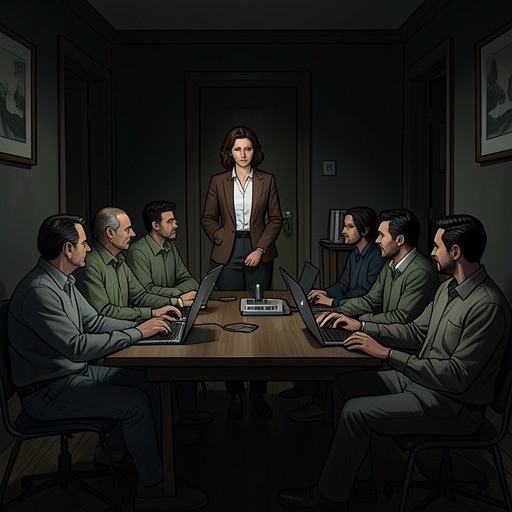
The reports Lynn gathers describe a phenomenon that has expanded in both reach and numbers. Twice a month, she holds early-morning meetings at Joe's Barbershop to share what her contacts monitoring other parts of the country have heard. Five years earlier, when she first learned about OBGs, reports were concentrated in a few northeastern cities, including New York City and Boston. By the time of the meetings described, sightings had reached as far south as Miami, as far north as Portland, Oregon, and as far west as Los Angeles.
Lynn suspects that OBGs, or an earlier form of them, may have existed for about twenty years. In that earlier period, they reportedly kept to themselves, focused on reaching the top position, and avoided drawing attention. The newer pattern alarms Lynn and the other women: OBGs seem better able to blend in with non-OBGs, and people who obstruct their ascent are now liable to be stepped over or pushed aside. The shift from keeping their heads down to removing perceived obstacles makes concealment part of the threat.
Workplace Context and Recognition
The pattern takes shape against workplaces where Black women may already face isolation and scrutiny. Before starting at Wagner Books, Nella Rogers worried that a Manhattan office would be hierarchical, homogeneous, and rigid; her earlier jobs behind bars and coffee counters had brought her into contact with people from many occupations and allowed her to dress as she pleased. She did not think she could have worn a Black Lives Matter shirt to her interview. Her unease establishes a setting in which professional belonging and self-presentation are already unequal concerns, though it does not by itself identify anyone as an OBG.
Resistance to workplace diversity also appears in the aftermath of Wagner’s diversity town halls. Nella recalls employees in the kitchen speaking sarcastically about hiring nonwhite people and predicting that doing so would mean hiring unqualified workers. The episode shows how demands for inclusion can be recast as threats to merit, a framing that narrows the space in which Black women’s experiences are taken seriously. In another conversation, Nella struggles to explain to Owen why conduct that seems harmless to an outsider can carry a different meaning for her; she sees his position as a white cisgender man as limiting his experience of the publishing world she navigates.
A set of workplace assessments offers a further, distinct example of how Black women are judged. Comments about Kiara, Ebonee, and Camille reduce them to appraisals of social cues, speech, workplace atmosphere, and gratitude. The records do not establish that these women are OBGs. They do, however, place the phenomenon in a world where Black women’s behavior is closely evaluated and where professional acceptance can be made conditional on other people’s judgments.
Representation and the Stakes of Definition
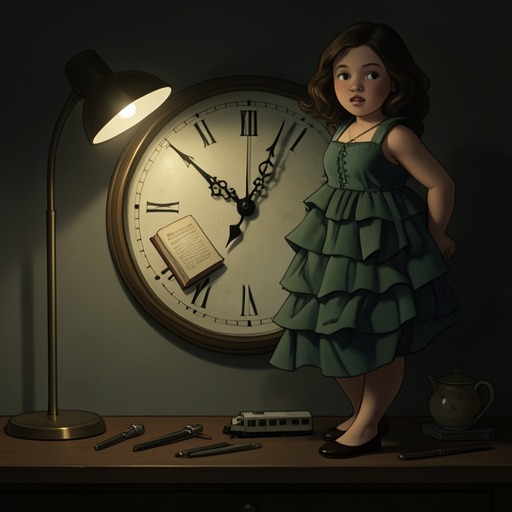
The novel’s dispute over Shartricia, a fictional character in a book under discussion, gives the question of who defines Black women’s experience a concrete form. Shartricia is nineteen, pregnant with her fifth child, and unable to confirm which of two absent men fathered the baby. Her name is attributed to her mother’s attempt to honor the color of a bright-green dress she wore at a club when her water broke. Nella judges the character to be a collection of unflattering stereotypes about a Black person suffering amid the opioid crisis in Ohio, with no meaningful development by the novel’s end. Hazel likewise calls the portrayal contrived, caricatured, and offensive.
Shartricia is not identified as an OBG, and the book’s caricature is not the same phenomenon as the personality changes Lynn describes. The connection is instead a question of authority: whose account of Black women is treated as credible, and whether a person is given complexity beyond the expectations imposed on her. That concern also sharpens the contrast at the heart of OBGs. The women’s pursuit of success may make them more legible to the white colleagues they serve, while their hostility toward other Black women reinforces the very divisions that make those women easier to dismiss.