Resistance Rules
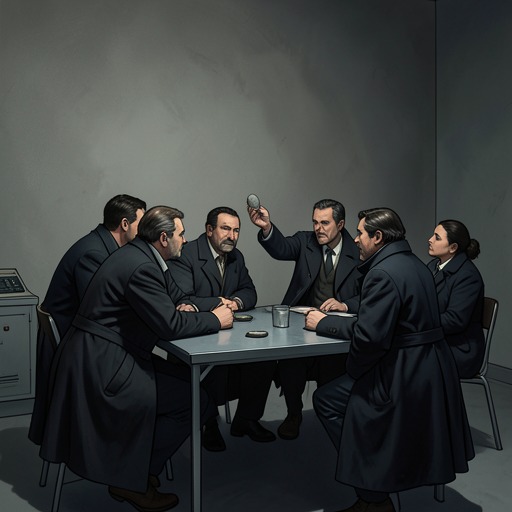
The Other Black GirlThe Resistance Rules are the Resistance’s core safeguards for secrecy and contact, shaping how Shani Edmonds can investigate the transformed women known as Other Black Girls (OBGs). Their central tension is practical and ethical: caution may protect the group, but it also limits what Shani can learn and whom she can warn. As the threat becomes more immediate, the rules test the boundary between disciplined resistance and silence in the face of harm.
The Rules and Their Purpose
The Resistance’s two most deeply drilled instructions are Stay off the grid and Don’t tell anybody anything. Lynn Johnson emphasizes both after Shani tells her she will come to New York, spending nearly an hour insisting that Shani promise to follow them. The duration matters: these are not casual suggestions but conditions presented as fundamental to participation. Shani finds the rigidity almost enough to make her reconsider joining.
Lynn’s warning gains force when she sends Shani Eva’s shifting identities, a map of her far-reaching movements, and a record of the destruction left behind. In response, Shani deletes Twitter, Facebook, and Instagram, cuts off years of hair, and gives her mother a false explanation for leaving Boston: that she experienced something unspeakably racist at work and wants a fresh start in New York. The rules therefore reach beyond communications with strangers. They reshape Shani’s public presence and require concealment even within her family.
Restraint Around OBGs
A further instruction is Never confront an OBG or potential OBG unless directed. Lynn describes it as the Resistance rule Shani likes least, and its force is clearest in the encounters it prevents her from turning into confrontations. Shani had seen Eva with Nella Rogers at Nico’s in August, then heard her speak about solidarity and diversity at Curl Central. Shani is furious enough to imagine grabbing Eva by a loc and demanding that she repeat her words, but the rule requires her to hold back.
That restraint is rooted in Shani’s recognition that something is wrong with Eva. Recalling a crowd outside Anna’s office, Shani had found Eva at the back, arms held tightly across her body, and understood too late that the woman she had met on the train was not acting as herself. The encounter makes the prohibition more than a tactical inconvenience: outwardly human behavior can conceal a changed person, and Shani cannot reliably decide alone when confrontation is safe or useful.
Investigation Under Constraint
The rules also govern how Shani can approach Nella. On September 27, 2018, at Joe's Barbershop, Shani proposes making contact the following week by pretending to be an aspiring writer seeking a meeting. She reasons that Nella seems too wary to approach on a train, while a publishing pretext might make a conversation possible. Lynn immediately refuses. The proposal shows Shani trying to turn an indirect route into an opening; Lynn’s answer keeps the group at a distance instead.
Their disagreement reflects unresolved evidence, not simply a difference in temperament. Shani reports that Nella has been staying late at Wagner Books and trying to recruit Jesse Watson to write a book for the publisher. She has also seen Nella at Hazel-May McCall’s event and watched her distribute items to others. Lynn cautions that those items could merely promote Nella’s organization or the shop, and insists that Nella’s continued employment at Wagner means she cannot yet be trusted. For Lynn, proximity to Wagner and attendance at Hazel’s event outweigh Shani’s hopes that Nella might be approached.
Lynn supports her caution with the group’s history of harm. She recalls Shani’s experience at a magazine and her own medical-school program, where an OBG still benefits from research Lynn conducted, despite Lynn losing the money she spent without receiving a degree. Shani does not dispute the damage, but argues that it happened five years earlier and that the Resistance still knows little beyond the havoc being caused in Hollywood. Lynn counters that the group does know why OBGs can change other Black women so effectively, and uses that knowledge to justify keeping Nella at arm’s length.
Secrecy, Knowledge, and Consent
The rules place a premium on limiting exposure, even as the Resistance’s mission depends on acquiring information. Shani recalls helping develop a hair formula with Imani: the image that returns to her is a woman’s hair divided into eight sections and Shani’s gloved hand applying the cool cream. Imani had promised that the batch would not burn; Shani had tested it with her pinky first. The precise, bodily details of the work sit uneasily beside the rule against telling anyone anything: the group must act on knowledge, while guarding how that knowledge and its methods circulate.
The danger the Resistance is trying to understand becomes explicit when Hazel explains the effects and intended use of the jars she offers Nella. She says they make Black women more amenable to working with white people and prevent guilt about doing so; she also describes numbing the ventromedial prefrontal cortex. Hazel admits that some women, including Ebonee, are referred to Richard Wagner and then to her or other Black women to be changed, often without being told what is happening. Nella objects that the change is made without consent. Hazel dismisses the objection with the claim that ignorance prevents harm.
That exchange clarifies what is at stake in the Resistance’s pursuit of information: the transformed women are not merely a hidden danger but people whose consent has been bypassed. Yet Shani’s own desire to make contact with Nella is checked by the same framework meant to protect the group. The novel thus presents secrecy as necessary protection and as a source of delay, leaving the Resistance to weigh uncertain evidence against the possibility that someone is already being manipulated.
Significance and Limits
The Resistance Rules create a structure for collective survival in a struggle where appearances cannot be trusted and the consequences of disclosure may be serious. Their repeated emphasis makes caution an operational discipline: remove digital traces, restrict what is shared, and do not act against a suspected OBG without direction. But the rules also make contact, verification, and intervention harder. Shani’s rejected proposal to approach Nella exposes that cost, while Lynn’s memories of exploitation explain why she will not treat caution as optional.
The rules do not resolve the conflict between protecting the Resistance and helping a potential ally. Instead, they define the terms on which that conflict unfolds. Against Hazel’s coercive promise that Nella can stop resisting and accept a painless transformation, the Resistance insists on distance and vigilance; its own challenge is to ensure that necessary secrecy does not become another reason to leave people without meaningful information or choice.