The Lie
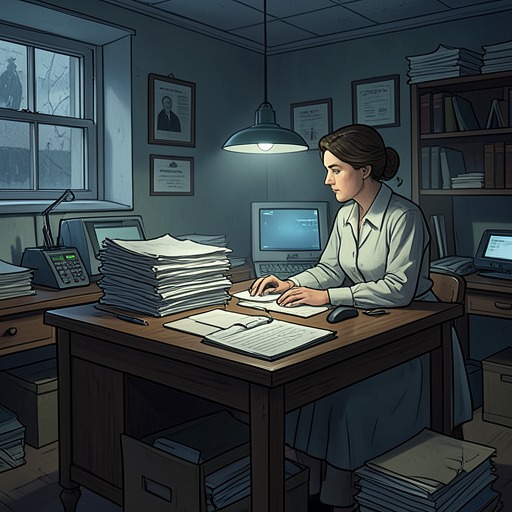
The Other Black GirlThe Lie is a manuscript by Leslie Howard, one of Vera Parini’s authors, whose passage between Vera, Hazel-May McCall, and Nella Rogers exposes an unusual imbalance in access at Wagner Books. For Nella, the important fact is not only that Vera wants an opinion on the book, but that Hazel receives it before she does. The manuscript becomes a practical test of Nella’s place in Vera’s working life: Vera has chosen a new assistant as an early reader while leaving her experienced assistant out of the exchange.
Identity and Introduction
The Lie enters the story through Hazel’s report that Vera sent her a book to read and asked for her opinion. Hazel initially assumes Nella has read it too. When Nella asks whether the book is Colin Franklin’s, Hazel reassures her that it is another title, then identifies it as Leslie Howard’s new book. Howard is one of Vera’s authors, and Vera has apparently received the manuscript recently. The distinction matters to Nella: this is not a book from an unknown source, but work by an author already within Vera’s editorial orbit.
Hazel explains that the exchange began after she ran into Vera at the end of the previous workday. Hazel had followed Nella’s advice to ask other editors what they were reading and to learn their tastes. Vera offered to send a book she had received that afternoon, and the manuscript arrived in Hazel’s inbox at eleven that night. Hazel wonders aloud whether Vera works continuously, even on vacations, and expresses concern for Vera’s children; Nella knows that Vera has no children. This mismatch in their conversation highlights how Hazel’s attention remains on the apparent logistics while Nella seizes on the manuscript’s timing and destination.
Unequal Access and Nella’s Suspicion
Nella’s immediate response is to consider when Vera could have sent the book. “Yesterday afternoon” is imprecise, and Vera often spends the day in meetings, so the timing alone does not prove that she deliberately excluded Nella. But Nella had seen Vera several times and had spent at least an accumulated hour with her before leaving the office. The omission therefore feels harder to dismiss as a simple scheduling accident.
The distribution also departs from Vera’s established habits. Nella knows Vera as one of Wagner’s more private editors: she has not previously shared manuscripts with other assistants, and she generally keeps books she may pursue to herself until she has had time to decide what she thinks. Against that background, sending Leslie Howard’s pages to a new employee rather than to Nella seems conspicuous. Nella considers whether Vera means to ostracize her, perhaps because Vera remains angry about the Colin Franklin matter. Later, as she imagines a glass barrier between herself and Hazel, she reframes the problem: Hazel is not to blame; Vera may be setting the assistants against each other to keep Nella alert. The narrative presents that conclusion as Nella’s suspicion, not as a confirmed account of Vera’s intention.
From Hazel’s Inbox to Nella’s Desk
When Hazel asks whether Vera has sent Nella the book yet, the question appears to come from genuine concern rather than mockery. Still, it stings enough that Nella nearly lies and claims she has received the manuscript. Instead, she admits that Vera has not sent it and asks Hazel to share it. Hazel readily agrees, supposing that the omission simply slipped Vera’s mind because she has a great deal going on.
Hazel sends the file from her workstation and turns her chair toward Nella, remaining there as if waiting. Nella thanks her and checks the clock on her computer to see how long she has before she can leave. That small office choreography gives the transfer an awkward social dimension: Hazel treats sharing the book as a simple favor, while Nella receives it after privately measuring what the original omission might mean. The manuscript reaches Nella through a colleague rather than through the editor who wants her judgment, making the route itself part of the tension.
Reading, Report, and Editorial Consequences
When Nella later meets with Vera, she cannot bring herself to disclose the anonymous notes telling her to leave work. Instead, she says she has finished The Lie. Vera spins around quickly, smiles, and eagerly asks what Nella thinks, already suggesting that she loved it. Nella says that she missed her subway stop while reading. The detail is true, but she uses it to imply an enthusiasm she does not feel: privately, she considers the book fine and not worth the effort of finding comparison titles. She offers to send Vera a report rather than disclose that reservation.
Vera asks her to do so because she is seriously considering making an offer. She also acknowledges that she forgot to send the manuscript to Nella and assumes Hazel shared it. Nella accepts the explanation without pressing the point, calling the omission nothing, while recognizing Vera’s remark as a partial apology. The exchange leaves both the oversight and its possible meaning unresolved: Vera admits forgetting, but Nella has already experienced the delay against a history of editorial privacy and the recent conflict over Colin Franklin.
The Lie also leads directly to another request. Embarrassed that she forgot the first manuscript, Vera asks whether Nella can read a different book by the next day and promises to send it immediately. She describes that book, Steeled Heart, as very good and compares it to Pride and Prejudice meets I, Robot. The quick pivot places The Lie within Vera’s practical workflow: it is a potential acquisition for which she wants Nella’s report, and the successful rapid read prompts her to seek another assessment. Yet Nella’s guarded praise means the report begins under a quiet strain between the opinion Vera solicits and the judgment Nella actually holds.