Wagner Books Diversity Town Halls
The Other Black GirlWagner Books Diversity Town Halls are a series of workplace meetings that Richard Wagner announces after a police shooting prompts public outrage. They begin with the promise of a collective conversation about diversity, but the first meeting quickly reveals that the employees do not share a clear understanding of what the subject means. As colleagues retreat from the discussion and attendance falls, the series makes visible both the limits of the company’s response and the particular burden placed on Nella Rogers as its only Black employee in the room.
Origins and Intended Purpose
The meetings follow the departure of Yang, the colleague who had trained Nella in editorial procedures and helped her navigate the office. Yang, a first-generation Chinese American, had been the only other person of color Nella had worked alongside at Wagner. Three days after Yang’s last day, news spread of another unarmed Black man killed by a white police officer, this time in rural North Carolina. Reports said the man had been trying to turn up his hearing aid. The shooting struck Nella particularly hard: the victim was in his seventies, hard of hearing, and bore a subtle resemblance to a grandfather she had never met.
The day after Nella watched Jesse Watson’s angry response to the shooting gain attention on Twitter, Richard sent a company-wide email announcing a series of Diversity Town Halls. Such emails were unusual from Wagner’s editor in chief, who generally communicated by appearing unexpectedly in employees’ offices or sending handwritten notes. Nella found the announcement promising enough to print and pin inside her cubicle. The meetings appeared to offer a way for Wagner employees to discuss a subject that otherwise remained unaddressed. Yet the announcement did not specify what diversity at the company meant, leaving the central purpose of the series open to dispute from the outset.
The First Town Hall
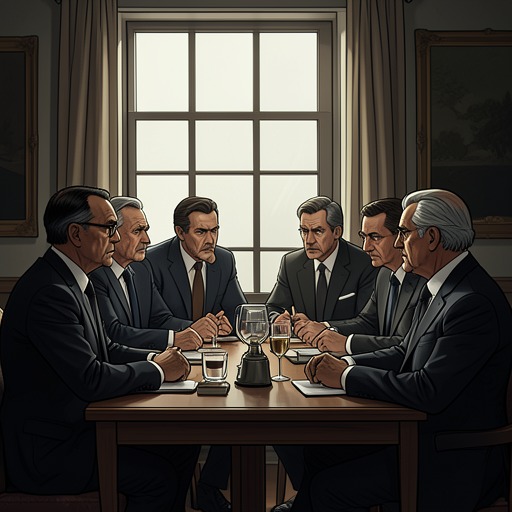
At the first meeting, the human-resources representative, Natalie, and a British moderator introduced as a neutral facilitator spent the opening hour trying to establish what the attendees were meant to discuss. One editor asked whether diversity meant employees, books, or authors. Other colleagues pointed to a Black writer Wagner had published the previous year as evidence that the company had already addressed the issue. Nella tried to redirect the discussion with measured observations, but hesitated to criticize the preference for Ivy League credentials and personal connections in senior hiring: her own résumé had benefited from a professor’s editorial contact.
She also recognized a more complicated gap in her colleagues’ example. The Black writers Wagner had published in recent years were not Black Americans but writers from an African country. Nella understood that this did represent one kind of diversity, while failing to address the absence she was concerned about. She did not feel ready to unpack those distinctions alone in front of her white employers. Her difficulty was not a lack of awareness of the problem, but the constraint of having to explain it in a room whose members were still deciding what counted as diversity.
The second hour moved into role-play and word-association exercises. When Nella offered BIPOC as a term associated with diversity, her coworkers responded enthusiastically, then supplied left-handedness, nearsightedness, and dyslexia as further examples. A suggestion concerning non-millennials made clear to Nella that the conversation was unlikely to return to the treatment of Black people within the company or the publishing world. The moderator then praised the roughly one hundred attendees for being open. Everyone in the room was white except Nella, a contrast that sharpened the distance between the meeting’s language of openness and the difficulty of discussing the issue she had tried to raise.
Declining Attendance and Nella’s Isolation
After the first session, coworkers left quickly, relieved to return to informal conversation; Nella felt that they seemed more perplexed than when they had arrived. She was perplexed too, but for a different reason. Her colleagues could publish books about subjects such as Bitcoin, Middle Eastern conflicts, and black holes, yet many appeared unable to understand why a more diverse publishing house mattered. The meetings did not resolve that divide.
Attendance dropped with each nonmandatory session. The second meeting drew half as many people as the first, and the next drew fewer still. By the fourth, only Nella and a blue-eyed publicity assistant remained. Natalie had stopped attending as well, citing scheduling conflicts. When the assistant meekly proposed offering donuts to attract more people, Nella tore up the think piece she had planned to share and left the room. The gesture exposed her frustration after a series of meetings in which the practical work of sustaining the discussion had fallen increasingly to her.
Nella later remembered the outburst as a public display of weakness and felt heat in her cheeks when she recalled it. She had gradually befriended other assistants, and people of color working at the front desk and in the mailroom knew her by name. But those connections did not provide the particular understanding she wanted from a close colleague: someone with whom she could discuss the racial insensitivity of a fictional character and then return to work. The town halls therefore stand not only as a failed company initiative, but as a sequence that makes Nella’s isolation more legible even as it gives her a formal venue to speak.
Significance Within Wagner
The series places a declared commitment to conversation beside the company’s inability to sustain it. The initial email raises Nella’s expectations; the first meeting’s confusion, the narrowing attendance, and the fourth session’s near emptiness record how quickly that promise loses institutional support. The contrast is especially pointed because the meetings are presented as an answer to a specific public crisis, yet their discussion repeatedly drifts away from the racial questions that prompted Nella’s concern.
Nella’s position is also shaped by the same workplace dynamics that make the meetings difficult. In a conversation with Hazel, she recalls hearing employees discuss the possibility of being forced to hire nonwhite candidates and assumes that criticism of a colleague’s work might be interpreted as an accusation of racism. Some coworkers treat her as an exception, a qualified employee whose degree seems to separate her from Black identity; that treatment can spare her intrusive requests for sensitivity reads, but can also make her feel that accepting Wagner’s job required surrendering part of herself. Against this background, the town halls do not simply fail to produce a shared definition of diversity. They show how the language of inclusion can leave its intended subject responsible for explaining the problem, while the institution and most of its employees gradually withdraw from the conversation.