Deer Lodge penitentiary
The OutlawsDeer Lodge penitentiary is a feared destination rather than a setting Del Delaney reaches in the scenes surrounding his flight from Montana. The prospect of confinement shapes his decision to run: he believes the accusation against him leaves little hope of a fair trial, and imagines prison as a fate worse than death. Later, the same threat helps define the different paths available to Delaney, The Kid, and John Smith as they reckon with their criminal histories and the possibility of returning home.
A Prison as a Feared Future
When Sid Blackwell prepares to arrest Delaney after Ruby Prentiss accuses him, Delaney immediately imagines the consequences of a trial. He expects Ruby’s testimony to be believed and doubts that the process will be fair, since Blackwell’s father is the judge. The prospect of being sent to Deer Lodge penitentiary makes the danger feel final: Delaney thinks he would go mad if imprisoned and sees no way out once Blackwell has him in custody.
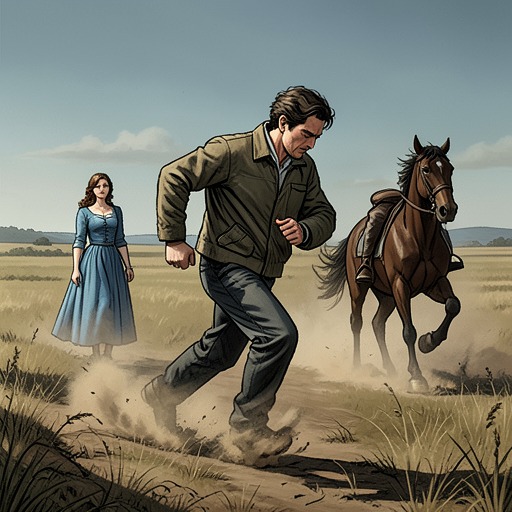
The prison’s force in the story comes from what Delaney believes it would take from him. He recalls cowboys describing prison as worse than death, and measures his choices against that bleak account. Rather than wait to face a system he considers stacked against him, he dresses, prepares to escape, and runs. His decision is driven not by a belief that flight will clear his name, but by the conviction that remaining in Blackwell’s power offers no viable future.
Flight in Exchange for Freedom
After leaving town, Delaney rides north as though bound for Wineglass, then changes direction once he is out of sight and heads southwest. He crosses the state line into Wyoming, reasoning that a sheriff there is less likely to take an interest in him than a Montana lawman. He avoids larger towns and county seats, obtains food by hunting when he can, and otherwise buys supplies at country stores.
The escape does not make life easy. Delaney rides through late-spring rain and occasional snow, enduring cold and discomfort, but accepts those hardships as the price of staying out of the Deer Lodge penitentiary. The contrast is central to his predicament: freedom means uncertainty and physical hardship, while the prison represents confinement under a legal process he expects to lose. His flight buys distance, not security, and gives him ample time to contemplate a future he cannot yet imagine improving.
A Measure of the Outlaws’ Choices
The prison also serves as a point of comparison among the men Delaney encounters. The Kid says he has killed three men and taken part in six bank robberies; in his view, he is already too deeply involved to turn back, and his immediate aim is to avoid being jailed. John Smith likewise regards himself as exposed: he helped the Kid rob a bank and faces a first-degree murder charge at home. Delaney suggests Smith might be acquitted because the killing could be considered justifiable homicide, but Smith says that nothing can change the charge he faces.
Their accounts distinguish the men’s situations rather than treating outlawry as a single condition. The Kid accepts continued crime as the only direction left to him; Delaney hesitates over whether to withdraw before becoming more deeply implicated; Smith remains conscious of the charge awaiting him at home. Against the prospect of prison, each weighs not only immediate capture but the possibility of a life beyond flight.
The Limits of the Threat
Deer Lodge penitentiary remains a projected consequence in these passages, not a place where the narrative shows Delaney or his companions confined. Its significance lies in how persistently the possibility of imprisonment narrows their choices. For Delaney, fear of being sent there prompts escape and makes hardship seem preferable to surrender. For the Kid and Smith, the danger of arrest exposes the different burdens they carry and the different meanings of going back.
Near the end of the supplied narrative, Smith says he intends to return home and face the consequences rather than keep running. That decision provides a pointed contrast with Delaney’s earlier flight: the prison has represented the fate he cannot bear, but the story’s outlaws do not all respond to legal danger in the same way. The institution thus marks both the power of the law over their imagined futures and the personal choices that fear of that power cannot settle for them.