Del Delaney
The OutlawsDel Delaney is a Montana ranch hand whose false accusation, flight, and later protection of Kate Muldoon turn the label of outlaw from a mark imposed by law into a difficult choice about what kind of life to lead. He begins by insisting that he has not committed the crime for which he is wanted. Yet, as the story carries him from Prairie City to the company of other fugitives and then into a struggle over Kate’s inheritance, staying free increasingly means deciding whom he will stand beside and what he is willing to risk.
Identity and Background
Before his flight, Del had worked for ten years at Wineglass, a ranch about ten miles from Prairie City. His mother taught primary school in town and cooked at Wineglass in the summers. He rode alone to Prairie City’s monthly dance, a major local diversion in a community with few other entertainments. He expected to sleep late the next morning and return to the ranch that afternoon; instead, his name would become familiar to Montana sheriffs from reward notices.
Del’s account emphasizes the injustice of his position. He says he has done nothing to deserve the rape charge and regards it as the last crime he would ever commit. The contrast between his ordinary ranch employment and the criminal notice bearing his name establishes the gap between a legal accusation and his own understanding of his character. When Sid Blackwell comes to arrest him with a gun, Del recognizes the immediate danger and escapes rather than submit to custody.
Flight and the Making of an Outlaw
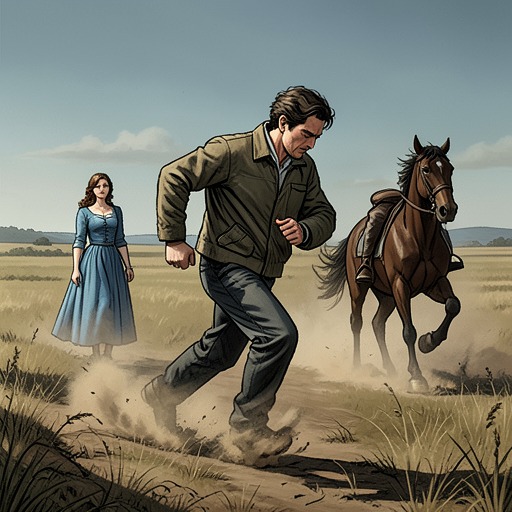
Del leaves Prairie City on his buckskin, Jim Dandy, riding north as though headed toward Wineglass before turning southwest once he is out of sight. He crosses into Wyoming, avoids larger towns and county seats, and alternates between hunting for food and buying supplies at country stores. Rain, occasional snow, and discomfort make the journey hard, but he accepts them as the price of freedom and as preferable to confinement in Deer Lodge penitentiary. The route is not simply an escape from a town; it is the beginning of a life organized around avoiding recognition.
On the trail he turns over the possible accidents that brought him to this point, including whether he would have been accused if he had not gone to the dance or if Ruby Prentiss had not been there. He also asks himself why she accused him. The questions show that his flight does not settle the charge in his mind: he remains caught between the event that made him a fugitive and the life he might have had without it.
At Baggs, a town whose business community welcomes outlaw money and does not probe newcomers’ pasts, Del sees the practical appeal of a place where a wanted man can find work. The town’s history as a refuge for the Wild Bunch and its proximity to Brown’s Hole make it a place where fugitives and local commerce have long met. Del arrives hoping that an outfit needing another man might take him on, and there encounters The Kid and John Smith. Their circumstances sharpen the difference between being pursued and being guilty of specific crimes. The Kid admits to killing three men and taking part in six bank robberies; John says he helped in one robbery and faces a first-degree murder charge at home. Del considers whether he might instead take a riding job and avoid further crime, hoping that his own charge could eventually be dropped. The Kid argues that none of them can go back. Del’s hesitation marks him as an outlaw in company, but not yet an outlaw by settled conviction.
Kate Muldoon and a New Responsibility
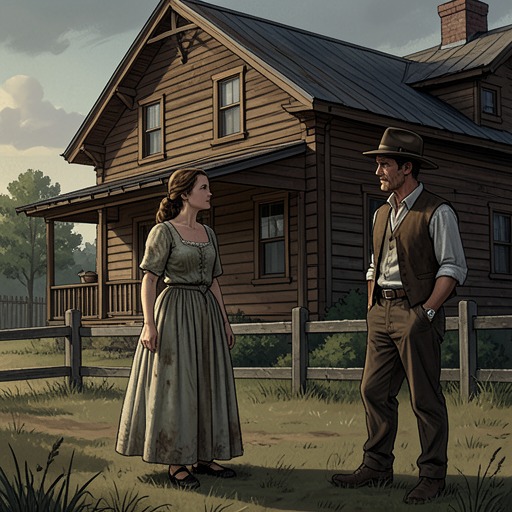
Del’s later bond with Kate begins in danger. After he has saved her twice in half an hour, she tells him she feels she belongs to him and offers her gratitude. He refuses to treat her as someone he owns and instead asks what has made her a target. Kate names Max Landon and explains the stakes: her father left the Diamond M and about one hundred thousand dollars deposited in the Roily bank. She says she does not know the will’s terms, but Judge Bailey has called it a bad will and told her that her father had refused to change it.
Kate describes a conflict that is both personal and economic. Her father loved her, but expected Landon to inherit the ranch’s authority through marriage to her; he trusted Landon, wanted the ranch run well, and did not believe a woman could manage it. Kate says she has never loved Landon, whom she suspects of robbing her father, and that he has pressed her to marry him since she was fifteen. This history gives Del’s protection a purpose beyond keeping Kate alive: he becomes involved in a contest over whether she can retain control of her inheritance and determine her own future.
When Del urges her to consider whether anyone at the Diamond M would fight for her, Kate says she has not been there that summer and has been told by Judge Bailey that only the cook remains from her father’s former employees. The lack of a dependable ranch force helps explain why she hires Del and two of his friends as bodyguards. Del tells Adam Jessup that he represents Kate, and, when Jessup questions whether three men are enough, insists that Landon’s attempts on her life must be brought to a head. He rejects the suggestion that his interest is her inheritance and describes the three men as the protection Kate hired.
Conflict, Love, and Decision
The responsibility of protecting Kate changes Del’s understanding of his own attachment. With The Kid gone and John Smith needed to stay with Kate, Del concludes that he must face the danger alone. He realizes that he loves her and that there is no halfway course for him. This is a decisive turn: the man who earlier imagined slipping away to a quiet riding job now accepts a dangerous confrontation because retreat would mean abandoning Kate to Landon.
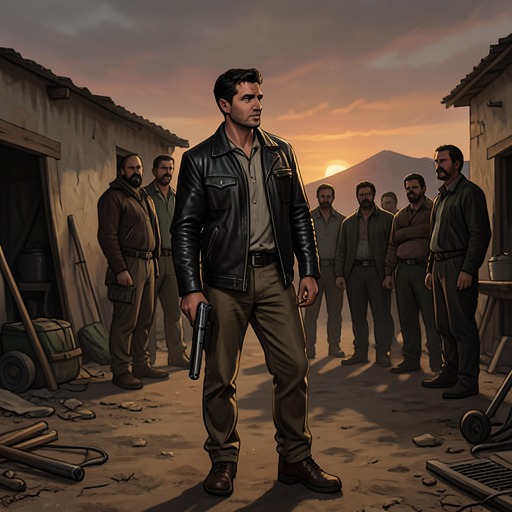
Del does not present himself as an expert gunfighter. When Judge Bailey asks his plans, Del says he knows what he wants to do but recognizes that killing Hawk Sloan would not solve the problem. Bailey agrees and identifies Sloan as a gunfighter, while Del has doubts about taking him on. Del’s response distinguishes determination from simple faith in violence: he is resolved to act, but understands that removing one armed opponent may not undo Landon’s control over Roily.
At the reading of the will, Landon demands that Del be removed from the room. Kate answers that Del has every right to remain and announces that they will soon marry. Landon’s disbelief and insult do not make Kate retreat; she rejects his claim on her and reminds him that her father once took him in at the Diamond M. Her defense of Del and her accusation that Landon repaid her father by trying to murder her turn the inheritance dispute into an open contest over loyalty and authority.
Change and Ending
Del’s relationship with Kate becomes mutual rather than protective alone. When she later says she belongs to him, Del is no longer irritated: he says he belongs to her as well, and they do not want to wait to marry. The language that he once resisted as ownership has become a declaration of reciprocal commitment. His identity has changed accordingly. He remains a man with the law behind him, but no longer treats escape and isolation as the only possible answers to danger.
John Smith also decides to stop running and return home to face the consequences of his past. He says that working for Del has been thanks enough and that he has learned about courage. Kate, meanwhile, expects to learn to run the ranch and plans to place most of its day-to-day responsibility on her foreman, while making clear that marriage will not exempt Del from that work. Del accepts the prospect of being her husband and sharing the responsibility. The ending therefore joins personal commitment to practical consequence: Kate claims her future at the ranch, and Del chooses a place within it rather than another trail out of town.