Graveyards of men’s dreams
The Outlaws“Graveyards of men’s dreams” is the narrator’s image for abandoned mines whose broken machinery and empty buildings preserve the scale of ambitions that failed. At the Enterprise Mine, the phrase binds physical desolation to the human cost of speculation: the ruins are not merely remnants of industry, but evidence of dreams that left investors with losses and no promised easier life.
The Enterprise Mine as a Ruin
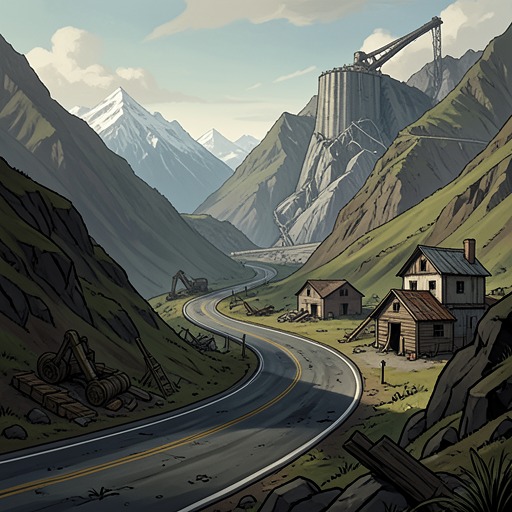
The narrator and Kate Muldoon reach the Enterprise Mine above Roily, near timberline, where the grass is good enough to explain why Red Muldoon once brought cattle there for the summer. No cattle are present when they visit. Ahead of them, the mine buildings show years of neglect: windows broken, doors sagging, machinery rusting, roofs collapsed under winter snow, and surfaces weathered to dingy gray by sun and wind. The ruined site makes the expression concrete. The mine’s extensive machinery and varied buildings suggest the size of the undertaking, while their decay records its failure.
Kate explains that the owners spent more than a million dollars developing the mine. Her father did not know how much silver had been found, but the company went bankrupt, and Eastern investors lost everything. Among those who invested, she says, were widows and older people who lost their life savings. The abandoned structures thus stand beside a specific human consequence: an enterprise promising returns instead became a source of ruin for people who had trusted their money to it.
A Dispute Over Dreams and Risk
The image prompts a disagreement between Kate and John Smith about what those losses mean. John calls the episode greed, then argues that anyone investing in a mine should be prepared to lose the investment. Kate rejects that judgment. Wanting an easier life, she argues, is not necessarily greed; for people living in poverty, the possibility of escaping it can make an investment seem like a dream rather than simple avarice.
John shifts from calling the investors greedy to calling them gullible, maintaining that they should have known the danger. Kate answers with unusual force, challenging him to consider whether he himself has ever invested in a dream. After a grave silence, he admits that he once did: not with money, but with his life, and that he too was gullible. His confession makes the exchange more than an argument about the judgment owed to failed investors. It reveals that the language of foolish hope applies to personal commitment as well as financial risk, and that John’s hard skepticism does not mean he has never trusted a dream of his own.
Mining Decline and the Wider Image
The Enterprise Mine’s ruins belong to a larger landscape of decline. When the narrator first rides into Roily, he finds a town more like a ghost town than a functioning county seat. Mining dumps scar the mountainsides, skeletal mills remain from the work of processing ore, and many cabins stand empty, their windows broken and doors hanging askew. A bartender recalls that silver remains in the mines but says extraction needs a market to make it worthwhile. The town now depends on a few cattle outfits and a little dry farming, rather than the mining activity that once sustained its livelier days.
That downturn also reaches beyond abandoned buildings. The mines no longer provide tax revenue, leaving the county short of money; even officials’ salaries may be delayed for months. Read against that background, “Graveyards of men’s dreams” describes more than the wreckage of one speculative venture. It gives a human scale to a regional decline in which failed mining hopes leave visible ruins, lost savings, and a weakened local economy. The phrase does not settle whether the investors were foolish or justified in hoping for change; the conversation at the mine keeps both the dangers of risk and the appeal of a better life in view.