Outlaw identity and destiny
The OutlawsOutlaw identity and destiny in The Outlaws take shape where legal accusation, actual criminal acts, and personal choice meet. Del Delaney’s flight begins with an accusation he believes has been engineered against him; later, the threat of prison and the company of experienced outlaws make him consider committing the crimes he has so far only feared being punished for. The Kid and John Smith show that this turn is not the same for everyone: one embraces outlaw life, while the other regrets his path and ultimately resolves to face the law at home.
A Status Imposed by Circumstance
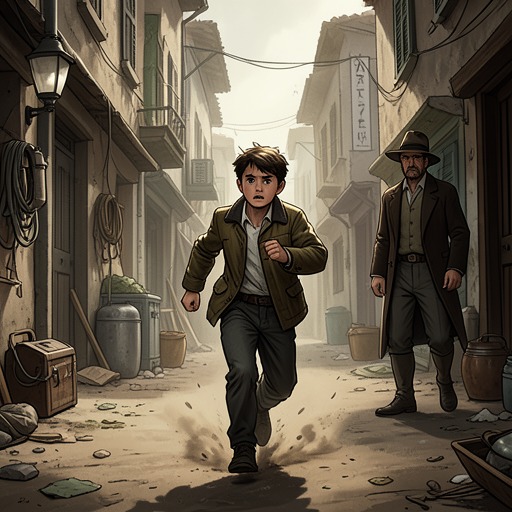
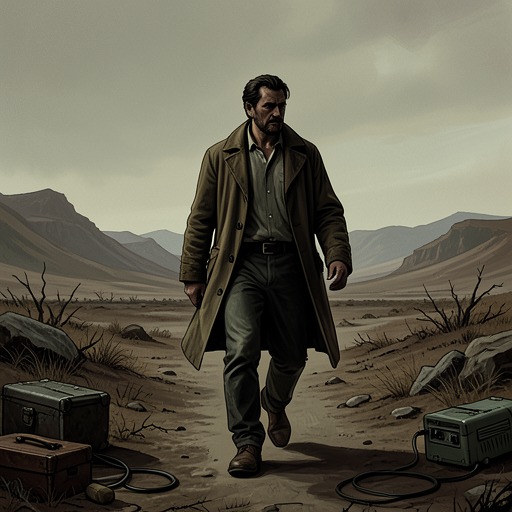
For Del Delaney, outlawry first arrives as a label and a danger rather than a chosen identity. After fleeing Montana, he crosses into Wyoming, avoids larger towns and county seats, and alternates between hunting for food and buying supplies at country stores. In late spring he rides through rain and occasional snow, accepting discomfort because he believes it is preferable to a cell in Deer Lodge penitentiary. His immediate aim is freedom from capture, not a settled life outside the law.
Distance gives him time to reconsider how he came to be on the run. He attributes Ruby Prentiss’s accusation partly to wounded pride after he walked away from her, but another possibility troubles him: Sid Blackwell may have arranged a trap. Delaney considers whether the accusation could have been planned to leave him worse off if he had acted differently. The suspicion remains speculation, not proof. What is certain to him is the consequence: Sid Blackwell is a deputy, his father is a judge, and Delaney cannot see how or when he could safely stop running.
That uncertainty makes identity feel imposed by other people’s decisions and by the reach of local authority. Delaney had imagined travelling to see the country, but he recognizes that his actual journey is not a carefree adventure. He expects to move from job to job before the law catches up, and still imagines that he might return to his mother or go home if the case is eventually forgotten. At this stage, outlawry is a predicament he hopes may yet be temporary.
From Flight to a Chosen Course
Delaney’s practical attempts to live respectably sharpen the conflict. Short of money, he finds work with a Mormon outfit in Star Valley, where the work is more agricultural than ranching. Learning to plow, he grows angry at being treated as an outlaw and begins to reason that he might as well become one. His decision is not presented as the outcome of a single crime: it develops through the pressure of his legal predicament, his experience of hardship on the road, and his sense that honest work cannot restore the life he has lost.
The month in Star Valley does not make a lasting refuge. When the boss’s wife wants him to hoe her garden, Delaney draws his time and leaves, still heading south. He considers robbing small stores but rejects the idea: their safes are unlikely to contain enough, and he feels sympathy for the storekeepers, who earn little and have families to support. The contrast matters. He is moving toward bank robbery, yet he has not adopted an indiscriminate view of other people as targets.
The prospect of prison brings his private reasoning into the company of The Kid and John Smith. After hearing that the two have robbed a bank on their way south, Delaney thinks of the cell awaiting him at Deer Lodge penitentiary and concludes that he may as well live more comfortably if he is destined to spend his life avoiding prison. When he asks whether the others have reached the same conclusion, the possibility of outlawry becomes a shared course of action rather than merely his solitary speculation.
Different Histories, Different Outlaws
The Kid describes a life already defined by repeated violence and robbery: he says he has killed three men and held up, or helped hold up, six banks. He has also spent much of his money gambling and the rest on women in Helena and Butte. His account makes clear that money from crime has not secured the stable future Delaney is considering. The Kid, however, treats further robbery as the practical answer. He insists that a man in their position cannot go back and must keep from being thrown into jail.
John Smith’s position is markedly different. He has helped The Kid rob one bank, which leaves him vulnerable to recognition, but the deeper burden is a first-degree murder charge at home. Smith killed a man he found with his wife; Delaney thinks Smith might have been acquitted in many communities because the killing could be regarded as defending his home. Smith nevertheless believes that the dead man’s powerful brothers would have ensured his conviction. His decision to flee therefore rests not only on the formal charge but on his expectation that local influence would determine the outcome.
Delaney perceives a distinction between his companions’ dispositions as well as their records. He regards The Kid as an outlaw at heart, unmoved by the fact that he has killed, yet also as a loyal friend who would have acted decisively to protect him. John Smith, by contrast, seems to Delaney not to be fundamentally an outlaw. Smith regrets the killing and regrets the bank robbery even more. He is a capable cowboy, but Delaney senses that Smith doubts himself and weighs the odds before committing. Delaney feels more akin to Smith, while believing that in a sudden confrontation The Kid would be the one he could depend on. Loyalty and identity thus do not line up neatly: the man most comfortable with outlaw life is also the one Delaney trusts to defend him, while the man closer to Delaney’s own temperament remains haunted by what he has done.
The Meaning of No Return
The group’s decision is shaped by the belief that legal choices have narrowed beyond repair. Delaney briefly considers leaving his companions and taking a riding job, hoping that charges might eventually be dropped if he committed no new crime. The Kid answers that he is already too deeply involved to choose that escape. Smith likewise believes his murder charge cannot be undone, and fears that facing it would place his fate in the hands of the dead man’s influential family. Their accounts explain the force of The Kid’s claim that they cannot look back: for him, it expresses an identity already embraced; for Smith, it turns an unwanted history into an assumed future; for Delaney, it helps convert fear of punishment into participation.
That conversion remains incomplete for Delaney. His plan to rob a bank is an attempt to act on the outlaw identity he has been assigned, but his sympathy for small shopkeepers and his uncertainty about leaving the life behind show that he has not simply become The Kid. Nor does the group’s shared predicament erase the differences between them. The story presents outlaw destiny less as an innate quality than as a path shaped by circumstance, prior violence, local power, and decisions made under pressure.
Smith’s final change of direction makes that path visible as a choice rather than an absolute fate. As he walks beside Delaney and Kate Muldoon, he says he has been thinking of returning home to face the consequences, believing that doing so will be better than continuing to run regardless of the outcome. His decision does not resolve what the law will do to him, but it breaks with the group’s assumption that the only possible future is continued flight. In that contrast, outlaw identity remains unstable: it can be imposed, adopted, endured with regret, or finally resisted.