Red Muldoon
The OutlawsRed Muldoon is remembered as the cattleman whose wealth and authority made him the dominant figure in Roily after the mining boom faded. He built the Diamond M into the county’s largest ranch, held public office, and exerted influence over local law enforcement. His death left behind not only a substantial estate but also an unusually complicated legacy: he had prepared Max Landon to run the ranch while Kate Muldoon remained his daughter and heir.
Identity and Rise
Kate Muldoon identifies Red as her father and describes him as a well-known local character. He arrived in the country with a herd of cattle when the area was opening up and established the Diamond M on the river, about twenty miles below Roily. By selling cattle to the miners, he made a fortune while the mines were active. The ranch’s origins tied his prosperity to the mining settlement’s growth, even as its later importance would outlast the mines themselves.
The mining strike at Roily had been made shortly before Red arrived. When the mines played out, the Diamond M remained the county’s largest ranch, and Red became, in Kate’s account, the only rich man in the area. That prominence was not merely a matter of private wealth: in a county with few other substantial economic resources, his ranch gave him a position from which he could shape public affairs as well as the local economy.
Ranch, Mining Country, and Local Economy
Roily’s decline provides the setting for Red’s influence. The town is described as a near-ghost town, with abandoned cabins, shuttered businesses, old mining works, and only a small remnant of its former population. Its bartender nevertheless believed silver remained in the mines and that renewed investment could revive the place. In the meantime, he described cattle outfits and limited dry farming as among the few activities still sustaining the area. The Diamond M was central to that diminished economy.
Red’s relationship to the surrounding land was also practical and seasonal. Kate recalls that he brought cattle to the good grazing near the Enterprise Mine for the summer months. The mine itself had become a ruin after its owners spent more than a million dollars developing it; Kate says Red did not know how much silver it had yielded, but he had heard that the company failed and eastern investors, including widows and elderly people, lost their savings. The contrast between a failed mining venture and Red’s surviving cattle operation marks two different outcomes of the same resource-driven economy.
The county’s weakened finances further reveal how much had changed since the boom. Judge Bailey explains that closed mines no longer supplied tax revenue, county officials could go unpaid for months, and some property owners did not pay their taxes. Ranches contributed, but most were small. Red used to say that he kept the county going, Bailey recalls, though his contribution was not enough to meet all its needs. His wealth gave him unusual local weight, but it could not reverse the broader decline.
Public Authority and the Law
Red served two terms in the state legislature and remained county commissioner until shortly before his death. In his last year, he was so physically debilitated that he could not leave the house. His political importance, however, had also rested on his standing outside elected office. He was never sheriff, Bailey says, but he supported the sheriff and demanded action when the officeholder failed to do his job. When Red was still able to intervene directly, the sheriff responded quickly to his pressure.
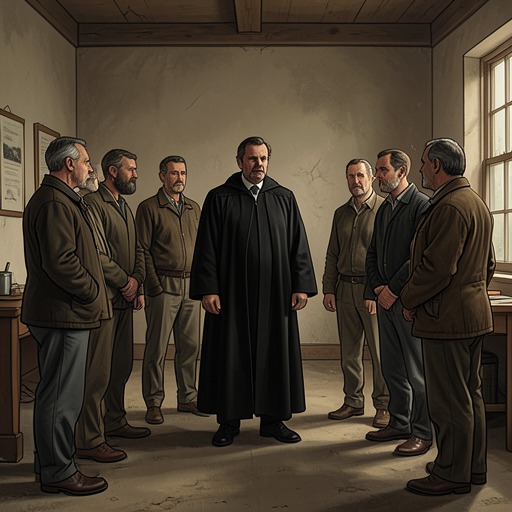
Bailey’s account makes Red’s influence significant partly by contrast with the county’s weakened institutions. The judge could issue rulings and levy fines, but without a sheriff who enforced them or collected the penalties, his formal authority had little force. Red had supplied a kind of informal leverage: his support could help make the sheriff act. That arrangement depended on a powerful individual rather than reliable public resources, and it could not simply be inherited as an office when Red became incapacitated.
Family and Succession
Red’s choices at home shaped the conflict that followed his death. Kate recalls that he had wanted a boy and struggled to know what to do with her after she was born. After her mother died, housekeepers raised Kate more than her father did; eventually, he sent her away to school, apparently hoping education would make her a lady. Bailey likewise remembers Red’s wish for a son and says that, although Red loved Kate and valued family ties, he had tried to make her into the boy he had wanted.
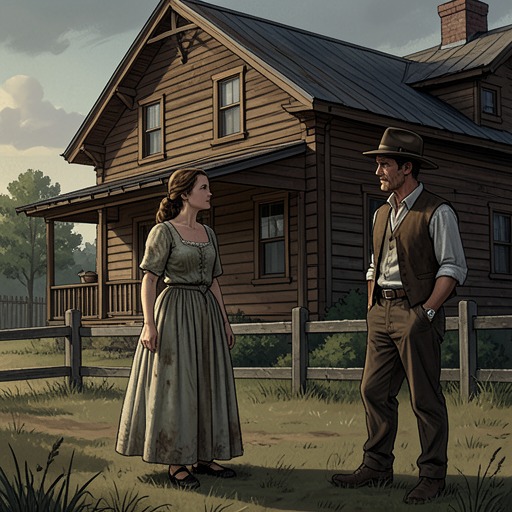
Max Landon entered Red’s household at fifteen. According to Kate, her mother initially objected to the boy’s appearance, but Red allowed him to stay; once given food and decent clothes, Max proved exceptionally hardworking. Red effectively raised him, and after Kate’s mother died Max continued to live in the house. Red admired his work and ranch knowledge. When the foreman was forced to quit after being hurt in a stampede, Max became foreman at twenty. Kate describes him as nearly a son to Red, and Bailey says Red had raised him to run the Diamond M after Red’s death.
That plan placed affection, ability, and inheritance in uneasy proximity. Red did not simply employ Max: he brought him into the household and prepared him to manage the ranch. But Kate remained his daughter, and Bailey emphasizes that Red valued blood ties. The two accounts resist reducing Red’s intentions to a simple choice between them; they instead show a family structure in which his expectations for Max’s work and his bond with Kate did not resolve the question of who should control his estate.
Death and Legacy
Red died a week before Kate tells her story. His will, which Bailey had long been his lawyer’s instrument to carry out, was entirely Red’s creation. Bailey says Red would tell him what he wanted and leave him to implement it; the resulting document was the strangest will the lawyer had encountered, and he believed there had been nothing he could do to change it. He declines to disclose its provisions in their conversation, so the will’s precise terms remain unstated here.
Kate estimates that Red’s estate might exceed one hundred thousand dollars, though she does not claim to know its exact value. Her qualification that she must live to inherit it underscores that her position as daughter did not guarantee a secure future. Red’s legacy therefore joins material wealth to unresolved succession: the ranch that helped sustain a declining county, the public influence that once compensated for weak institutions, and a will whose consequences outlasted the man who designed it.