Red Muldoon’s will
The OutlawsRed Muldoon’s will is the document that determines who inherits the Diamond M Ranch and who may claim authority over it. Its provisions make Kate Muldoon the estate’s principal heir but give Max Landon a conditional place in the ranch’s future, setting an uneasy distinction between ownership and management. Because the will remains unread while Kate faces a threat from Max, its unknown terms become an immediate practical danger as well as a source of suspense; when Judge Bailey finally reads it, the document confirms Kate’s inheritance and sharply narrows Max’s lawful claim.
Creation and Secrecy
Kate knows that her father left a will but does not know what it says. Judge Bailey has refused to disclose its contents, though he has told her that it is a bad will and that he tried to persuade Red to change it. Kate describes her father as stubborn, resistant to the judge’s advice even when the judge considered the document problematic. The secrecy is therefore not evidence that the terms are unknown to everyone: Bailey has the will, but he keeps its contents undisclosed until it can be formally read.
Bailey later explains that he had been Red’s lawyer but had not directed Red’s decisions. Red told him what he wanted, and Bailey carried out those instructions. In Bailey’s account, the will was Red’s own creation, not a document drafted to impose the lawyer’s preferences. He calls it the strangest will he had encountered in his years of practice and says he had been unable to change it. The distinction matters when Max later accuses Bailey of writing the document to disadvantage him: Bailey maintains that he would have used different wording, while insisting that Red personally chose the arrangement.
Family Expectations and the Ranch
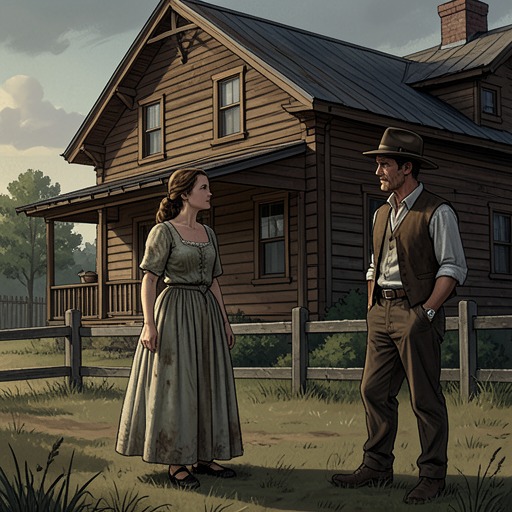
Kate’s understanding of her father’s intentions is shaped by the family history surrounding the Diamond M Ranch. Red loved her, took her hunting and fishing, and tried to raise her as he might have raised a son. In Kate’s view, however, he also transferred to Max some of the affection and expectations he would have given a son. She believes her father valued blood ties but wanted Max to run the ranch, and that he hoped she would marry Max so the property would remain under his control. She also recalls that Red believed a woman could not manage the ranch as well as a man. These are Kate’s explanations of her father’s outlook, not knowledge of the will’s exact clauses; until Bailey reads it, she cannot tell how far her expectations match the written terms.
Kate says Max had pursued the idea of marrying her since she was fifteen. She had told Red she would kill herself rather than be forced into that marriage, and Red did not press the demand, though she understood that he still wanted it. She also suspected Max of taking advantage of her father, but had no proof. Against this background, the will’s eventual distinction between Kate’s inheritance and Max’s prospective position is consequential: it does not make Max the immediate owner, yet it does provide for him to remain involved in the ranch if Kate employs him.
The Delayed Reading
The will’s first scheduled reading is meant to take place on the day Kate believes Max tried to have her killed. She concludes that preventing the reading may have been the reason for the attempt. The threat gives the delay a concrete cost: until the document is read, Kate cannot know whether she legally owns the ranch, what role Max may claim, or what she can demand of him. She asks what will happen if the will gives her the ranch but Max refuses to leave. Her expectation is that he will not give it up, making the question one of enforcement as much as inheritance.
Kate identifies Bailey as the person she can trust in Roily. She has returned from school and, after arriving by stagecoach from Durango, has spoken to no one there except the judge. She once knew many of the town’s residents, but does not know whether those friendships remain dependable. She names banker Adam Jessup and preacher Charles Nathrop as former friends, while warning that Max’s power may frighten townspeople into silence or dishonesty. The uncertainty about local support reinforces why the will’s formal reading matters: its terms can establish Kate’s claim, but they cannot by themselves guarantee that others will help enforce it.
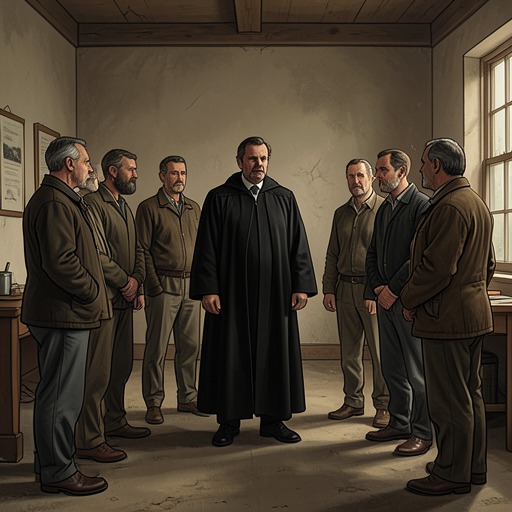
Del Delaney tells Bailey that he intends to bring Kate to the judge’s office so the will can be read, and that he will remain there to hear it despite Max’s objections. They set the reading for the day after tomorrow at three in the afternoon, and Bailey agrees to notify Max. Bailey questions whether Delaney and his companions can protect Kate long enough to reach that point. He also explains the limits of his own authority: he can preside over a trial, but cannot ensure a jury will decide against Max if jurors fear retaliation, and he cannot simply go to the ranch and force Max off it. The will’s scheduled reading thus creates a legal process, not a guarantee of safety or justice.
Provisions and Practical Effect
When Bailey opens the envelope, he first describes Red’s holdings as the ranch and his savings accounts, along with money in a checking account used for the Diamond M’s operating expenses. Max has had access to that checking account and therefore knows its balance, while Bailey says he does not know the amount at that moment. The detail separates the ranch’s long-term ownership from its day-to-day finances: even before the will is read, Max has access to funds tied to operating the property, though that access is not presented as ownership of the estate.
The will leaves Red’s property, land, stock, and cash to his daughter, Kate Muldoon. It expresses Red’s wish that Max continue as foreman of the Diamond M under Kate’s employment and, in time, become a full partner. Its final condition states that if Kate dies, the entire estate goes to Max. The provisions therefore place Kate first in the present line of inheritance, preserve a route for Max to gain a partnership through future employment, and make her death the circumstance under which he would inherit everything. The will does not state that Max already owns the ranch or that he is entitled to control it regardless of Kate’s wishes.
Bailey makes the immediate consequence explicit: if Kate does not want to employ Max, he must vacate the premises within twenty-four hours. Bailey adds that, given Max’s recent attempts to murder her, she is justified in refusing to retain him as foreman. This is the clearest practical effect of the will’s wording in the scene. Max’s position depends on Kate’s decision to employ him; the document does not require her to keep him in charge.
Dispute and Significance
Max reacts to the reading by accusing Bailey of having written the will and obtained Red’s signature when Red was not of sound mind. Bailey rejects the accusation, saying Red was strong-minded and had come to him almost a year earlier with instructions. Max’s challenge attacks both the document’s authorship and the legitimacy of its terms, but the evidence presented at the reading supports Bailey’s account that Red directed the arrangement. The dispute also reveals the gap between Max’s assumption of authority and the will’s actual division of power: he has treated the ranch as if it were already his, whereas the document makes Kate the heir and places his continued employment at her discretion.
The banker Adam Jessup confirms that Max had approached him about borrowing money to buy new stock and improve the Diamond M herd as though the operation already belonged to him. Jessup had told Max he would need to deal through Kate, but Max brushed her aside as if she had no role. After the reading, Kate tells Jessup that she gets everything and that Max receives it only if she dies. John Smith recognizes why that condition would make her a target. In the plot, the will converts a private family arrangement into a public test of whether Kate’s ownership can be respected: it settles what Red put in writing, but its provisions must still contend with Max’s refusal to accept a future in which he is not the ranch’s unquestioned owner.