Wineglass
The OutlawsWineglass is the ranch that anchors Del Delaney’s life before his flight from Montana: he has worked there for ten years, and he imagines building a small cattle spread beside it. The outfit offers him more than a job. It is tied to his mother’s work, his savings, and the possibility of remaining in the region. When a false rape accusation drives him away, Wineglass becomes the homeward destination he can only consider from a distance.
Setting and Work
Wineglass is described as a sizable ranch outfit about ten miles from Prairie City. Del has ridden for it for a decade, a stretch of steady employment that distinguishes his ordinary life from the itinerant existence he later fears. The ranch is not shown through detailed scenes of its buildings or daily operations; its character emerges instead from the work and future Del associates with it.
His mother is part of that local connection. She teaches primary grades at the Prairie City school and cooks for Wineglass during the summers. Del therefore has ties to both the nearby town and the ranch: she works in each, while his own long service is with the outfit. On the night he goes into Prairie City for the monthly dance, he stops at his mother’s house to clean up, expecting to sleep late the next morning and ride back to Wineglass that afternoon. The plan captures the regularity of the life he expects to resume.
A Future Beside the Ranch
Wineglass also represents a possible step beyond wage work. Del has saved about a thousand dollars, and his mother is prepared to lend him additional money. His boss has promised to help him start a small spread next to the ranch, while allowing him to continue working part time until his own herd grows. The proposal links independence to continued employment rather than requiring Del to abandon the place where he has spent years.
Del is modest about his prospects as a partner, describing himself as a cowhand earning forty dollars a month and board. He doubts that Ruby Prentiss would want to help a poor man establish a ten-cow spread. That contrast gives Wineglass’s promise a particular scale: Del’s ambition is not wealth or prominence, but a small foothold of his own, made possible by savings, his mother’s support, and his employer’s practical assistance.
The Ranch and Del’s Flight
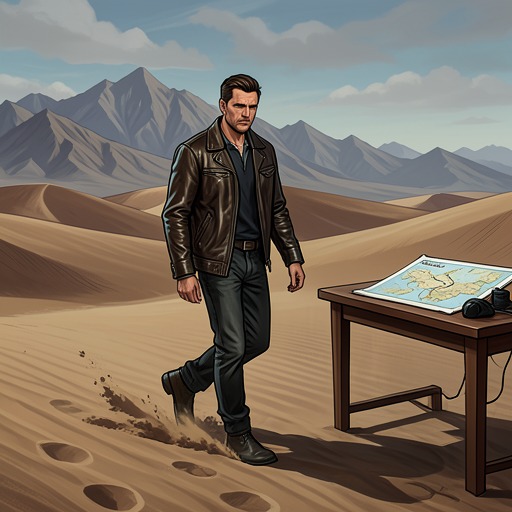
After Ruby accuses him of rape, Del leaves Prairie City rather than face the law. He saddles his buckskin, Jim Dandy, and rides out appearing to head toward Wineglass; once beyond the town’s sight, he turns southwest and gallops away. The ranch is thus present in his first movement out of town as the apparent destination of a man who has not yet revealed that he is fleeing. Del does not reach it in this account: he continues in the other direction, eventually crossing into Wyoming.
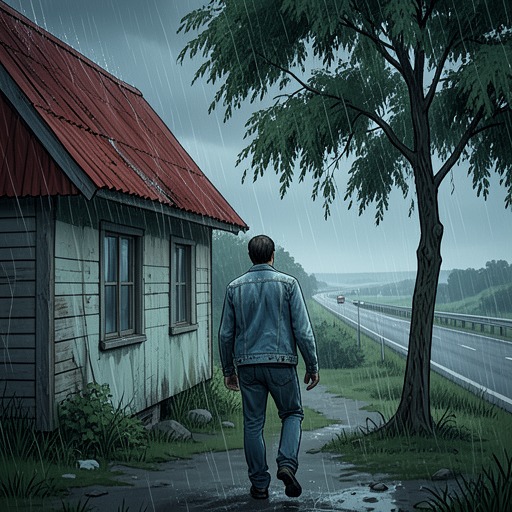
The years of work at Wineglass make his escape a rupture in an established life, not simply a journey away from Prairie City. On the road, he avoids larger towns and county seats, endures late-spring rain and occasional snow, and exchanges comfort for freedom because he fears imprisonment. He considers stopping for work and riding on before the law catches up. That unsettled prospect stands against the concrete arrangement he had at the ranch: regular work and a chance to establish a small herd nearby.
Home as a Possibility
As Del rides, he wonders whether he might someday return to see his mother, go back to northern Montana, and find that the law has forgotten him. He reaches no firm conclusion; for the time being, he has to wait and keep moving. Wineglass matters in that uncertainty because it belongs to the life he can imagine recovering, alongside his mother and the region where he had worked for ten years.
The ranch’s significance is therefore rooted in what Del loses access to, rather than in a later return or any described change at the outfit. It embodies a modest, locally supported alternative to life on the run: a job, an employer willing to help, and the prospect of land and cattle of his own. The false accusation converts that attainable future into a possibility deferred, while the ranch remains a measure of the home Del hopes he may yet reach again.