Ahiga entrance
The Outsider (Stephen King Edition)The Ahiga entrance is Marysville Hole’s back door: a service and emergency route connecting to the cave’s celebrated Chamber of Sound, and later the path by which rescue parties entered after two boys disappeared underground. Its history binds practical access to catastrophe. After the cave was closed, the main entrance was cemented over, but the Ahiga entrance’s status remained uncertain; that ambiguity would draw Ralph Anderson and Holly Gibney toward the cave and into the danger left behind by its past.
Position and purpose
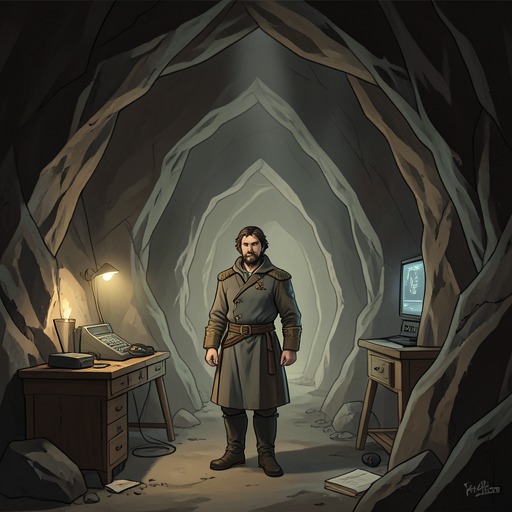
The Ahiga entrance was less glamorous than the public entrance and the Chamber of Sound, but it had a direct connection to that main chamber. Cave staff used it to bring in supplies, and it served as an emergency way out. The route’s practical importance made it more than a secondary entrance: it linked the tourist-facing cave to the working passages behind the public experience.
Tourists were not allowed to enter by the Ahiga side. A road ran past the gift shop toward it, and the area was associated with pictographs that Holly Gibney knew about from the cave map still available online. A sign bearing an image of Chief Ahiga pointed visitors toward the best pictographs. The contrast between that public sign and the entrance’s restricted use marks the gap between the cave presented to tourists and the wider, less accessible system behind it.
The rescue route and its cost
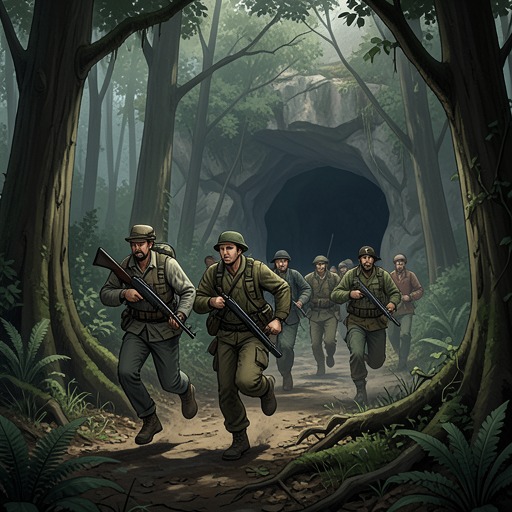
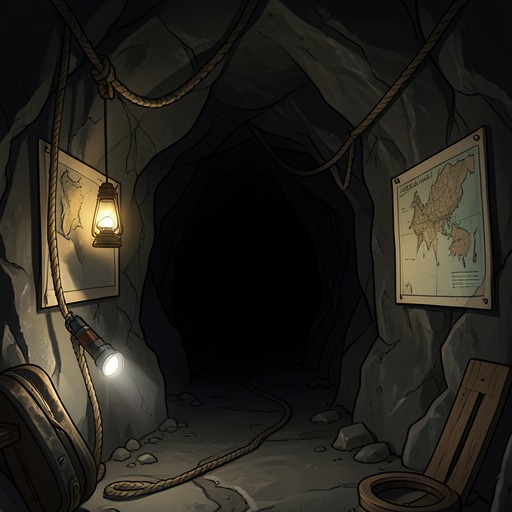
Roger, who had explored the Ahiga side, knew it well enough to guide others through it. When he and his companions heard the lost boys’ cries again from that side, they fetched rope and lights from the equipment building and went in to rescue them. The route that seemed to offer a way to reach the children instead led the rescuers into the maze beneath the cave.
Ev Brinkley remained behind to pay out rope and tie on additional lengths as needed. When he was down to his last hundred feet of free rope, he heard a sound like a cherry bomb enclosed in a toilet bowl. Lovie Bolton believed that someone had fired a pistol in the cave in an attempt to guide the boys toward the rescue party, triggering a collapse; she rejected the idea that Roger had fired it. Alec Pelley likewise reasoned that a gunshot could bring down rock, comparing its effect to firing a shotgun to start an avalanche. The other rescuers did not return. The disaster made the Ahiga side a route inseparable from both the attempt to save the boys and the deaths of those who went in after them.
Closure and uncertain access
Over the years, a dozen search parties entered Marysville Hole. After the 2007 earthquake, which measured only three or four on the Richter scale, the cave was considered too dangerous to enter. The Chamber of Sound largely withstood the shaking, although stalactites fell from its ceiling; other passages collapsed, including one called the Art Gallery. The cave was closed, and Lovie believed that both the main entrance and the Ahiga entrance were stopped up.
The entrances were not, however, described as having the same kind of barrier. The main entrance had been cemented over to prevent another child from getting lost. The Ahiga entrance had also been boarded up, but the articles Holly had read did not say whether it had been plugged with cement. That was not proof that it remained open: Ralph pointed out that the missing information did not establish the entrance’s condition. Nevertheless, the distinction mattered. A cement plug would require a powerful charge of dynamite to breach, and disturbing it could worsen the damage begun by the earthquake.
The path into the condemned cave
During the confrontation at Marysville Hole, Holly identified the road beyond the gift shop as the route to the Ahiga entrance. With Jack Hoskins pinning the group down with a rifle, she proposed that Lieutenant Sablo draw his fire while she and Ralph crossed the exposed stretch to that road. She estimated they would need to cover about fifty yards in twelve to fifteen seconds. The plan made the Ahiga route an immediate tactical possibility, not merely a point on the cave’s old tourist map.
Ralph and Holly eventually followed the Ahiga path as it turned sharply left, almost doubling back, and ended at a small, shed-like structure. Its faded green paint and ajar, windowless door stood beside two weathered warnings: no trespassing and condemnation by order of the Marysville town council. Inside, boards had been torn away from a fissure about six feet wide, their splintered ends still fixed to the rock with large, rusted bolts. The entrance was abandoned and officially condemned, yet physically breached.
From entrance to perilous passage
Ralph and Holly stepped through the fissure into a descending rocky corridor. Holly’s flashlight picked out glowing droplets leading into the dark—the same residue her improvised black light had detected in Ralph’s living room. They could walk side by side for only about sixty feet before the passage narrowed, forcing Holly to hand Ralph the flashlight while he kept his pistol in his other hand. The Ahiga entrance thus brought the investigation from an uncertain clue aboveground into the cave’s physical evidence.
Farther down, the passage narrowed where rubble crowded both sides, beneath a deep cavity in the rock roof. Ralph recognized the place as the site of the old collapse; the second rescue party had apparently carried away the largest pieces, leaving the smaller debris pushed aside. Glowing traces remained among the rubble. Near the fissure and along the descent, the old disaster was not simply recounted as history: its damaged passage still shaped the route, and the residue suggested a presence had passed through it.
The cave’s acoustics and fragile roof continued to make the Ahiga route dangerous. When the outsider confronted Ralph and Holly, it reminded them that the rescue collapse had occurred in the Devil’s Slide passage, where the gunshot’s sound would have been dampened. It warned that a shot in the cave could bring down larger stalactites or even collapse the bluff above, burying everyone in a landslide. The threat turned the entrance’s long history of sound, rockfall, and failed rescue into a constraint on the confrontation: inside Marysville Hole, firing a weapon might be as deadly to the people using it as to their enemy.