Channel 81 recording of Harlan Coben's lecture
The Outsider (Stephen King Edition)The Channel 81 recording of Harlan Coben's lecture is the central visual record that places Terry Maitland in Cap City while police evidence and eyewitness claims place him in Flint City during Frank Peterson's abduction and murder. Discovered online and replayed by investigators and the defense, the public-access footage transforms an apparent impossibility into a documented contradiction: the man on screen looks and behaves like Terry, and appears in the audience and in a close-up asking a question. It becomes a crucial alibi, but not an instant answer to the larger mystery.
The Recording and Its Discovery
The recording appears on Channel 81, Cap City's public-access website, among videos of city council meetings, a bridge reopening, a library tutorial, and a zoo update. Alec Pelley sends Ralph Anderson a link with a pointed warning to check it before pursuing the case against Terry. The link leads to a video titled “HARLAN COBEN SPEAKS TO TRI-STATE ENGLISH TEACHERS,” showing the Sheraton logo behind the event's introduction. Its setting and ordinary civic context make the revelation more consequential: this is not a private recollection or an unverified claim, but a program already available for inspection.
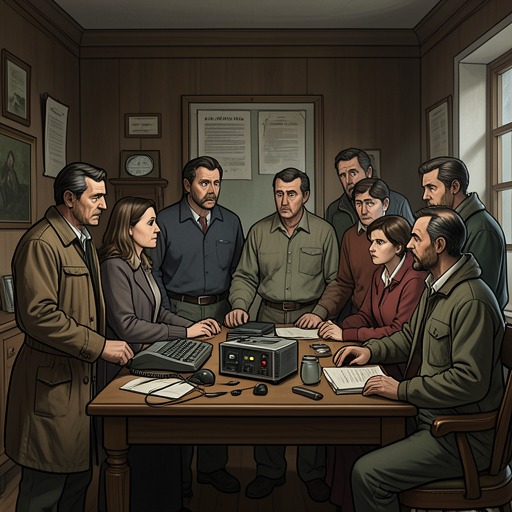
The recording begins with the association president welcoming the audience and introducing Coben. Ralph and District Attorney Bill Samuels skip ahead to the end of the introduction, at about nine minutes and thirty seconds. At the speaker's entrance, the camera shows the audience applauding and picks out a table near the front where Terry is seated with Roundhill, Quade, and Grant. Ralph recognizes him and tells Samuels that the man is Terry, not merely someone who resembles his son's former coach. The recognition is personal as well as visual: the apparent alibi belongs to the same man Ralph arrested.
What the Footage Establishes
Coben speaks for about forty minutes, and the video periodically cuts away from the podium to audience members listening or responding. Terry appears in a number of these shots. The strongest passage comes during the question-and-answer session: the camera switches to Terry in close-up as he stands to ask Coben whether a writer always knows the culprit in advance. The shot captures more than a resemblance in a crowd; it records Terry's face and voice in a specific interaction at the event.
The footage conflicts with evidence placing Terry in Flint City at the same time. An account of the station surveillance, for example, describes a man with Terry's appearance entering the Vogel Transportation Center at 9:33 p.m. on July 10, buying a paperback at 9:35, and leaving at 9:39. The tape therefore does not simply add another sighting to a disputed trail. It places an apparently identical Terry at a different location, sharpening the central problem of the case: how could the same man be in both places?
The discovery also revises the significance of an earlier detail in the prosecution's case. During questioning, Ralph had contrasted Arlene Stanhope's claim that she saw Terry putting Frank's bicycle into the stolen van around three o'clock with Terry's reported presence at a Sheraton meeting. The recording supplies a verifiable visual record of that conference attendance, rather than leaving the conflict to rest on what Terry said or what a witness remembered. The evidence points in opposing directions, and neither can be dismissed merely by repeating the other's account.
An Alibi and Its Limits
The recording changes the defense's understanding of what may be proved. When Marcy and Howie Gold visit Terry in jail with news that the public-access channel taped the lecture, Terry initially reacts with surprise: he remembers that the introduction mentioned a recording but had not paid attention. He then realizes that the question he asked Coben may have been captured on the audio, and wonders whether it could be matched to his voice. Marcy tells him that he is already visible in the video; Howie adds that Terry appears about half a dozen times, including in shots of the audience laughing or applauding. The spoken question is not the only evidence: repeated images establish his presence across the event.
Terry asks whether this means the case is closed and he will be free the next day. Howie refuses to promise that outcome. The arraignment is still ahead, and the prosecution has forensic evidence it considers powerful. The scene distinguishes an alibi's importance from its immediate legal effect: the recording creates a major challenge for the accusation but does not erase the other evidence or end the proceedings on the spot.
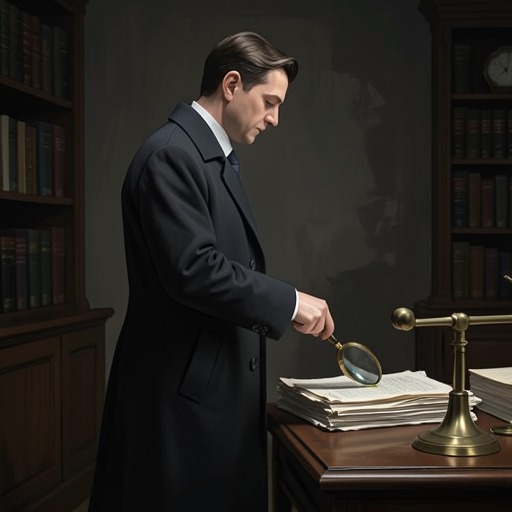
Ralph's response is equally unsettled. He watches the video with Samuels and sees Terry in the audience and then, unmistakably, standing to ask his question. Yet his confidence in the image does not produce confidence in its explanation. He wonders whether the perfectly timed close-up could somehow be part of a setup, and whether the apparent contradiction might be an elaborate deception. He has no evidence that it is, but cannot make the footage fit the case he believed he had. His resistance shows how a record can be clear about what appears before the camera while leaving unresolved what that appearance means.
Custody, Publicity, and the Image
The lecture video belongs to a larger chain of mediated images that shapes the case and its human costs. A sports photographer captures Terry at the baseball field at the moment of his arrest; the next day's front-page photograph makes him look both vulnerable and guilty. Later, the presence of police and a mobile crime unit at the Maitland home draws neighbors onto their lawns, where the spread of information by cell phone makes the family's private crisis public. The lecture recording works differently: it helps expose the weakness in a simple accusation, but it too turns Terry's recognizable image into evidence to be circulated and interpreted.
The courtroom coverage that follows his arraignment offers a revealing contrast. Television footage records the shooting and Terry's actions during it, including his effort to push Marcy out of the line of fire. But Ralph insists that the burned man standing beside Terry is not visible in any of the recorded footage. Holly Gibney later asks whether the courthouse coverage was checked; Ralph confirms that it was, and that the man is absent from every clip. The recordings are thus neither all-seeing nor interchangeable. The Sheraton footage documents an apparent double's presence; the courthouse footage records a death yet fails to contain a figure Ralph says he saw. Images become evidence, but their gaps remain part of the case.
Consequence and Narrative Significance
At the Sheraton, Ralph reviews the hotel's sharp, full-color security footage as well. It shows a man resembling Terry in the lobby, gift shop, fitness room, and autograph line. Ralph considers some views uncertain, but judges the images of the man using the exercise equipment and waiting for an autograph to be unmistakable. That footage supports the lecture recording, although the Channel 81 close-up of Terry asking a question makes the hotel surveillance seem almost beside the point. The manager also says the room associated with Terry and William Quade has been occupied and cleaned repeatedly since their stay, limiting the prospect of recovering further evidence there.
Even after seeing the lecture video, Ralph privately entertains the possibility of a double. The recording proves, to his satisfaction, that Terry was in Cap City; it cannot, by itself, explain the apparently matching figure implicated in the crime. That distinction preserves the story's central tension between what can be documented and what can be understood. The recording is powerful not because it solves the contradiction, but because it prevents the investigation from treating one version of Terry's whereabouts as the whole truth.