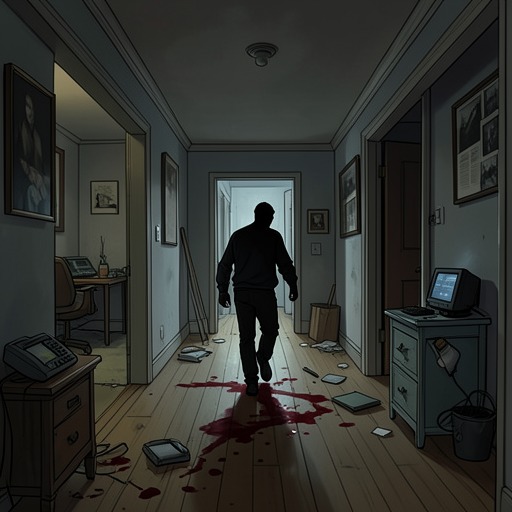
El Cuco’s hibernation
The Outsider (Stephen King Edition)El Cuco’s hibernation is the hidden interval in its transformation cycle: after killing, it marks the person whose identity it will take, then withdraws while the change proceeds. Holly Gibney describes this as a form of hibernation rather than uninterrupted stillness, with the creature resting in a preselected den and sometimes moving about. The pattern links concealment to the creature’s choice of its next identity and to the places where it feels most at home.
Place in the Transformation Cycle
Holly lays out the sequence for the investigators: the murders come first, followed by the marking of the next victim, whom she calls its next self; then the creature goes into hiding as the transformation takes place. The interval is therefore not merely an escape from notice. It is part of the process by which the killer prepares to become someone else, and its duration gives the apparent changes of identity a hidden timetable.
Holly contrasts the legends, in which transformation takes years or even generations, with her belief that it takes only weeks or months at most. She explains that the creature may move from time to time but mostly remains in its chosen den. The prolonged, concealed change helps account for why the investigators find traces of a pattern rather than a continuously visible transformation.
Dens and Places of Death
The investigators consider whether El Cuco could have learned about the graveyard as it absorbed Terry Maitland’s thoughts and memories. The graveyard was where people buried their dead before the town dried up, and it held the graves of many of Terry’s ancestors. Its connection to Terry makes it a plausible place for the creature to know about through the identity it was acquiring.
Holly says that legends about El Cuco describe creatures that favor places of death, where they feel most at home. Jeannie Anderson extends that idea by imagining a graveyard as a fitting place for creatures that feed on sadness. Together, these observations connect the creature’s possible resting places to death and grief, while leaving the graveyard’s specific role as a den unresolved.
Evidence and Uncertainty
The graveyard sits near the barn where discarded clothes were found, and the investigators also consider the unexplained substance that had blackened the hay. These details give the theory a tangible setting: a place associated with Terry’s family history, near evidence already troubling the investigators. But the clues do not settle the case. Ralph Anderson is willing, for the time being, to accept that an outsider may explain much of what they have found, yet the disappearing man at the courthouse and the evidence that Terry was in two places at once remain obstacles to a complete explanation.
Hibernation thus offers the investigators a way to understand the gap between the creature’s acts and its changing appearance, but it remains part of a theory built from legends, circumstantial traces, and an impossible double. The concealed interval can organize those clues without resolving the central contradiction that continues to trouble Ralph.