El Cuco’s projection limits
The Outsider (Stephen King Edition)El Cuco’s projection limits are the constraints that distinguish its distant manifestations from its physical presence. The projections can resemble a target closely, appear in places the creature is not wholly occupying, and still produce small physical effects; they do not, however, amount to a complete or effortless second body. The rule helps explain both the traces left behind at the Anderson home and the creature’s unfinished transformation into Claude Bolton.
What Projection Can Do
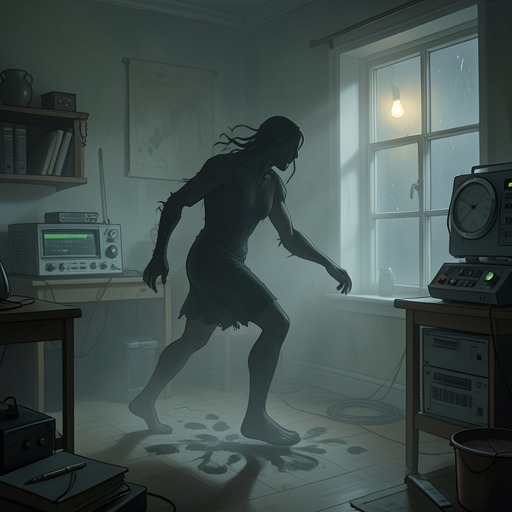
Holly Gibney proposes that the appearances witnessed by Grace Maitland and Jeannie Anderson were projections. In her account, a small portion of El Cuco’s physical self was present with them: enough to move a chair and switch on the stove light, but not enough to leave impressions on the new carpet. The detail marks a boundary between an image that can act upon its surroundings and a fully embodied visitor. The manifestation is neither merely an illusion nor an ordinary physical arrival; it occupies an unstable middle ground.
Holly’s explanation also gives the projections a material consequence. If producing them requires El Cuco to exert itself, each distant appearance costs energy. What seems like uncanny reach is therefore limited by the creature’s body: its projected presence can extend its influence, but the effort tires it. The faint residues in the Anderson living room matter precisely because they register this incomplete contact, making the projection’s physical component detectable even when the creature has not left ordinary footprints.
Costs, Hunger, and Timing
The projections occur at a cost that is sharper because Holly believes El Cuco should be hibernating during this part of its cycle. Instead, it has been exerting itself. Its activity suggests that it has been using projection when its body ought to be resting, a mismatch that leaves it weak. The rule thus connects the apparently separate appearances to the creature’s larger condition: projection extends its reach, but repeated use drains a body already out of its expected rhythm.
Holly considers hunger another possible cause of El Cuco’s actions. When Alec Pelley wonders why it would act at a particular time, she suggests it may have had to, perhaps because it was too hungry to wait for a better opportunity. Ralph Anderson offers a darker alternative: the creature may simply have become arrogant, like serial killers who begin to imagine themselves above restraint. The exchange leaves the immediate motive unresolved, but it frames the projections and other risky acts as behavior under pressure—whether the pressure is need or confidence in impunity.
Projection and Physical Presence
The courthouse appearance provides the strongest contrast between projection and full embodiment. Holly believes El Cuco may have appeared wholly in the flesh there only once, on the day Terry Maitland was shot, because it was hungry and expected a crowd from which it could feed. Yet Howie Gold points out an apparent contradiction: if the creature was physically present, it did not appear on the television videotape. Holly accepts the comparison to a vampire that casts no reflection. The scene therefore makes physical presence no guarantee of ordinary visual evidence; even an embodied El Cuco can evade the record that should, by everyday assumptions, confirm it.
This distinction also sustains the investigation’s uncertainty. The characters can reason from the chair, the stove light, the carpet, and the videotape, but those clues do not make the creature fully intelligible. Holly states that she does not know what it is, even while proposing a detailed account of how its appearances work. The projection rule is consequently practical rather than a complete supernatural taxonomy: it helps explain particular traces and limits, without resolving the creature’s nature.
The Unfinished Image
At the later confrontation, Ralph Anderson sees El Cuco wearing Claude’s face, but the likeness remains visibly imperfect. The chin is too square and cleft, the jaw is longer on one side, reddish-brown streaks interrupt the black hair, and one eye is blue while the other is brown. Ralph recognizes the blue eye from the moment Terry died. The creature’s appearance makes transformation look like an incomplete process rather than a finished disguise.
Ralph connects that visible incompletion to Jeannie’s earlier projection: the projected figure may have looked exactly like Claude, while the creature’s physical self had not yet caught up. Projection can therefore present a more complete likeness than the changing body itself. That gap is the rule’s most consequential limit and its most unsettling feature: the image can arrive ahead of the flesh, while the flesh remains marked by the deaths and identities through which El Cuco is changing.