El Cuco’s projections
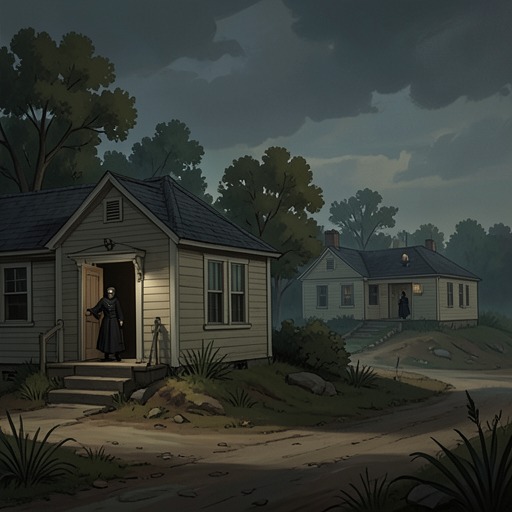
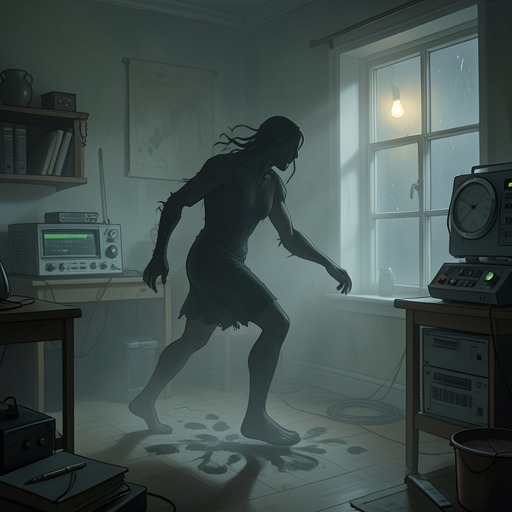
The Outsider (Stephen King Edition)El Cuco’s projections are partial appearances of the creature rather than wholly separate bodies. Holly’s account offers a way to reconcile the apparitions witnessed by Grace Maitland and Jeanette Anderson with the scant physical evidence left behind: a small portion of El Cuco’s actual body is present, enough to affect objects, but not enough to behave like a fully material person. The projections make the creature’s reach seem broader than its physical presence, while their traces reveal that the two are not entirely separable.
How the Projections Work
Holly believes the apparitions seen by Grace Maitland and Jeanette Anderson were projections. She reasons that some part of El Cuco’s physical self must accompany them: at Ralph Anderson’s home, the visitor left traces in the living room, moved a chair, and switched on the stove light, yet made no impressions in the new carpet. The scene suggests a presence capable of acting on the world without settling into it completely.
That limited embodiment also has a cost. Holly thinks projecting exhausts El Cuco, which matters because it should instead be in the hibernating phase of its cycle. Rather than resting, it has been exerting itself. Projection is therefore not an effortless extension of the creature’s power: it drains a body already out of phase with its expected cycle.
Evidence and Limits
Howie Gold tests the explanation against the most striking apparent exception: El Cuco’s presence in the flesh at the courthouse, despite its absence from the television footage. Holly accepts the premise. In her theory, that may have been the creature’s only wholly physical appearance, prompted by hunger and the prospect of abundant food at the scene. The distinction between a projection and a full-bodied manifestation helps explain how a creature could be present to witnesses yet evade a recording.
Holly remains uncertain about the creature’s ultimate nature. Asked whether it is supernatural, she does not claim to know what it is. Her account is an inference drawn from traces, absences, and observed effects—not a complete explanation of the being behind them.
Projection and Transformation
The distinction between El Cuco’s projected appearance and its changing physical form becomes visible in the confrontation at Marysville Hole. The creature’s face resembles Claude Bolton’s, but it has not fully resolved into Claude’s likeness: the chin and jaw are wrong, its hair carries reddish-brown streaks, and one eye is blue rather than brown. Ralph Anderson recognizes that blue eye as the one he saw go dark when Terry Maitland died.
Ralph concludes that the projection Jeanette saw could have looked exactly like Claude even though the creature’s actual body had not caught up with that image. Projection can thus present a more complete likeness than the transforming body has yet achieved. The gap between image and flesh is both a practical limit on El Cuco’s imitation and a clue that its transformations remain unfinished.