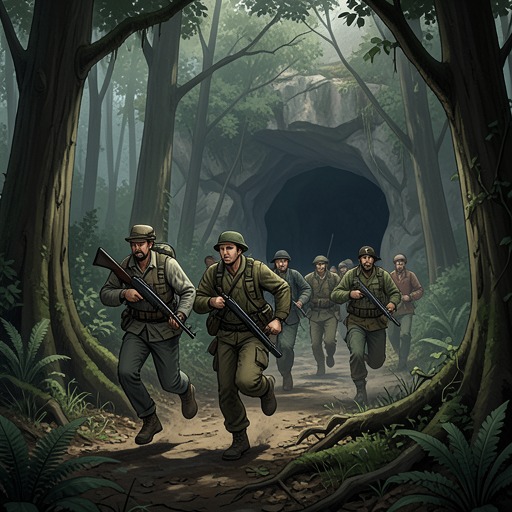
Jack Hoskins’s Winchester rifle
The Outsider (Stephen King Edition)Jack Hoskins’s Winchester rifle is the weapon with which he prepares to ambush the investigators at the Marysville Hole. A Winchester .300 bolt-action fitted with a Leupold VX-1 riflescope, it offers Jack the practical reach and confidence of a professional firearm; in the stakeout, however, its precision cannot resolve the uncertainty surrounding his orders, his illness, or the visitor who promised to cure him.
The Rifle and Its Specifications
Jack retrieves the rifle from a locked case in his truck bed, treating it as his pride and joy. He identifies it as a Winchester .300 bolt-action and has mounted a Leupold VX-1 riflescope. By his estimate, he can hit a target at two thousand yards, though only on four out of six tries on a good day and without wind. He does not expect to shoot from anything like that distance if the opportunity comes. The qualification makes the weapon’s power concrete without making it limitless: Jack is confident in its capability, but his own estimate retains room for error.
The rifle’s weight in the scene is also practical. After parking by a derelict service building near the cave, Jack takes it out of the lockbox and carries it up the rocky bluff to a position overlooking the parking lot and boarded-up entrance. He opens the case and mounts the sight there, aligning the rifle with the approach he expects the investigators to use. The weapon is not merely present; Jack deliberately prepares it for a particular line of fire.
The Stakeout Above the Marysville Hole
Jack has been told by a visitor with tattoos on his fingers to handle the investigators if they come to the Marysville Hole. He does not know whether they will. The visitor has said that Jack will be restored to health and be free of cancer, whether the investigators arrive or not; Jack’s assignment is therefore framed as a conditional ambush, but his promised reward is presented as certain.
From the bluff, the rifle’s scope brings the parking lot and cave entrance into view. Jack calculates that anyone who appears there will look as large as the ticket booth he passed. He settles into the shade beneath an overhanging rock, first checking for snakes, scorpions, and other wildlife, then drinks water, takes pep pills, and uses cocaine from a bottle he has bought. With the Winchester across his lap, he waits as the sun lowers, dozing intermittently but remaining alert to movement. The familiar routine of a stakeout, repeated over the course of his police career, makes the extraordinary assignment feel briefly like ordinary police work.
No investigators arrive that day. Jack concludes that they are not coming, at least not yet, and the finger-tattooed visitor—if the voice is truly the visitor’s and not Jack imagining agreement—confirms that Jack will return the next day. Jack accepts the prospect of waiting for a week, or even a month. He takes the rifle back down the bluff and locks it in the truck’s box before driving toward Tippit for supplies. The stakeout thus ends without a shot, but not with the assignment abandoned: the rifle remains ready for another attempt.
Promise, Doubt, and the Weapon’s Limits
The Winchester stands against Jack’s doubts without silencing them. He wonders whether the visitor is lying, whether someone who can give him what he wants can also take it away, whether the cancer is real, and whether the visitor is real at all. He pushes these questions aside and returns to his preparations. His confidence in the rifle contrasts with his uncertainty about the mission’s supernatural promise: he knows what the scope can show him and what the weapon can do, but he cannot verify the source of his orders or the promised cure.
That contrast gives the rifle a double function. It is a credible instrument of violence, carefully stored, equipped, and aimed at the route the investigators might take; it is also the concrete object around which Jack organizes an increasingly precarious belief. He can measure its range in yards and assess its hit rate, while the conditions governing the ambush remain beyond measurement. His repeated intention to return to the bluff keeps the threat active even after the first day passes without a target.
Narrative Significance
The rifle makes Jack’s threat legible before any confrontation occurs. The reader sees the ambush being prepared from a position above the cave, through the sightline Jack has chosen, while the intended targets have not yet appeared. This emphasis on waiting sustains suspense through anticipation rather than action: the weapon is ready, the entrance is watched, and the promised confrontation remains deferred.
The object also sharpens the tension between trained procedure and fractured judgment. Jack treats the stakeout as a familiar police task, checks the surrounding terrain for hazards, and calculates what the scope will show. Yet he is dependent on an apparition or visitor he cannot confidently distinguish from his own imagination, and he keeps returning to the same doubtful promise of being made well. The Winchester offers no answer to that contradiction. It can focus Jack’s attention on the cave entrance, but it cannot tell him whether anyone will come—or whether the certainty he finds in the weapon is enough to make the mission real.