Regis
The Outsider (Stephen King Edition)Regis is the Ohio setting where evidence from the Howard sisters’ murders converges on Heath Holmes. Its residential streets and abandoned industrial fringe connect the suspect’s family home, a former factory, and the investigation’s search for traces of the crime, making the town’s derelict spaces a practical part of the case rather than a mere backdrop.
Setting and Local Landscape
Holly Gibney visits the house where Holmes had been staying with his mother during his vacation. The windows are boarded, the lawn is uncut, and a sign offers the property for sale through the First National Bank of Dayton. The house’s vacancy gives physical form to the disappearance of the Holmes family from the neighborhood, though Holly recognizes that a photograph of the property might register as sorrow to some viewers and as no more than an image to others.
The surrounding area is described as a transition between farmland and industrial abandonment. Rusted railway tracks run past a deserted station with boarded windows; vine-covered boxcars, old storage facilities, and obsolete repair sheds occupy the same neglected corridor. A broken factory stands nearby, its crumbling brick wall marked with a spray-painted swastika. The setting combines ordinary infrastructure with visible decay, offering investigators a landscape of neglected buildings and routes rather than a clear, orderly crime scene.
The Holmes Home and the Case
Holly’s visit to the boarded house takes place during her investigation of the Howard sisters’ murders. She considers how the family’s loss has emptied the property and contrasts that local aftermath with the broader grief and anger left by Frank Peterson’s death in Flint City. The house therefore links a specific suspected killer’s family circumstances to the wider pattern of sorrow surrounding the investigations, without making the two communities’ experiences identical.
The case evidence also places Holmes in Regis during the period when the Howard sisters were killed. His mother maintained that he remained in town, and neighbors reportedly saw him doing chores and errands there on the day the girls disappeared. That account sits uneasily beside the evidence against him and the investigation’s central problem: evidence pointing toward Holmes while his whereabouts were also supported by people who had seen him locally.
The Abandoned Factory
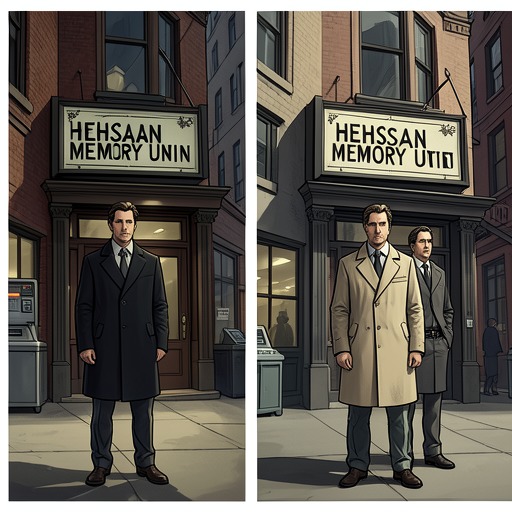
The factory on Regis’s industrial fringe becomes a significant evidence site after deputies from the Montgomery County Sheriff's Office inspect locations Holly photographed. They find a pile of bloody clothes inside, including an orderly’s jacket bearing a tag marked as Heisman Memory Unit property. The clothing provides a material link between the abandoned site and the care facility where Holmes had worked.
Investigators anticipate that forensic examination of the clothing may connect it to one or both of the Howard sisters, and that fingerprints might belong to Holmes, potentially blurred if his transformation had begun. The evidence is described at this point as a discovery and a basis for further testing, not as a completed forensic result. Regis’s derelict factory thus serves as a repository of clues whose significance depends on subsequent analysis.
Narrative Significance
Regis gathers the investigation’s domestic and industrial traces into one small geography: a family home left boarded and for sale, a former workplace represented by the jacket, and abandoned facilities where evidence can remain concealed. The town’s neglected railway corridor and factory make the investigators’ movement through the landscape part of the work of reconstructing the case.
The contrast between neighbors’ accounts of Holmes’s ordinary activity and the evidence associated with the murders prevents Regis from functioning as a simple explanation of guilt or innocence. Instead, the town holds competing traces: everyday local observation, an emptied home, and physical evidence recovered from abandonment. Its role in the narrative is to make the investigation’s uncertainty tangible in the very places where its clues are found.