The Missing Shirt
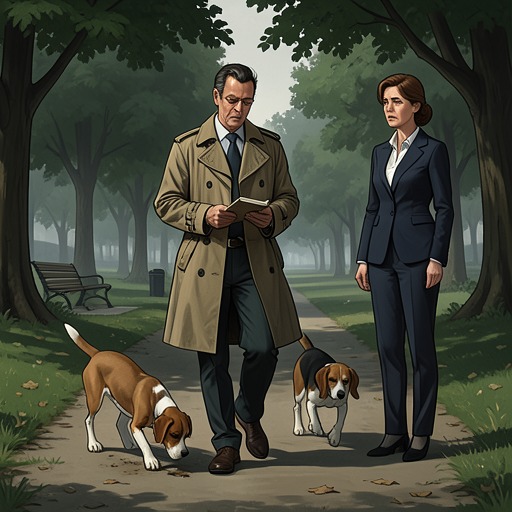
The Outsider (Stephen King Edition)The Missing Shirt is the apparently ordinary garment whose absence from the barn inventory becomes a consequential investigative clue. Terry Maitland’s clothing there is listed as pants, underpants, socks, and sneakers, but no shirt; later, Ralph Anderson and Alec Pelley connect that gap to something worn on the head by a badly disfigured man seen at the courthouse. Because the garment may also have been the shirt Terry wore in train-station security footage, the clue offers a possible material link between scenes that seem impossible to reconcile. Its identity remains a hypothesis requiring verification, not a conclusion established by the evidence.
The Inventory and the Omission
The shirt first matters through its absence. Reviewing the description of clothing left in the barn, Ralph notices that the list names pants, underpants, socks, and sneakers but no shirt. Claude Bolton had mentioned the same omission, and Yune Sablo had directed Ralph back to it while distinguishing the clue from the tire tracks. Yune suggests two mundane possibilities: perhaps the missing shirt was the wearer’s favorite, or perhaps there was no other shirt available when he left the barn. Neither possibility explains where it went, but the inventory turns an incomplete set of clothes into a question with potential bearing on the investigation.
The omission acquires a different significance when Ralph recalls the courthouse. In the seconds surrounding Terry’s fatal shooting, Ralph had noticed a badly disfigured man wearing something on his head. His attention had been occupied by the crowd and other disturbing details, so the item registered only imprecisely. As he reconstructs the scene, he recalls that it seemed larger than a bandanna and hung down toward the man’s shoulders. A shirt, he considers, could have been worn that way. The recollection does not establish what the garment was; it supplies a new way to read the earlier sighting.
From Head Covering to Possible Evidence
Ralph’s association brings together three otherwise separate details: the absent shirt in the barn, the covered head of the man at the courthouse, and the shirt Terry wore in security footage from a train station. The crucial possibility is not simply that a shirt was used as a head covering, but that this might be the particular garment missing from the barn and visible in the footage. Ralph frames the connection as uncertain and asks whether there is a way to find out. The material object thus shifts from a gap in an inventory to a possible means of testing whether the courthouse figure and the evidence concerning Terry are connected.
Ralph does not pursue the idea alone. He recognizes that he needs Jeannie Anderson, who is more adept with computers, to help examine the possibility. He also considers whether Howard Gold and Alec Pelley should be treated as allies rather than adversaries, recalling Pelley’s suggestion that they might be on the same side. The shirt’s investigative value therefore depends not only on identifying an object but also on coordinating people and information that Ralph had previously kept at a distance.
Independent Recognition and Limits
When Ralph later raises the courthouse figure with Howard Gold and Alec Pelley, he deliberately withholds what the man had worn on his head and asks whether either of them noticed him. Howard says his attention was fixed on Terry and Marcy Maitland. Alec, by contrast, remembers the burned-looking man and initially thought the head covering might have been a bandanna or kerchief. He independently reaches the same alternative Ralph has considered: it could have been a shirt, possibly the one missing from the barn and worn by Terry in the train-station footage. Yune confirms that Alec has identified the connection Ralph had in mind.
That convergence makes the idea more than a private misremembering, but it does not settle the object’s identity. Ralph’s memory is a reconstruction of a brief, crowded moment, and Alec’s first impression was also of a bandanna or kerchief. Even if the courthouse covering was a shirt, the possibility that it was the missing garment—and specifically Terry’s shirt from the footage—still needs to be tested. Howard’s question, whether Ralph is still trying to implicate Terry, also underscores the interpretive stakes: the clue could be misread as another attempt to blame Terry, when Ralph is pursuing an explanation for evidence that complicates the case against him.
Narrative Function
The Missing Shirt makes absence legible without making it conclusive. A list that seems complete enough to name four kinds of clothing is unsettled by the one item it leaves out; a fleeting figure, previously absorbed into the commotion around the courthouse, becomes newly significant through that gap. The clue links inventory, recollection, and recorded footage, but preserves the difference between a plausible connection and verified evidence. In that respect, the shirt marks a change in Ralph’s method: instead of treating a strange detail as incidental, he tests whether it belongs to a wider pattern, while acknowledging that the pattern still requires proof.