The debate between natural and supernatural explanations
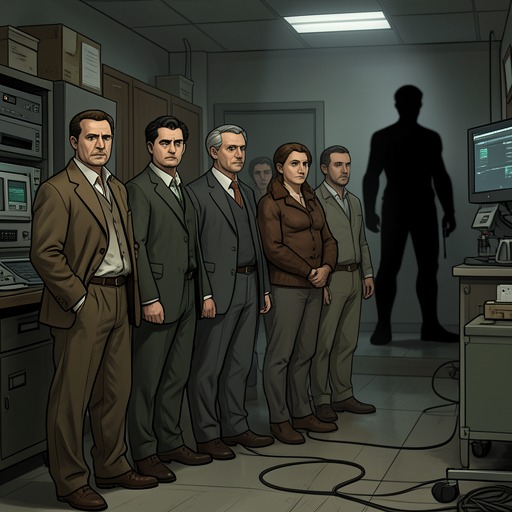
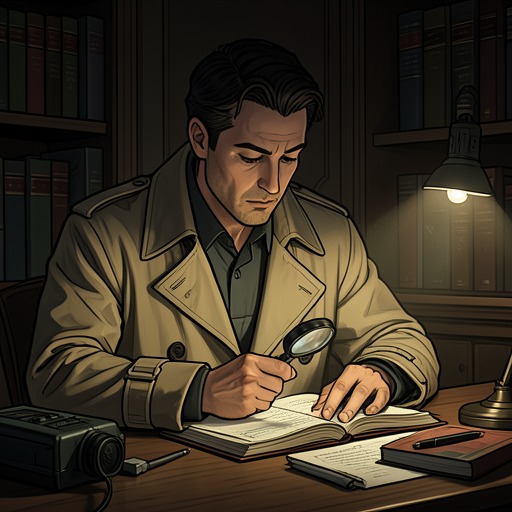
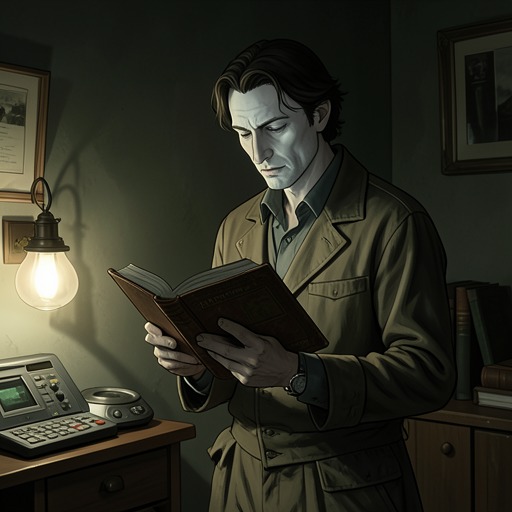
The Outsider (Stephen King Edition)The dispute between natural and supernatural explanations takes shape in a late-night conversation between Ralph Anderson and Jeannie Anderson about the two Terrys and the evidence that will not fit a single, ordinary account. Jeannie asks whether the supernatural might be the only answer to the riddle; Ralph refuses to accept it. Their exchange frames the novel’s central strain between an investigator’s commitment to material explanations and a pattern of events that seems to exceed them. It does not settle the disagreement: Ralph recognizes the force of the reasoning but remains unable to believe in an explanation that breaks the rules of the natural world.
From Metaphor to the Inexplicable
Jeannie begins with stories Ralph has heard before: Bill Hodges’s account of footprints that abruptly stopped and Ralph’s own image of maggots somehow appearing inside a cantaloupe. She points out that both men have been speaking metaphorically, as, in her account, the Poe story can be read as a metaphor for the divided self. Her question is what remains when the metaphors are stripped away. Ralph answers that he does not know; Jeannie names what remains as the inexplicable.
That shift matters because the metaphors had offered ways to contain puzzling evidence within familiar ideas. A stopped trail might suggest a concealed explanation, and an impossible-seeming intrusion into a cantaloupe might work as an image rather than a literal event. Jeannie refuses to let metaphor alone dispose of the problem. She takes the contradiction in the two Terrys seriously and asks whether the supernatural is not simply a symbolic description but the only possible answer.
Jeannie’s Argument for a Larger Reality
Jeannie presents belief not as certainty about a particular religious doctrine but as openness to realities that exceed ordinary perception. She says she would like to believe in God because she does not want existence simply to end, while acknowledging that a return to blackness could seem logically consistent with having come from it. She places greater confidence in the stars and the universe’s infinity, and extends the idea of infinity in both directions: outward into the universe and inward into the multitude of thoughts that may lie behind any conscious thought.
Her account includes consciousness and the unconscious, although she admits that she does not know what either is. It is a case for intellectual humility as much as for supernatural possibility: the limits of current understanding do not prove that reality ends at what can be readily explained. To reinforce the argument, she invokes Sherlock Holmes’s maxim that once the impossible is eliminated, whatever remains, however improbable, must be the truth. Ralph counters by noting that Arthur Conan Doyle believed in fairies. The exchange exposes a gap between the logic of the maxim and Ralph’s trust in the person associated with it; Jeannie’s point, however, concerns the method of reasoning, not Doyle’s reliability as a witness to the supernatural.
Ralph’s Refusal and the Case Against It
Ralph says plainly that he does not believe in the supernatural: not ghosts, angels, or the divinity of Jesus Christ. His churchgoing does not represent a conversion to belief. He describes the church as peaceful, a place where he can sometimes listen to himself, and says that attending is also what is expected. He supposes Jeannie may go for similar reasons, or because of Derek Anderson. Faith, for Ralph, remains an account of personal habit and setting rather than an explanation of the case.
After their conversation, they go upstairs together, but Ralph continues to turn over the reasoning even during their intimacy, apart from the moment when thought gives way. He considers whether Holmes’s maxim can be reformulated: once the natural is eliminated, whatever remains must be supernatural. He cannot accept that conclusion. His resistance is not merely professional caution; he says he cannot believe in an explanation that transgresses the natural world, not as a police detective and not as a man.
Instead, he returns to the case’s human and juridical conclusion: a real person killed Frank Peterson, and that person was Terry Maitland, now dead. This conclusion preserves a natural explanation, but it does so by assigning the crime to a man whose circumstances have already generated the riddle of the two Terrys. Ralph’s position therefore remains under pressure from the very evidence he is trying to explain. The supernatural is proposed as an answer, not accepted as one; the ordinary explanation persists as Ralph’s conviction, not as a contradiction-free resolution.
A Maxim Set Against the Two Terrys
The dispute returns later through a different remembered phrase. While reflecting on the scenes surrounding Terry’s death, Ralph mutters that a man cannot be in two places at the same time. The statement expresses a basic natural and logical rule: one person cannot occupy two locations simultaneously. Yet the impossible appearance of two Terrys is precisely what makes that rule insufficient to resolve the case. The maxim says what should be possible, while the evidence, as Ralph understands it, refuses to conform.
The novel thus places two forms of reasoning beside each other without making Ralph’s skepticism disappear. Jeannie asks what remains when metaphorical explanations are removed; Holmes’s maxim urges the reasoner to follow the evidence beyond what seems plausible; Ralph insists that the supernatural cannot be the answer. His commitment to ordinary causation offers a firm ground from which to investigate, but it also leaves him confronting a case that ground cannot comfortably hold. The tension lies not in a settled contest between belief and disbelief, but in the persistence of both: the supernatural remains an explicit possibility, while Ralph continues to name Terry as the human killer.