A force for good that restores balance
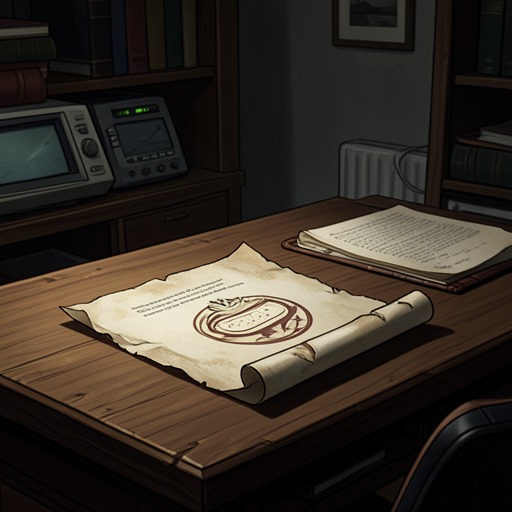
The Outsider (Stephen King Edition)A force for good that restores balance is Holly Gibney’s counterweight to the evil she has confronted: not a denial of horror, but a belief that some force can help bring its consequences to light. In the book’s closing conversation with Ralph Anderson, she points to the scrap of paper from Tommy and Tuppence as evidence that chance may sometimes work against evil rather than serve it.
The Scrap as Evidence
Holly returns to a small piece of paper found in the van, a clue whose presence had resisted the explanations she and Ralph considered. In her view, the scrap should never have been there at all. Yet it was, and it connected the investigation to what happened in Ohio. Its significance lies not only in what it revealed, but in the unlikely chain of discovery it made possible.
The paper is an ordinary object made consequential by its wrong place. Without that link to Ohio, Holly believes, the thing responsible for the crimes might still be at large. The scrap therefore joins material evidence to the larger question of whether events can disclose a pattern beyond deliberate human action: an overlooked fragment becomes the hinge between a hidden threat and the people searching for it.
Holly’s Belief
Holly describes the force as something that tries to restore balance. Her claim is explicitly a belief, not a proven account of how the universe works. She admits that the thought helps her withstand the awful things she encounters, while also arguing that the evidence seems to support it—not only in this case, but everywhere.
The belief does not make the evil less real. Holly has just called the enemy pure evil, and Ralph agrees; the force for good is meaningful precisely because it answers, rather than erases, that judgment. The scrap offers a local, tangible instance of a wider possibility: that the world’s damage may meet resistance through circumstances that cannot readily be explained.
What the Clue Means to Ralph
Holly asks Ralph to remember the paper when the bad dreams return. Her request gives the clue a second function: it is not simply evidence in a solved chain of investigation, but a reminder intended to endure beyond the case. The scrap can help Ralph hold on to the possibility of a counterforce when the violence and its aftermath threaten to overwhelm him.
Ralph does not immediately answer. Before their private conversation ends, Jeannie comes in with coffee, and the moment alone is almost over. He says he has been thinking about the universe, which has no end and no explanation. His reflection leaves Holly’s belief unresolved: the paper supports her sense of balance, but the vastness Ralph contemplates prevents that sense from becoming a complete explanation. The novel closes the idea on that tension between a particular clue that seems providential and a universe that remains beyond understanding.