Oliver Peterson
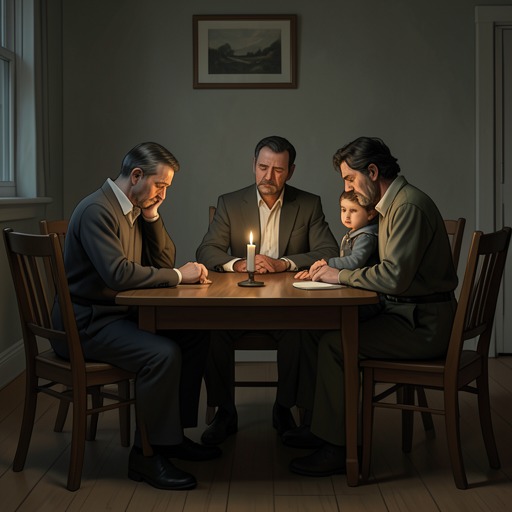
The Outsider (Stephen King Edition)Oliver Peterson, usually called Ollie, is the older brother of Frank Peterson. After Frank’s murder, he becomes the Peterson family’s surviving son and quietly takes on tasks that help hold the household together as his parents struggle with their loss.
Identity and Family
An elderly neighbor distinguishes Frank from Oliver by noting that both Peterson boys had red hair and that Oliver was at least five years older. Oliver had once delivered the neighbor’s newspaper; Frank, by contrast, was the boy she remembered with a bright lime-green bicycle bearing a Flint City High sticker. The recollection fixes Oliver’s place in the family while marking the future Frank will not reach.
The brothers were seven years apart, yet they had been unusually close. The narration suggests their age difference may have kept sibling rivalry to a minimum and made Oliver something like a second father to Frank. After Frank’s death, Oliver is described as Fred and Arlene’s only son.
After Frank’s Death
At the Petersons’ remembrance gathering, Oliver helps clear dishes and restore the living room and den after a crowd of mourners and visitors has passed through the house. Fred is surprised by his son’s efficiency: Oliver, ordinarily a self-involved teenager who needed repeated reminders to pick up after himself, works without complaint. He carries dishes to the kitchen, loads the dishwasher, starts it, rinses more, and stacks them for another load.
The gathering stretches beyond the family’s expected evening. It winds down, then swells again after news arrives that Terry Maitland has been arrested for Frank’s murder. The renewed crowd brings a grim mixture of disbelief, praise for Coach T’s apparent normality, and calls for severe punishment. By the time the visitors leave, perhaps fifty or sixty people have come through. Oliver’s steady cleanup stands in contrast to the public commotion and to Fred’s exhaustion.
After the guests are gone, Oliver vacuums the den with the same unexpected, methodical care, removing the crumbs left on the carpet. His eyes are red and swollen. Fred offers to take over in the living room, and the two make a small agreement to share the work. Fred manages a genuine smile, perhaps his first since the police came to the door, while Oliver continues cleaning. Their exchange gives the bereaved father and son a brief, practical way to be together without needing to explain the loss.
Family Crisis and Responsibility
The fragile quiet is interrupted when Arlene begins laughing in the kitchen. Her laughter turns uncontrollable as she jokes about the surplus of food left by mourners and the fact that she will not need to shop for a long time. Oliver moves toward her when she throws food and continues to behave erratically; he tells her to stop and tries to take her by the shoulders. Fred follows as the crisis escalates.
When Arlene collapses, Oliver drops to his knees beside her, calls for his mother, and tells Fred that she may not be breathing. Fred orders him to call emergency services and begins checking for a pulse and attempting CPR. The episode marks a devastating change in the household: the family’s grief over Frank is followed by Arlene’s medical emergency, with Oliver present and trying to help as his parents’ roles shift around him.
Practical Aftermath and Narrative Role
After Arlene dies, Oliver finds her burial-insurance papers in the bottom drawer of her desk, filed between the mortgage agreement and appliance warranties. He contacts the funeral home, declines to make the arrangements himself, and says Fred should handle them. The papers include blank obituary forms; Arlene had apparently made copies of the form she used for Frank, anticipating that she might need another. Oliver fills one out, then cleans the kitchen, putting away the leftovers and washing the floor before discovering that he is hungry.
These actions extend the pattern established after Frank’s remembrance: Oliver responds to grief through necessary work, even when the work is far beyond ordinary teenage chores. His care for his parents and his history of closeness with Frank make him a quiet measure of the losses suffered by the Peterson family, while the ordinary objects he handles—dishes, a vacuum, insurance papers, and an obituary form—show how bereavement presses practical responsibility onto the people left behind.