Bob Sheldon
The OutsidersBob Sheldon is a Soc whose murder by Johnny Cade in self-defense becomes the central crisis of the novel, exposing the human cost of the greaser-Soc rivalry and the tragic consequences of a system that spoils its children while condemning others.
Identity and Background
Bob Sheldon is a wealthy Soc from the West Side, a handsome black-haired boy with dark eyes and a reckless grin that reminded Ponyboy of Sodapop's. He was a sophomore in the yearbook, making him about eighteen at the time of his death. He wore heavy rings, which he was proud of, and those rings were the instruments that cut Johnny's face so badly during the beating in the vacant lot. Bob was Cherry Valance's boyfriend, and she described him as having something that made people follow him, something that marked him different, maybe a little better, than the crowd. He was the best buddy a guy ever had, according to his friend Randy Adderson, a good fighter and tough, but also a real person. His parents spoiled him rotten; they gave in to him all the time, and Bob kept trying to make someone say 'No' to him, but they never did. He wanted somebody to lay down the law, set the limits, give him something solid to stand on. His mother had a nervous breakdown after his death.
Role in the Greaser-Soc Conflict
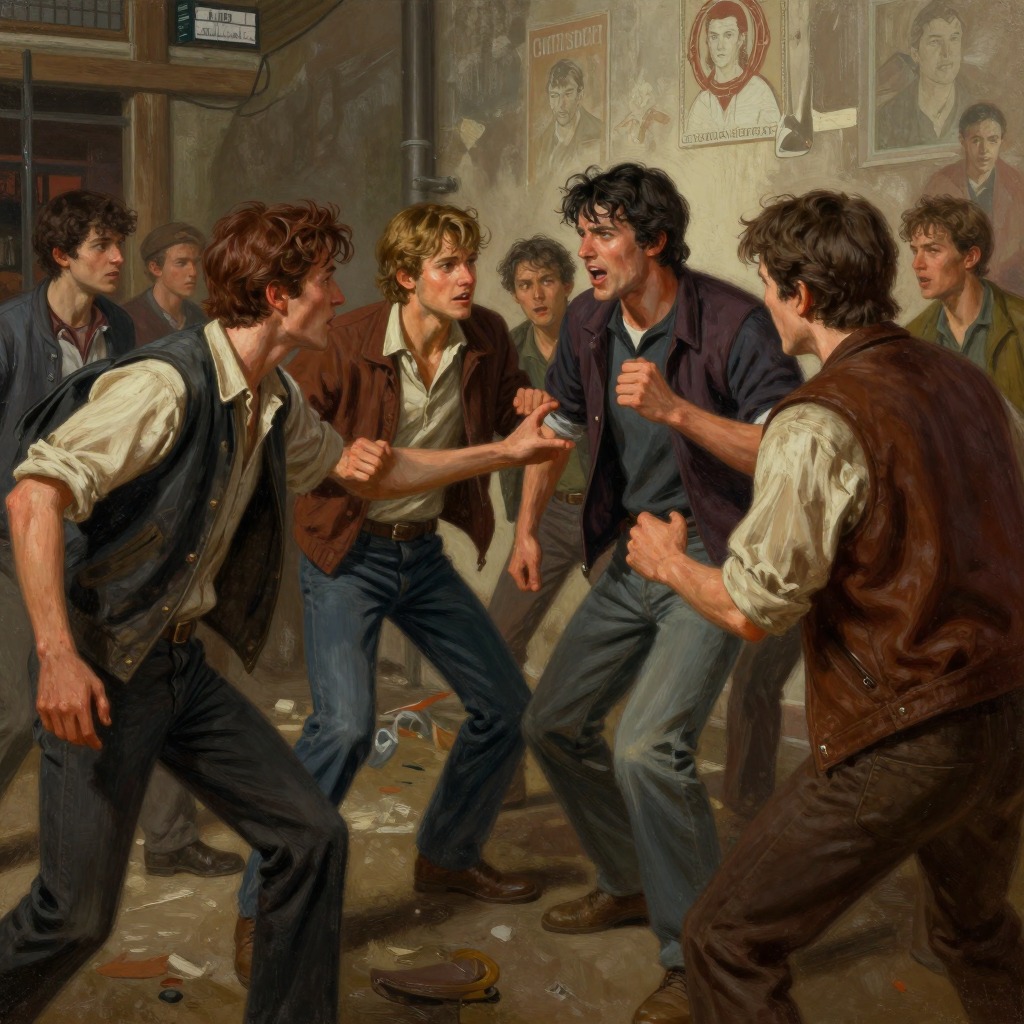
Bob was a central figure in the Socs' harassment of greasers. He was in the blue Mustang that pulled up beside the vacant lot when Johnny was beaten so badly he would carry a scar all his life. Bob was the one wearing the rings that cut Johnny up. He was also present at the park on the night of his death, when he and four other Socs, drunk and reeling, confronted Johnny and Ponyboy. Bob called them "white trash with long hair" and ordered another Soc to "give the kid a bath" by shoving Ponyboy's face into the fountain, nearly drowning him. It was this act of attempted drowning that drove Johnny to stab Bob with his switchblade. Bob's death triggered all-out warfare between the Socs and greasers across the city, with the Socs seeking revenge and the greasers rallying for a rumble to settle the score.
Character and Relationships
Bob was a complex figure, not merely a one-dimensional bully. Cherry Valance, who loved him, knew both his sides: he could be sweet and friendly, but when he got drunk, that was the part of him that beat up Johnny. Randy Adderson, his best friend since grade school, described him as a good guy who was cocky and scared stiff at the same time. Bob's parents never set limits for him, and Randy believed that if his old man had just belted him once, he might still be alive. Bob's death left a void in the lives of those who knew him, and Cherry could never look at the person who killed him. Ponyboy, after studying Bob's yearbook picture, came to see the person they had killed: a reckless, hot-tempered boy, cocky and scared stiff at the same time, who had a kid brother who might have idolized him and parents who either loved him too much or too little.
Death and Aftermath
Bob was killed in the park at two-thirty in the morning, after he and four other Socs, drunk, cornered Johnny and Ponyboy. When Bob ordered another Soc to drown Ponyboy in the fountain, Johnny stabbed him with his switchblade. Bob died instantly, doubled up and still in the moonlight, a dark pool growing from him. His death set off a chain of events: the greasers and Socs prepared for a rumble, Cherry Valance agreed to spy for the greasers and testify that the Socs were drunk and looking for a fight, and Johnny and Ponyboy went into hiding. The hearing that followed Bob's death resulted in Ponyboy being acquitted, but the emotional toll was immense. Ponyboy, reflecting on Bob's life, realized that Bob had been trying to find someone to stop him, and that his parents' failure to set limits had contributed to his death. Bob's death, like Johnny's and Dally's, became part of the story Ponyboy felt compelled to tell, a story about the human cost of the greaser-Soc divide.
Thematic Significance
Bob Sheldon represents the tragic consequences of a system that spoils its privileged children while condemning the underprivileged. His death is not simply a murder but a symptom of a deeper social illness: the failure of adults to provide guidance and limits, the violence that erupts when class divisions are left unchecked, and the loss of potential in both the rich and the poor. Bob's story, as revealed through Cherry and Randy, shows that the Socs, like the greasers, are trapped by their circumstances, and that the real tragedy is not just the death of a boy but the perpetuation of a cycle of violence and misunderstanding that destroys everyone it touches.