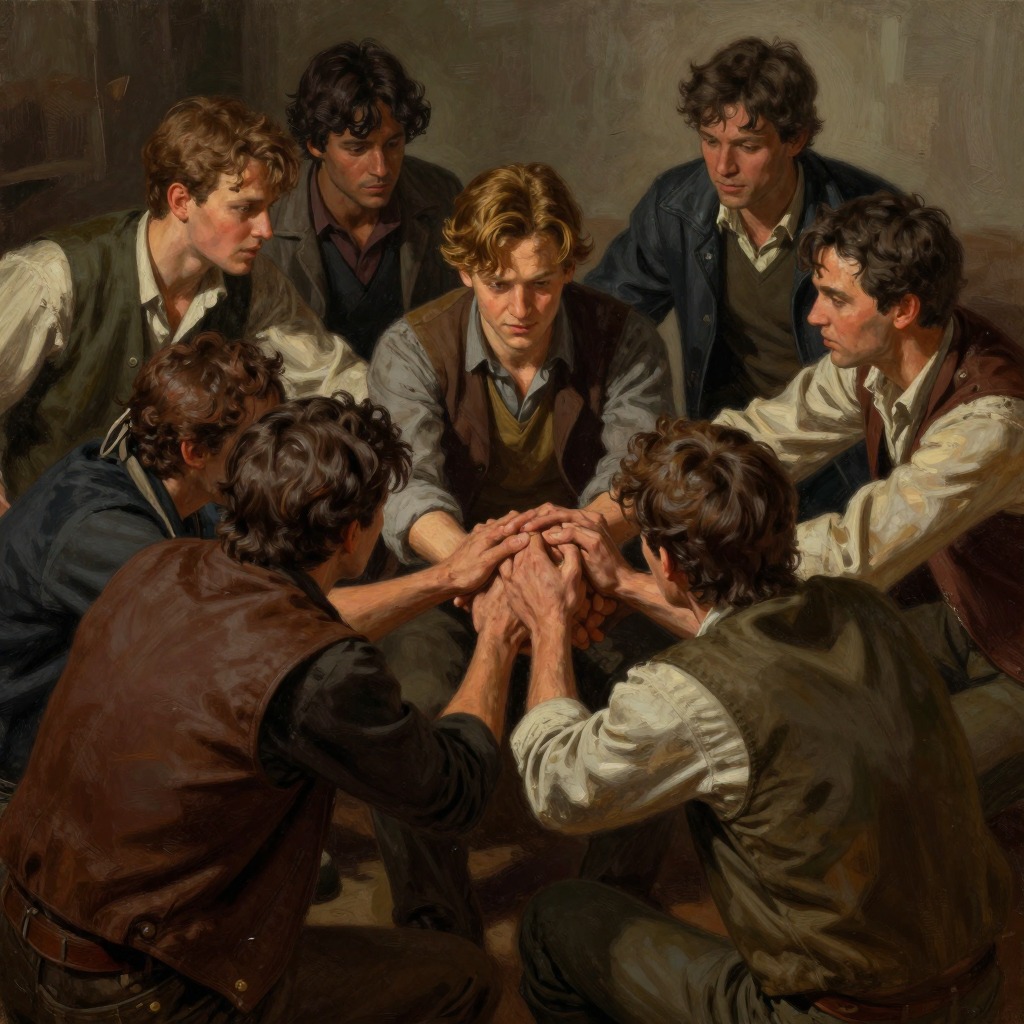
Curly Shepard
The OutsidersCurly Shepard is a minor but emblematic character in S. E. Hinton's The Outsiders, a tough, hard-as-nails greaser from the East Side who embodies the cycle of juvenile delinquency and the brutal code of the streets. As the younger brother of Tim Shepard, leader of the Shepard gang, Curly is repeatedly in and out of reform school, and his brief appearances serve as a foil to the more sensitive members of the Curtis gang, illustrating the fate that awaits greasers who fully embrace the hoodlum life.
Identity and Background
Curly Shepard is the younger brother of Tim Shepard, the leader of the Shepard gang, a tough outfit that operates in the downtown alleys. Like his brother, Curly is described as a "tough, cool, hard-as-nails Tim in miniature," suggesting he has been shaped by the same harsh environment from a very young age. He is a product of the East Side's social disorganization, where poverty, weak family structures, and constant exposure to violence create a pipeline to delinquency. Ponyboy Curtis notes that Curly is "an average downtown hood, tough and not real bright," but he respects him because "he could take anything." This capacity to endure pain and hardship without complaint is a core value of the greaser subculture, and Curly exemplifies it.
Key Actions and Objectives
Curly's most notable action in the novel is a game of "chicken" he plays with Ponyboy, where the two boys hold the lit ends of their cigarettes against each other's fingers to see who will flinch first. They stand there, "clenching our teeth and grimacing, with sweat pouring down our faces and the smell of burning flesh making us sick, each refusing to holler," until Tim Shepard happens to stroll by and cracks their heads together, swearing to kill them both if they ever pull such a stunt again. Ponyboy still carries the scar on his forefinger from this incident. This episode reveals the extreme, self-destructive rituals of toughness that define the greaser code, and it shows Curly as a willing participant in that world. His primary objective, like that of many greasers, is simply to survive and maintain his reputation. He is repeatedly in trouble with the law: Ponyboy mentions that Curly is "in the cooler" or "in the reformatory" for breaking into a liquor store, and Tim ruefully notes that Curly is serving a six-month sentence for that crime. Curly's life is a cycle of petty crime, punishment, and return to the streets, a pattern that the novel suggests is nearly impossible to break.
Relationships and Conflict
Curly's most significant relationship is with his older brother, Tim. Tim's reaction to Curly's incarceration is telling: he "grinned ruefully, probably thinking of his roughneck, hard-headed brother," and then went on to call Curly "every unprintable name under the sun—in Tim's way of thinking, terms of affection." This moment reveals a deep, if unspoken, bond between the brothers, one that is expressed through the harsh language of the streets rather than open sentiment. Curly also has a grudging respect for Ponyboy, as evidenced by the fact that he told Tim that Ponyboy was "a good kid." This respect is based on Ponyboy's willingness to engage in the same brutal tests of endurance, not on any shared values or interests. Curly's conflict is not with any individual but with the system itself—the social workers who hand him "pity-the-victims-of-environment junk" every time he is sent off to reform school, and the legal system that punishes him without offering any real way out.
Change and Ending
Curly Shepard does not undergo any significant change or development in the novel. He remains a static figure, a representative of the dead-end path that awaits greasers who fully internalize the hoodlum identity. Ponyboy, reflecting on the rumble, thinks about the Brumly boys and the Shepard gang and realizes that "they'd just get worse as they got older, not better." Curly is a prime example of this trajectory. He is already in reform school at a young age, and his future seems predetermined: more crime, more jail time, and an early death or a life of hardened criminality. He is the living embodiment of what Dally Winston might have been at a younger age, and what Johnny Cade could have become if he had not been saved by the gang's affection and his own sensitivity. Curly's story is not one of redemption or change; it is a cautionary tale about the corrosive power of the environment.
Narrative Role and Evaluation
Curly Shepard functions as a minor but important character in The Outsiders, serving as a benchmark for the greaser experience. He is one of the "young hoods—who would grow up to be old hoods," and his presence underscores the novel's central theme of social determinism. He is also a point of contrast for Ponyboy. While Ponyboy is also a greaser, he has a family that cares for him, a talent for writing, and a dream of a better life. Curly, by contrast, has none of these advantages. He is a product of a broken home and a disorganized neighborhood, and he has fully embraced the only identity available to him: that of a hood. His brief appearances remind the reader that the greasers' world is not just one of romanticized brotherhood and loyalty, but also of genuine despair and wasted potential. Curly is a flat character in the Forsterian sense, built around a single idea—the unbreakable, self-destructive toughness of the street—but he is effective precisely because he is so recognizable and so tragic.