Greaser-Soc rivalry
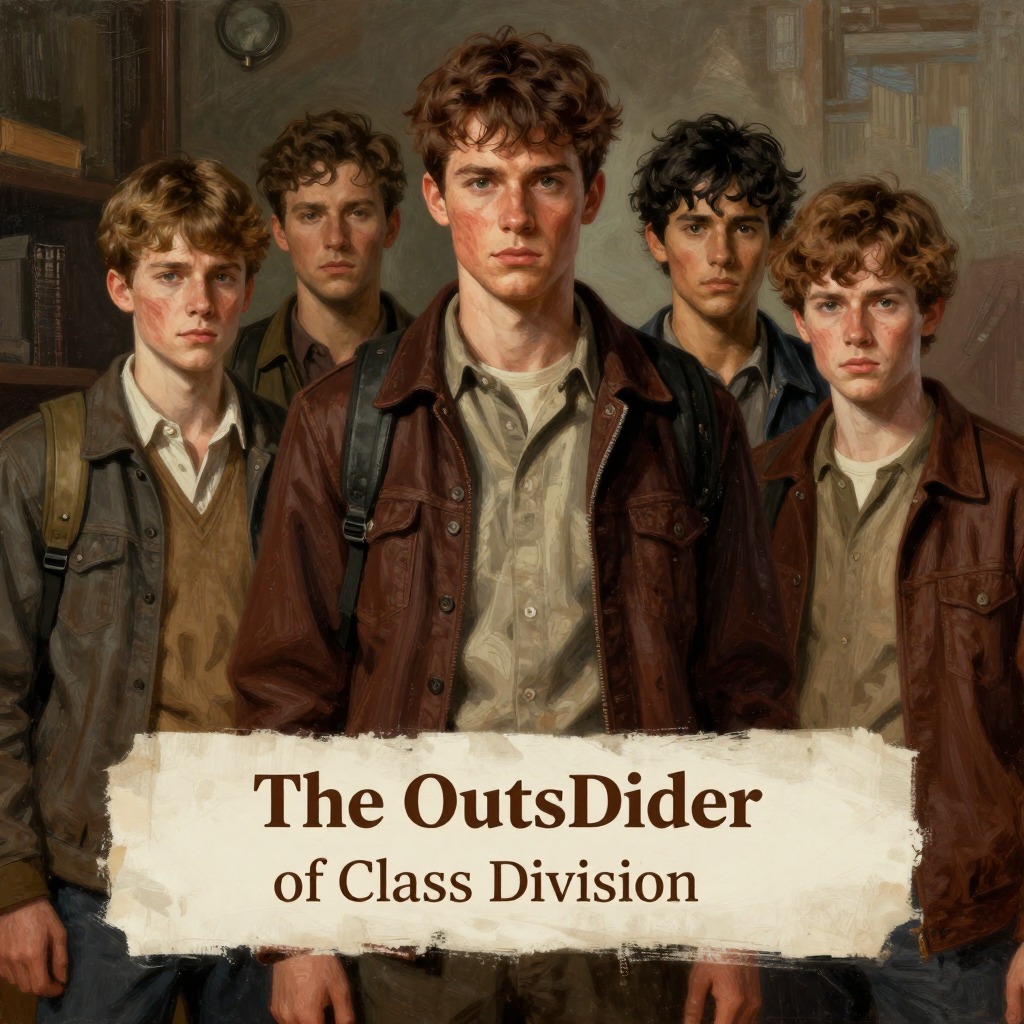
The OutsidersThe Greaser-Soc rivalry is the central conflict of S. E. Hinton's The Outsiders, a violent and seemingly unbridgeable social division between the working-class East Side greasers and the wealthy West Side Socs. This conflict is not merely a backdrop but the engine of the novel's plot, the crucible of its character development, and the primary vehicle for its thematic exploration of inequality, identity, and the possibility of understanding across class lines. The rivalry is defined by economic disparity, territorial violence, and deeply ingrained social prejudice, yet the novel ultimately complicates this binary, revealing the shared humanity beneath the labels.
Origins and Nature of the Conflict
The rivalry is rooted in stark economic and social inequality. The greasers, as Ponyboy Curtis explains, are "poorer than the Socs and the middle class" and are considered "wilder, too" . The Socs, an abbreviation for Socials, are the "West-side rich kids" who have "all the breaks" . This class divide manifests in a constant, low-grade war of territory and respect. Greasers cannot walk alone without fear of being "jumped" by Socs, an experience Ponyboy himself endures when five Socs corner him and threaten to cut off his hair . The conflict is not just about physical violence but about social labeling; the term "greaser" is used to "class all us boys on the East Side," while the Socs look at greasers "like we were dirt" . This dynamic creates a world where identity is predetermined by class, and where the most basic activities—walking home, going to a movie—are fraught with danger.
The Gang as a Surrogate Family and a Unit of Conflict
In the face of this external threat, the greaser gang functions as a surrogate family and a unit of survival. Ponyboy notes that he and his brothers have grown up with the other boys and "consider family" . The gang provides the love and affection that Johnny Cade, beaten by his father and ignored by his mother, would "never have known" otherwise . This bond is codified in unwritten rules: "You take up for your buddies, no matter what they do. When you're a gang, you stick up for the members" . The gang's solidarity is a direct response to the Socs' power; as Two-Bit Mathews explains, "Us greasers usually stick together" in a fight, while the Socs "gang up on one or two" . The gang's home, the Curtis house, is always unlocked so that any member who is "hacked off at his parents" has a place to go, reinforcing the idea that the gang is a more reliable support system than the biological family . This structure, however, also binds its members to the cycle of violence, as loyalty demands participation in rumbles and retaliation.
Escalation and the Cycle of Violence
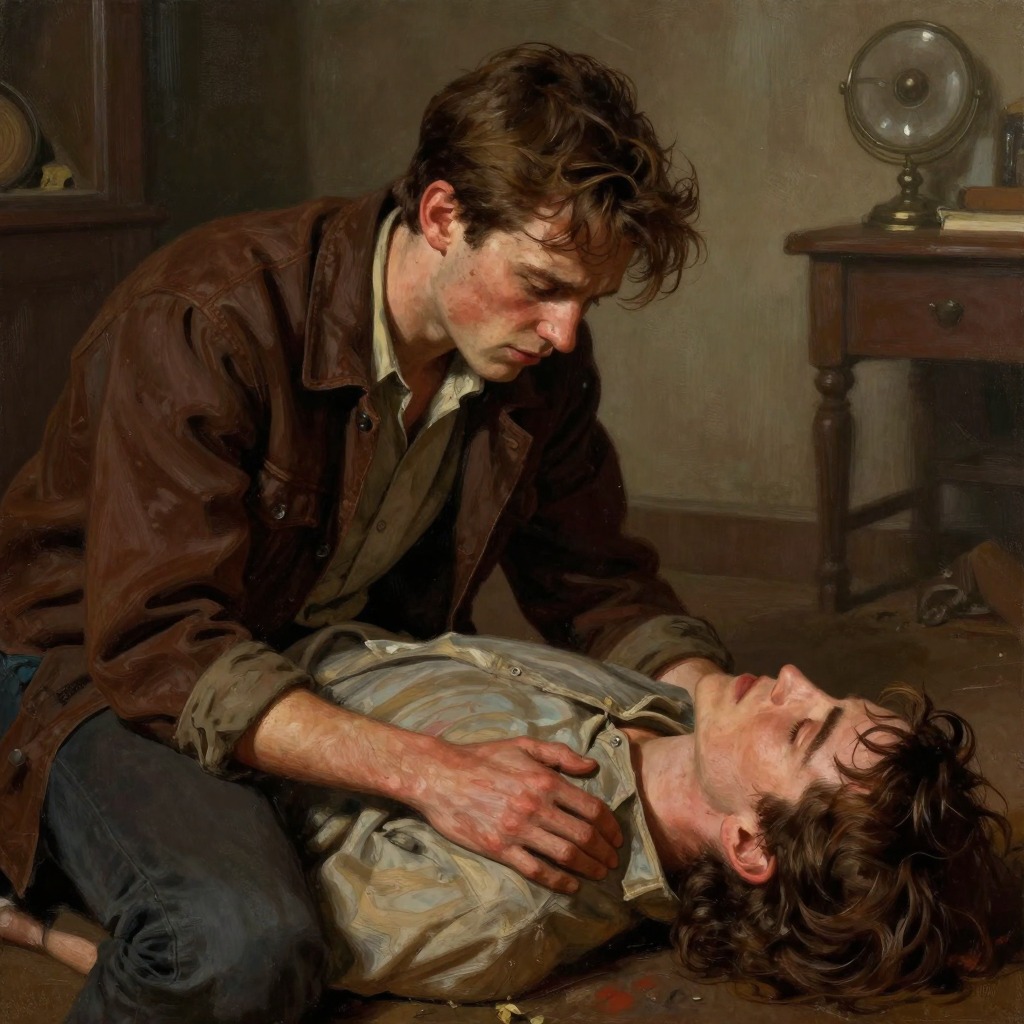
The rivalry escalates from casual harassment to murder, fundamentally altering the lives of the characters. The beating of Johnny by four Socs in a blue Mustang, an attack that leaves him scarred and terrified, is a pivotal trauma (E00226-E00233). This event transforms Johnny, who begins carrying a switchblade and vows that "he would kill the next person who jumped him" . The cycle of violence culminates when the same Socs, led by Bob Sheldon, attack Ponyboy and Johnny in the park, attempting to drown Ponyboy in a fountain. In a desperate act of self-defense, Johnny stabs and kills Bob (E00390-E00397). This act of violence forces Johnny and Ponyboy into hiding, and the ensuing manhunt and their eventual return lead to the novel's tragic climax. The conflict also escalates on a group level, with the Socs and greasers engaging in "all-out warfare all over the city" in the days following Bob's death . The final rumble is a formalized, if brutal, attempt to settle the score, with the greasers winning a territorial victory .
Complicating the Binary: Shared Humanity and Individuality
Despite the pervasive violence, the novel systematically complicates the simple binary of greaser versus Soc. Through his conversations with Cherry Valance, a Soc cheerleader, Ponyboy begins to see beyond the labels. Cherry tells him, "Things are rough all over," revealing that the Socs, too, have their own troubles and emotional emptiness . She explains that the real difference is not money but feeling: "You greasers have a different set of values. You're more emotional. We're sophisticated—cool to the point of not feeling anything" . This insight is reinforced by Randy Adderson, Bob's best friend, who tells Ponyboy that he is "sick of all this" and that fighting "doesn't do any good" because the social structure will remain unchanged . Ponyboy's own reflection on the conflict deepens this understanding. He realizes that the Socs are not a monolithic enemy; they are "just guys after all" . He also recognizes that the greasers themselves are not all alike: Darry fights for pride, Steve for hatred, Soda for fun, and Two-Bit for conformity . The novel's final message, delivered through Johnny's dying words, "Stay gold, Ponyboy," is a plea to preserve the innocence and sensitivity that transcend the brutal divisions of class and gang warfare .