newspaper article
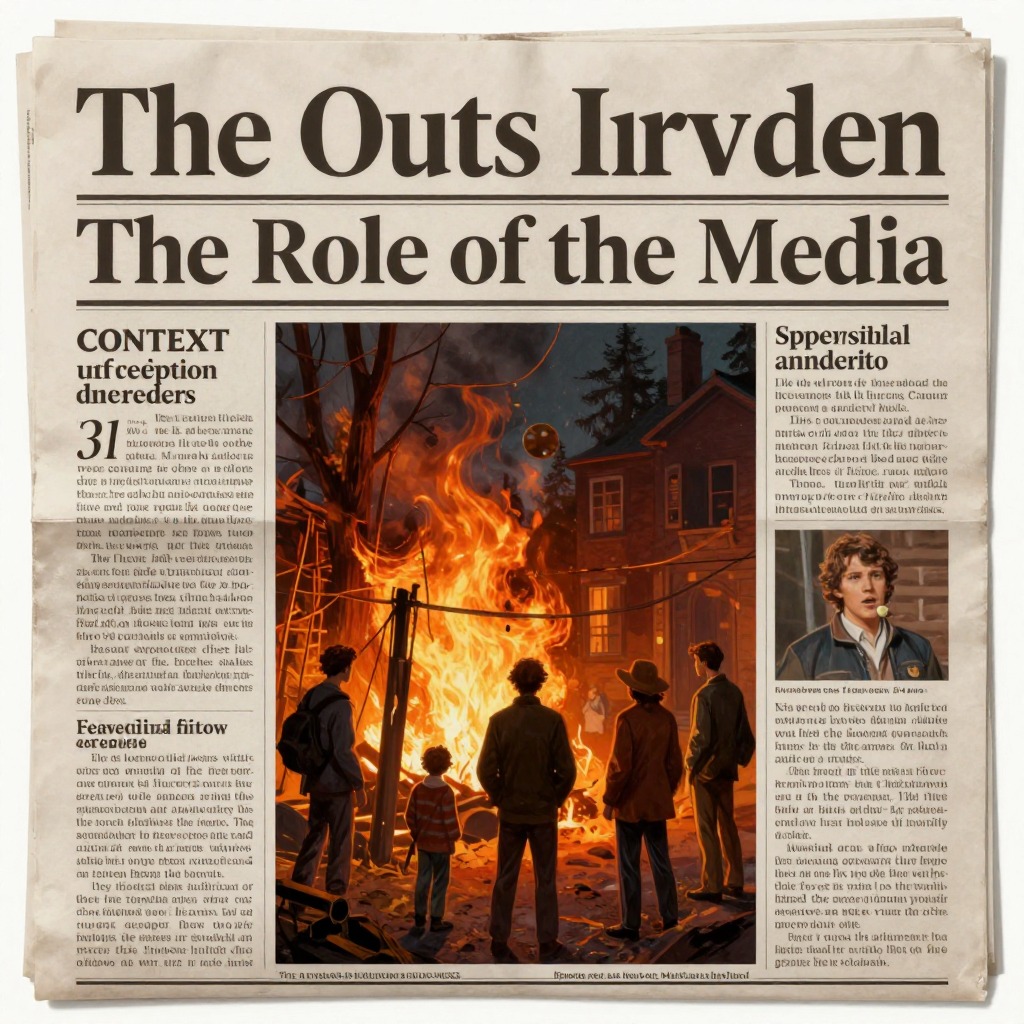
The OutsidersThe newspaper article that appears in the wake of the church fire rescue is a turning point in The Outsiders, reframing the public identity of Ponyboy Curtis and Johnny Cade. Headlined "JUVENILE DELINQUENTS TURN HEROES" on the front page of the second section, the article covers the fight, the murder of Bob Sheldon, the church burning, and the fact that the Socs were drunk and looking for a fight. It includes a comment from a parent stating that all the children would have burned to death if not for Ponyboy and Johnny. The article also features a picture of Ponyboy with his brothers Darrel Curtis and Sodapop Curtis, and it mentions that Cherry Valance testified that Bob had been drunk and that the boys were looking for a fight when they took her home. Bob's buddy Randy Adderson also said it was their fault and that the greasers only fought back in self-defense. Despite this, Johnny was charged with manslaughter. The article also profiles the Curtis brothers, noting how Darry works two jobs and has an outstanding school record, that Sodapop dropped out of school so they could stay together, and that Ponyboy makes the honor roll and might be a future track star. It concludes by stating that the brothers should not be separated after they have worked so hard to stay together, a line that makes Ponyboy realize the state might put him and Sodapop in a boys' home.
Public Perception and Heroism
The article fundamentally alters how the greasers are seen by the outside world. For the first time, Ponyboy and Johnny are not just "hoods" or "juvenile delinquents" but are celebrated as heroes who risked their lives to save children. The article's framing contrasts sharply with the usual treatment of greasers, who are typically blamed for trouble. The headline itself, with its word "turn," implies a transformation, though Two-Bit Mathews points out that they were heroes from the beginning. The article also includes a column about Darry, Sodapop, and Ponyboy, highlighting their efforts to stay together as a family after their parents' death, which adds a layer of sympathy and respect to their public image. This positive coverage stands in stark contrast to the way Dallas Winston is later portrayed; no editorials praise him after his death, and he dies a "dead juvenile delinquent."
Personal and Legal Consequences
For Ponyboy, the article brings a mix of pride and anxiety. He is mortified that his hair, which he had cut and bleached while hiding in Windrixville, looks so bad in the pictures. He manages to get some hair grease to comb it back before the photos are taken. More significantly, the article's mention of the possibility of the brothers being separated terrifies him. The line "we shouldn't be separated after we had worked so hard to stay together" makes him realize that the state is considering putting him and Sodapop in a boys' home. This fear hangs over him even as he is hailed as a hero. The article also leads to a flood of reporters and police at the hospital, who ask too many questions too fast, confusing Ponyboy. Darry eventually tells them to slow down, and Sodapop keeps them entertained with his antics, mimicking TV reporters and trying to lift a policeman's gun.
Contrast and Irony
The newspaper article creates a powerful irony. While it celebrates Ponyboy and Johnny as heroes, it also underscores the tragedy of their situation. Johnny is in critical condition with a broken back and severe burns, and the article's mention of the murder charge against him hangs over the celebration. The article also highlights the class divide: the Socs are portrayed as the instigators, but the greasers are still the ones facing legal consequences. The article's existence also contrasts with the fate of Dallas Winston, who dies a violent death that will not be celebrated in the press. Ponyboy reflects that nobody would write editorials praising Dally, even though he also acted heroically by pulling Johnny from the burning church. The article thus becomes a symbol of the selective perception of heroism, where the same actions are judged differently based on a person's reputation and social standing.
Narrative Significance
The newspaper article serves as a key plot device that accelerates the story's resolution. It brings the Curtis family into the public eye, which influences the juvenile court's decision. The article's positive portrayal of the brothers, combined with the testimony of Cherry and Randy, helps convince the judge that Ponyboy should remain with Darry and Sodapop. The article also forces Ponyboy to confront the reality of his situation. Reading it, he sees his own story laid out in print, which makes the events feel both real and unreal. It is a tangible record of the chaos and tragedy that has engulfed his life, and it ultimately inspires him to write his own story, the very narrative that becomes The Outsiders.