
The Battle of Political Models
The Ownership Wars: Who Owns YouThis flow follows the opposition between negative liberty, positive liberty, and meritocratic state power.
increasing Bearing strength in each event
 decreasing
Bearing strength in each eventdecreasingNegative Liberty

Negative Liberty
Freedom from Restraint
The book describes negative liberty as freedom from government interference, taxation, regulation, and collective obligation. Its strongest advocates imagine the market as a sufficient social order.
The narrative argues that this freedom is unevenly distributed. Those with capital can act freely, while those without it remain compelled by economic necessity.
The Hidden Master
Private power replaces public authority, producing domination without the visible language of rule.
Positive Liberty
Positive Liberty
Freedom to Become
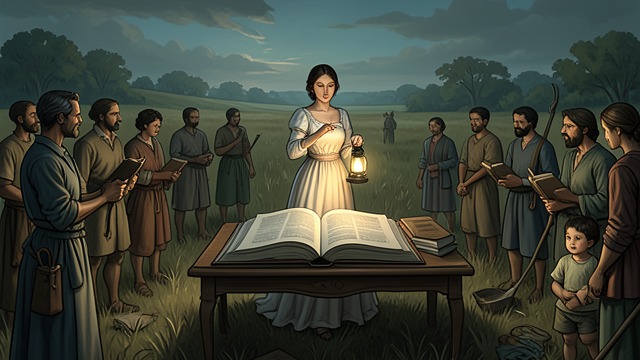
Positive liberty is presented as the capacity to develop one’s abilities through institutions that provide education, security, justice, and common direction.
The book treats government as potentially emancipatory when it acts for the General Will rather than for privileged owners.
Collective Conditions
Freedom becomes a social achievement, not merely an absence of prohibition. The central conflict is therefore between public capacity and private capture.
The Jacobin Alternative

The Jacobin Alternative
Revolutionary Administration
The book invokes Jacobinism as a model of decisive public action against entrenched privilege. Its preferred state would subordinate private inheritance to common justice.
Historical revolution is used less as a chronology than as an image of political will. A society can change only when institutions are willing to confront concentrated power.
The Danger of Delay
Incremental reform appears inadequate because inherited systems reproduce themselves. The narrative therefore favors transformation over accommodation.
The Meritocratic Republic
The Meritocratic Republic
Institutional Design
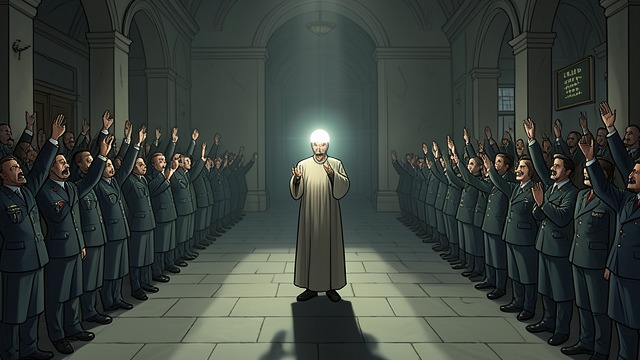
The imagined republic abolishes monarchy, inherited privilege, unaccountable elites, and religious domination. It selects citizens by ability and commitment rather than race, sex, sexuality, or family background.
The state is expected to direct resources toward knowledge, art, reason, and human development. Its legitimacy comes from performance for the common good.
Utopian Pressure
The model reveals both the book’s aspiration and its authoritarian edge. Equality of opportunity is pursued through an unusually powerful state.
The State of Reason

The State of Reason
A New Public Purpose
The envisioned state does not merely manage scarcity. It aims to optimize human capacities and coordinate a civilization devoted to intelligence, art, and discovery.
This purpose directly opposes consumer capitalism, whose citizens are reduced to purchasing identities and status symbols.
The Unresolved Question
The book leaves readers with a demanding question: how can a state pursue rational emancipation without becoming another unquestionable owner of human life?
In the early political theory sections
After the critique of libertarianism
In the programmatic middle sections
In the sections on Hyperborea
In the final vision of the future
