
The Campaign Against Donald Trump
The Ownership Wars: Who Owns YouThis flow follows the book’s sustained interpretation of Donald Trump as the visible embodiment of plutocratic power.
increasing Bearing strength in each event
 decreasing
Bearing strength in each eventdecreasingThe Billionaire Candidate
The Billionaire Candidate
Wealth as Credentials
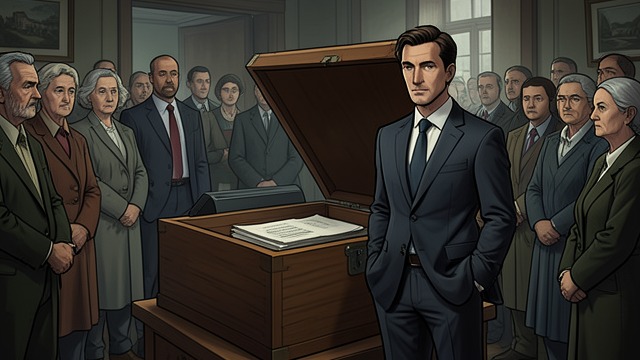
The book treats the candidate’s fortune and property empire as decisive evidence of elite membership. His public image of independence is presented as inseparable from inherited resources and commercial influence.
Rather than seeing wealth as disqualifying, supporters interpret it as proof of competence and strength. The narrative regards this inversion as a sign of false consciousness.
The Contradiction
The candidate promises to oppose the establishment while personifying the economic order that sustains it. This contradiction becomes the book’s recurring political test.
The White House Arrival
The White House Arrival
Plutocracy Becomes Visible
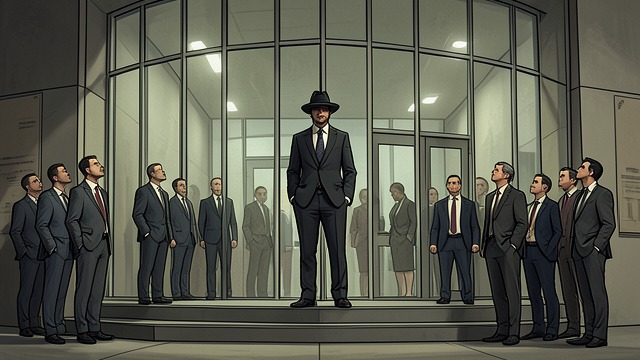
The election places a leading member of the Ownership Class inside the executive center of the state. The book argues that the usual political buffer between wealth and government has temporarily disappeared.
This visibility changes the meaning of accountability. Economic decisions that once seemed indirect now appear attached to a single recognizable figure and his circle.
A Risky Experiment
The victory is interpreted as an experiment in explicit plutocracy. Its success would normalize direct rule by wealth; its failure could expose the weakness of the entire arrangement.
The Swamp Reversal
The Swamp Reversal
The Promise
The campaign promise to drain the swamp gives popular form to anger against Washington, D.C., lobbying, and financial influence. Supporters imagine an outsider cleansing a corrupt system.
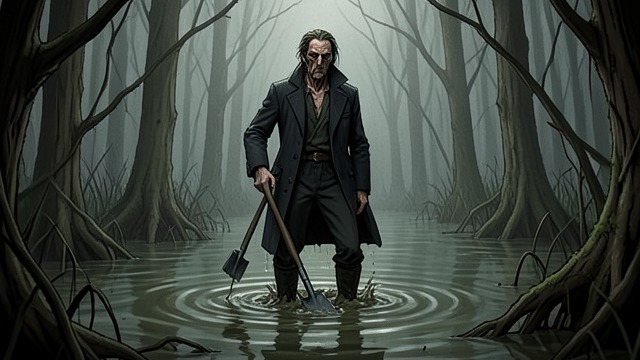
The book reverses the image by describing the new leader as a creature produced by the swamp itself. His wealth, connections, and political style emerge from the very networks he claims to oppose.
The Deepening
The result is not purification but concentration. The swamp becomes deeper because resentment has been directed toward institutions rather than toward the private power that captures them.
The Failed Performance
The Failed Performance
Politics as Spectacle
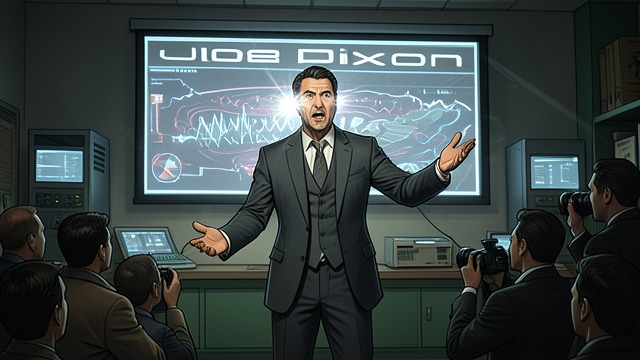
The presidency is interpreted as an extension of celebrity culture. The leader’s constant performance, improvised declarations, and media combat transform government into a continuous show.
The book connects this spectacle to the broader conversion of politics into entertainment. Public attention is captured while structural questions of ownership remain unresolved.
Approval and Disrepute
Low approval and international embarrassment are treated as evidence that spectacle cannot indefinitely substitute for competence. Yet the performance remains politically powerful because it rewards loyalty and outrage.
The Plutocratic Reckoning
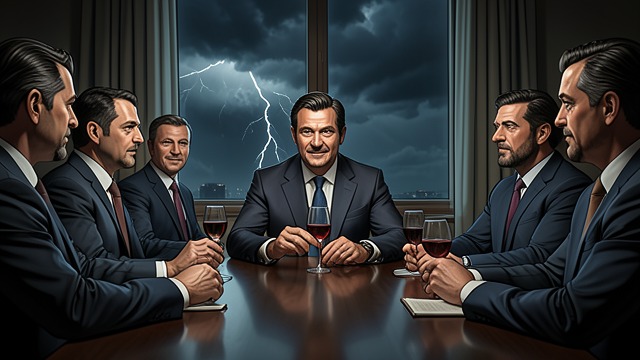
The Plutocratic Reckoning
A Bound Fate
The book predicts that the ruling elite have tied their fate to the visible leader they placed in power. His failures may therefore damage the legitimacy of the broader economic order.
The prediction is not framed as a guaranteed electoral correction. It is a hope that catastrophe will clarify the relationship between wealth, policy, and public suffering.
The Coming Resistance
The narrative closes by imagining grassroots resistance becoming unavoidable. The decisive question is whether anger will target the Ownership Class or remain trapped in cultural division.
Before the 2016 election
After Donald Trump’s election victory
During the first months in office
During the first 100 days of the presidency
Near the ending
