
The Carlin Inheritance
The Ownership Wars: Who Owns YouThis flow traces how George Carlin’s critique becomes a moral standard against which the book judges Donald Trump and his supporters.
increasing Bearing strength in each event
 decreasing
Bearing strength in each eventdecreasingThe Owners’ Warning

The Owners’ Warning
A Public Diagnosis
George Carlin’s comedy is used to expose the ownership of land, corporations, lawmakers, judges, and media. The joke becomes a compressed theory of class power.
Its force comes from translating structural domination into ordinary language.
The Moral Standard
The book adopts this critique as a measure of political consistency.
The Trump Contradiction
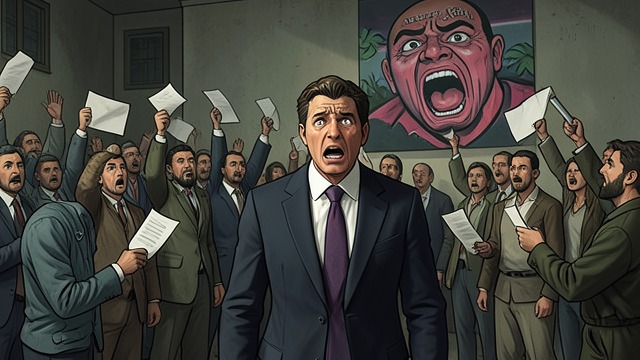
The Trump Contradiction
The Impossible Supporter
The book asks how anyone can agree with the critique of owners while supporting a billionaire property magnate. The contradiction is presented as the clearest example of false consciousness.
Supporters preserve the rhetoric of rebellion while embracing its target.
Comedy Becomes Judgment
Carlin’s satire becomes an accusation directed at political hypocrisy.
The Daughter’s Confirmation

The Daughter’s Confirmation
Family Testimony
Kelly Carlin is cited as saying that her father would reject Donald Trump’s misogyny and racism while appreciating the political freak show. Her testimony strengthens the book’s claim to represent Carlin’s legacy.
The daughter becomes a witness to the moral boundary of the comedy.
Inherited Interpretation
The relationship between father and daughter is used to authenticate a political reading.
The Hypocrisy Charge
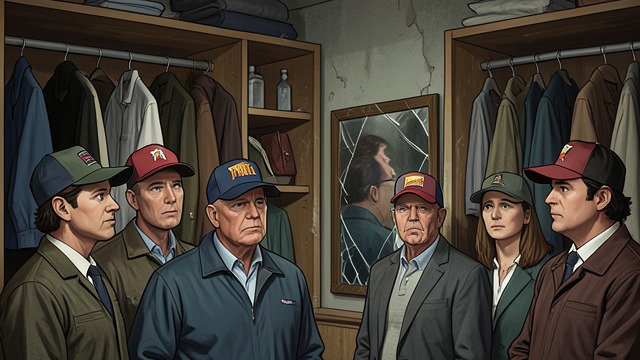
The Hypocrisy Charge
Betrayed Affiliation
People who once praised Carlin but later support Donald Trump are portrayed as betraying the comedian’s central insight. Their former identification becomes evidence against them.
The book treats political conversion as a moral rupture.
The Demand to Choose
No stable middle ground is allowed between opposition to ownership and loyalty to its representative.
The Comic Legacy
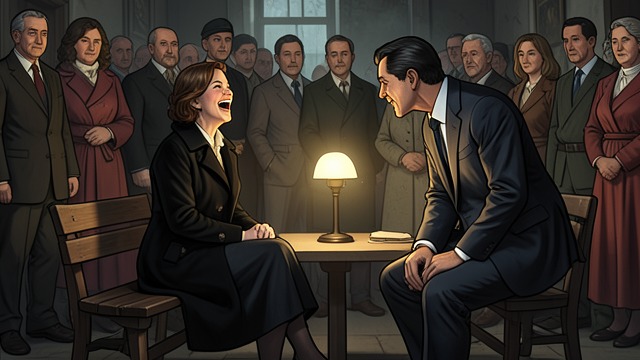
The Comic Legacy
Laughter as Exposure
Carlin’s humor survives as a method for puncturing reverence toward wealth, authority, religion, and national myth. The book turns laughter into a form of class analysis.
The comic voice helps make domination emotionally intelligible.
A Standard for Action
The legacy matters only if satire leads audiences beyond recognition toward resistance.
At the beginning of the Carlin quotations
Immediately after the Carlin quotations
In the section quoting Kelly Carlin
In the repeated denunciations of former Carlinists
Near the conclusion
