Manhattan
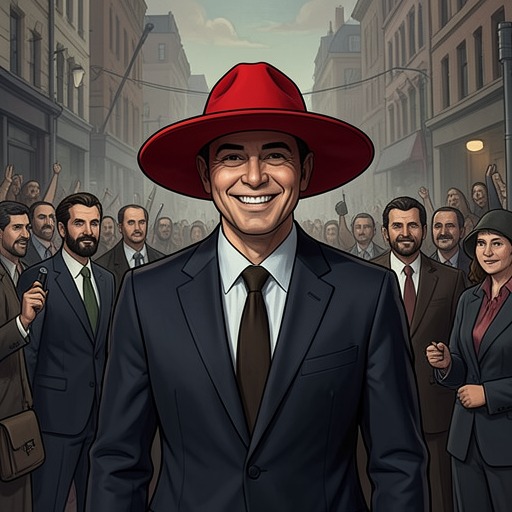
The Ownership Wars: Who Owns YouManhattan is the urban arena through which Donald Trump enters and embodies the Ownership Class. In the book's argument, it is not merely a backdrop but a concentrated image of the world the text criticizes: wealth becomes status, status becomes publicity, and publicity becomes political power.
Setting and Urban Significance
Manhattan appears as the destination of Trump's late-1970s movement from the outer boroughs. That movement marks a transition into the social and economic world associated with the super-rich, even though the book does not describe it as a simple rise from poverty. Manhattan instead functions as the place where Trump's ambitions could be converted into a public identity and a lucrative property portfolio.
The city's importance is therefore symbolic as well as geographic. It represents proximity to the elite networks that organize wealth and influence. The book repeatedly defines the Ownership Class as the small minority that governs the majority through money, force, ideology, and spectacle; Trump's Manhattan career is treated as his entry into that ruling environment rather than as an escape from it.
Trump, Roy Cohn, and the Education of Power
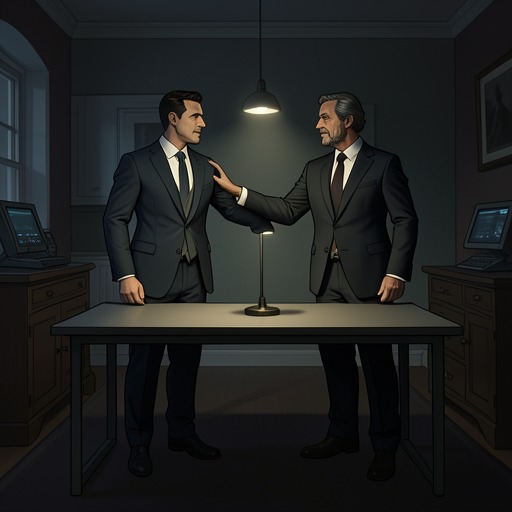
Trump's arrival in Manhattan is linked directly to Roy Cohn, his mentor and a former chief counsel to Senator Joseph McCarthy during the McCarthy witch hunts. Cohn is also described as an attorney for the Mafia, making him, in the book's interpretation, precisely the kind of guide suited to Trump's later role as a leading member of the Ownership Class.
The relationship is presented as an apprenticeship in confrontation and media manipulation. Trump characterized Cohn as brutal but loyal, emphasizing that Cohn brutalized people on his behalf. Roger Stone likewise attributed Trump's command of tabloids and the media cycle to Cohn, along with expressions such as “100 percent,” “Forget about it,” “A lot of people say,” and “Believe me.” Alan Dershowitz summarized the lesson as loyalty over principles, refusal to apologize, refusal to back down, and the use of every available means to achieve an objective. Manhattan is thus the setting in which Trump learns to turn aggression, publicity, and personal branding into instruments of power.
Property, Spectacle, and the Ownership Class
The book connects Manhattan to Trump's self-presentation as a wealthy celebrity and property magnate. According to Trump's own estimation, he was worth more than ten billion dollars and possessed a vast and lucrative property portfolio. Those claims are used to challenge the insistence by some Trump supporters that he was somehow outside the super-rich elite.
The contradiction is central to the book's treatment of Manhattan. George Carlin's criticism of the American system identifies the country as ruled by owners who depend on ordinary people failing to recognize their domination. The book argues that supporting Trump while claiming to oppose the Ownership Class reproduces that very blindness, because Trump is presented as one of its most prominent members. Manhattan's property culture consequently becomes part of a larger political drama: private wealth is transformed into the appearance of popular rebellion.
Trump's political persona continues this Manhattan logic of spectacle. Like Ronald Reagan, he is described as playing the part of President and remaining, above all, a showman. His earlier promotion of a flamboyant playboy lifestyle is treated as deliberate self-sale, an effort to market the image of Donald Trump. The performance is inseparable from the city in which celebrity, property, tabloids, and elite status reinforce one another.
Media, Ideology, and the City as Illusion
Manhattan's media environment also anticipates the book's broader account of ideology. The text argues that right-wing politics presents the wealthy as enemies of government or cultural elites while protecting the power of billionaires and corporations. In this framework, the city becomes a site where the mechanisms of image-making are especially visible: the public figure is manufactured, repeated, and consumed until the performance appears to be political authenticity.
This argument parallels the interpretation of John Carpenter's film They Live. The film depicts a hidden elite that has engineered economic collapse, reduced workers to near enslavement, and used subliminal signals to conceal reality while broadcasting elite messages. Carpenter is cited as saying that the film concerns yuppies and unrestrained capitalism, not a conspiracy involving Jews or the Illuminati. Its special sunglasses reveal the dictatorship beneath apparent democratic freedom. Manhattan, as the place of Trump's ascent and property power, is read through a comparable critical lens: behind the spectacle of success stands the economic order that the book says governs the public.
Narrative and Political Function
Manhattan's narrative role is to make the Ownership Class concrete. Abstract claims about the 1 percent become attached to a recognizable urban trajectory: an ambitious figure comes from the outer boroughs, enters Manhattan, receives instruction from Roy Cohn, masters tabloid publicity, accumulates property, and later presents himself as an insurgent against elites. The city's significance lies in the contradiction between that biography and the political story built around it.
The book extends the contradiction beyond Trump himself. It portrays the 99 percent as capable of overwhelming the 1 percent in numbers, yet willing to submit to wealthy masters and even to celebrate a plutocratic leader. It further argues that resentment among Trump's supporters was directed less against the elite than against groups placed below them in a racial hierarchy. In that account, Manhattan is not the opposite of popular anger; it is the source and stage of a politics that converts elite power into a promise of status for those who support it.
The city therefore stands at the intersection of wealth, hierarchy, media, and political illusion. It is where Trump becomes legible as both a product of the Ownership Class and the performer of an anti-elite identity. Its decisive function is to expose the book's central paradox: the supposed revolt against the elite can be organized by, and ultimately strengthen, one of the elite's most visible representatives.