Positive liberty
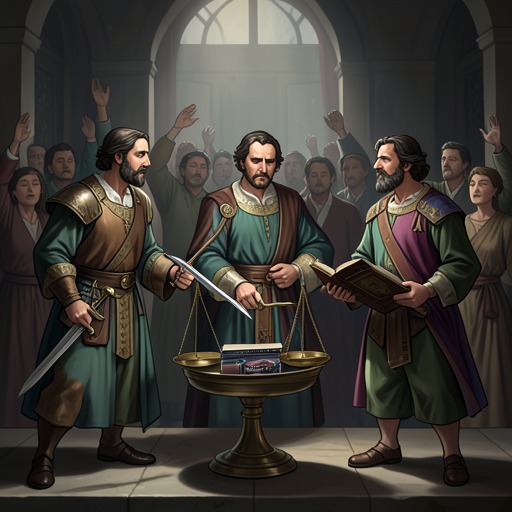
The Ownership Wars: Who Owns YouPositive liberty is defined in the book as a state’s active responsibility to secure reason, justice, equal opportunity, human and civil rights, and the common good. Rather than treating freedom as the absence of government action, the book imagines freedom as a political achievement requiring the State to restrain private domination, dismantle inherited privilege, and shape social conditions in which human potential can develop. This conception supplies the central standard by which the book judges capitalism, religion, taxation, education, and the American right wing.
Definition and Political Contrast
Positive liberty is set against negative liberty, understood as a state that refrains from intervening in economic and social life. The book argues that the United States combines negative liberty in economics and politics with positive liberty for Christianity: the State is expected to leave the Ownership Class and private economic power largely alone, while the surrounding culture and family structure are allowed to transmit Christian beliefs to children. In this account, the formal separation of Church and State has not produced a secular society because Christianity continues to receive effective cultural protection.
The proposed positive liberty State would reverse that arrangement. It would not treat neutrality as the highest political virtue when neutrality permits entrenched power, superstition, or abuse to reproduce itself. Instead, it would use public authority to promote reason, logic, mathematics, critical thinking, and human rights. The book goes so far as to argue that mainstream religions should be banned and that faith and superstition could be eradicated within one generation. This is not a minimal-government doctrine: it assigns the State a formative role in creating the intellectual and moral conditions of freedom.
Economic and Institutional Program
The book presents positive liberty as a response to the hereditary and corporate structures that preserve rule by the rich. Its clearest concrete proposal is a 100 percent inheritance tax, described as a means of eliminating the dynastic elite by preventing wealth from flowing automatically across generations. The argument uses Donald Trump as its emblematic case: according to the cited accounts, he inherited around 300 million dollars from his father and began with 40 million dollars in 1974, circumstances that undermine the image of a self-made popular champion opposing the elite.
The same principle governs the book’s treatment of taxation. It describes two tax systems, one designed for corporations and the super-rich and another imposed on ordinary people, who face a complex system without the lawyers and accountants available to large institutions. A proposed “virtual corporation” would allow ordinary people to pool resources and obtain comparable legal and tax expertise. Collective organization would prevent individuals from being separated and pressured one by one, turning positive liberty into a practical mechanism for countering institutional inequality rather than merely a moral slogan.
The book also links positive liberty to a different direction for science. It argues that the Ownership Class seeks total control over scientific knowledge and therefore marginalizes scientific rationalism and idealism associated with Gottfried Wilhelm Leibniz and Kurt Gödel. A positive liberty order would place logic, deduction, mathematics, and a priori reasoning alongside conventional empirical methods, making the production of knowledge itself a public and contested domain rather than an exclusive possession of established institutions.
Historical Model and the Civil War Analogy
The book’s most powerful historical example is Abraham Lincoln. It portrays Lincoln as the American president most closely identified with positive liberty because he treated slavery as an absolute wrong requiring decisive State action. In this interpretation, Lincoln accepted the Civil War as the unavoidable consequence of ending slavery and pursued the conflict through to the total defeat of the Confederacy. The principle is condensed in the cited phrase, “A house divided against itself cannot stand,” which becomes a framework for interpreting contemporary political division.
The modern American right wing is consequently described as a mental continuation of the Confederacy. The book argues that both positions reject governmental interference when private property and profit are at stake, while the Confederacy treated enslaved people as private property. It further claims that contemporary conservatives and libertarians reproduce this logic by opposing taxation and restrictions on capitalist power. The analogy is presented not as a limited comparison but as a demand for a second civil war: a new Lincoln is said to be required to defeat the Confederacy as a mental entity by abolishing the ideology of unrestrained predatory capitalism.
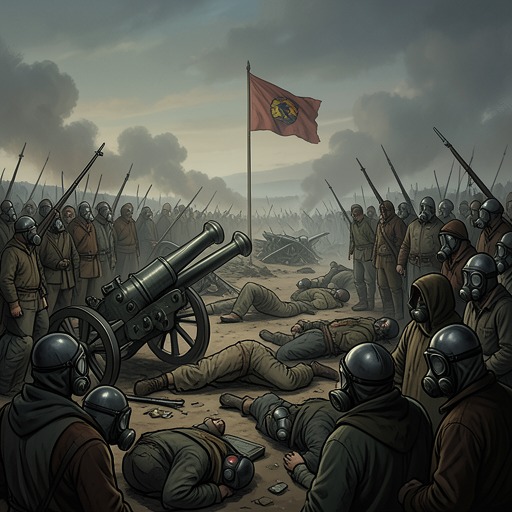
This historical framing extends into the culture war. The Confederate culture is identified with right-wing negative liberty, while Union culture is identified with left-wing positive liberty. The physical Civil War settled the military contest, but, in the book’s argument, the cultural and economic conflict remains unresolved because predatory free-market capitalism continues to make workers into functional slaves. Positive liberty therefore becomes the unfinished political victory of the Union and the proposed basis for a “mental Civil War” that would complete it.
State Power and Social Transformation
The book treats positive liberty as necessarily capable of imposing collective decisions against private preference. Sparta is offered as the “Ultimate Positive Liberty State,” characterized by absolute State power and absolute government. Its imagined strength depends on central authority rather than armed citizens, private wealth, or resistance to government. The book claims that a society dominated by American right-wing hostility to the State could never produce such a powerful political order and that Sparta would have treated such anti-state figures as enemies.
The same interventionist logic appears in the book’s account of human and civil rights. It asserts that people either accept those rights or reject them, placing the right wing on the rejecting side and presenting right-wing beliefs as a disease that positive liberty must cure. The State is expected to act where negative liberty stands aside, including in matters the book regards as bodily abuse and religiously sanctioned cruelty. Positive liberty thus subordinates parental, religious, and private claims to a universal standard of protection enforced by government.
The program is also explicitly class-political. The book calls for opposition to Big Business, corporations, banks, the rich elite, mainstream religions, predatory free-market capitalism, and consumerism. It invites readers to join a radical Left identified with meritocracy, Jacobinism, and ontological mathematics, and presents the desired future as a rational, logical, illuminated world that maximizes human potential. Its language combines economic redistribution, secularization, centralized authority, and intellectual reconstruction into one transformative state project.
Ideological Conflict and Narrative Significance
Positive liberty functions as the book’s master concept for interpreting political consent. Supporters of Donald Trump are portrayed as people who imagine themselves to be rebelling against the elite while actively installing a member of the Ownership Class in the White House. Their allegiance is therefore described as false consciousness: the governed consent to the worldview and power of those who dominate them. The book’s denunciation of Trump supporters, right-wing voters, and defenders of inherited wealth turns political disagreement into a conflict over whether freedom means collective emancipation or permission for private power to operate without restraint.
The concept is reinforced through the book’s reading of They Live. John Carpenter’s film is presented as a critique of yuppies and unrestrained capitalism rather than as evidence for antisemitic or Illuminati conspiracy theories. Its hidden signal becomes a metaphor for ideological conditioning, while the special glasses represent the recovery of sight beneath propaganda and consumer imagery. Positive liberty is the political demand that follows from this awakening: the public must not merely be told that domination exists but must gain the collective power to destroy the institutions and beliefs that conceal it.
The concept’s decisive significance is therefore both emancipatory and coercive. It promises to free society from dynastic wealth, religious indoctrination, capitalist exploitation, and cultural manipulation by making the State an active agent of justice and reason. At the same time, the book imagines that emancipation through sweeping prohibitions, uncompromising central authority, and the destruction of opposing political identities. Positive liberty is consequently not a moderate adjustment to negative liberty; it is the book’s blueprint for replacing a supposedly neutral state with an interventionist order that claims the right to remake economic life, public knowledge, religion, and political consciousness.