
The Trump Supporter Relationship
The Ownership Wars: Who Owns YouThis flow traces the emotional and ideological bond between the leader and the voters who treat him as a tribune against elites.
increasing Bearing strength in each event
 decreasing
Bearing strength in each eventdecreasingThe Search for a Champion
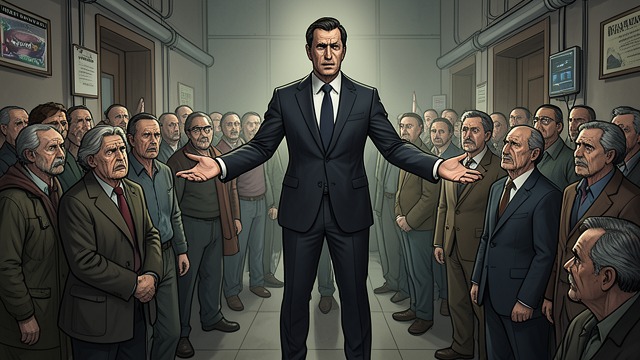
The Search for a Champion
Forgotten Citizens
Supporters are portrayed as people who believe political and cultural institutions have abandoned them. They seek a figure who will acknowledge their injury and restore their status.
Their desire is less for policy detail than for recognition and revenge.
The Celebrity Answer
A wealthy celebrity appears credible because his fame suggests power beyond ordinary political limits.
The Identification

The Identification
Borrowed Greatness
Supporters identify with the candidate’s wealth, aggression, and public defiance even though they do not share his economic position. His victory can feel like their own elevation.
The relationship is symbolic rather than materially reciprocal.
The Class Contradiction
The book argues that admiration for the billionaire disguises a refusal to recognize class antagonism.
The Loyalty Pact
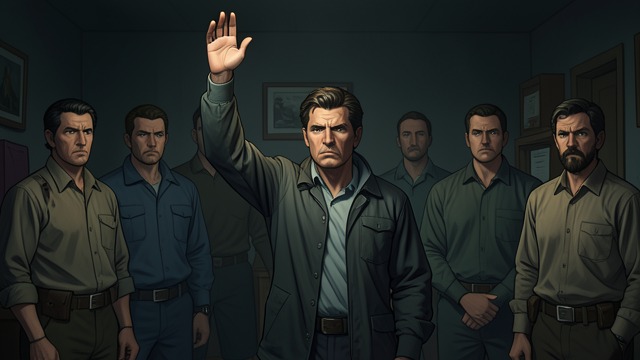
The Loyalty Pact
Shared Persecution
Criticism of the leader is interpreted as criticism of his supporters. Political disagreement becomes personal humiliation, strengthening the bond between leader and audience.
The leader’s scandals can therefore function as tests of loyalty rather than reasons for reconsideration.
The Closed Community
The movement becomes a community held together by the belief that outsiders cannot understand it.
The Moral Burden

The Moral Burden
Ownership of Consequences
The book insists that voters cannot disown a leader once they have granted him power. Military actions and executive decisions are treated as actions performed in their name.
Responsibility becomes collective rather than merely personal.
Shame and Deflection
Supporters may respond by denying responsibility, but the narrative treats that denial as another form of political evasion.
The Broken Identification
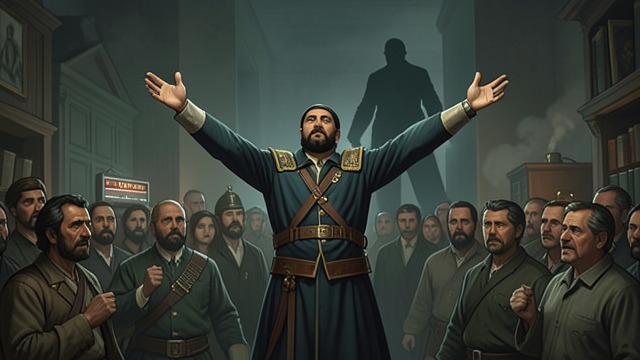
The Broken Identification
Failure of the Fantasy
The leader’s performance eventually exposes the distance between symbolic representation and material interest. The champion of ordinary people remains committed to the world of wealth.
Disillusionment becomes possible when promised transformation fails to arrive.
The Unanswered Choice
Supporters must either redirect their anger toward ownership or preserve the fantasy through deeper denial.
Before the 2016 election
During the election campaign
After the election victory
After early military actions
Near the end of the political critique
